
Three years ago I came to Estonia expecting little and left impressed. This time I knew exactly what was waiting for me, and the country still found a way to surprise me. The biggest surprise has a name: Annika.
I have a quiet rule about the places I have already written about. Mostly I leave them alone. There are too many courses I have never seen to spend a good week replaying ones I have. But Estonia talked me out of the rule, and not only because the golf was worth a second round.
In 2023 I wrote that Estonia reminded me of small grapes, the ones that grow under tougher conditions and end up in the more interesting wine. A small country, a short list of courses, but the ones that exist punch well above their weight. Coming back, the question was simple. Have the grapes turned into the wine I thought they might?
The shape of the trip is much the same as last time. Two of the country’s best clubs, Estonian Golf & Country Club just east of Tallinn and Pärnu Bay Golf Links down on the south coast, with the capital and the summer town of Pärnu. What is different is that I am no longer discovering these courses. I am checking on them. And at one of them, something is being built that changes the whole story.
Tallinn, before the city wakes
I had promised myself one thing in Tallinn: to be out in the old town before anyone else was. The medieval core is rightly famous, but in the middle of the day it belongs to the tour groups. At six in the morning in June it belongs to whoever is awake, and in June that means a sky that has barely bothered to get dark.
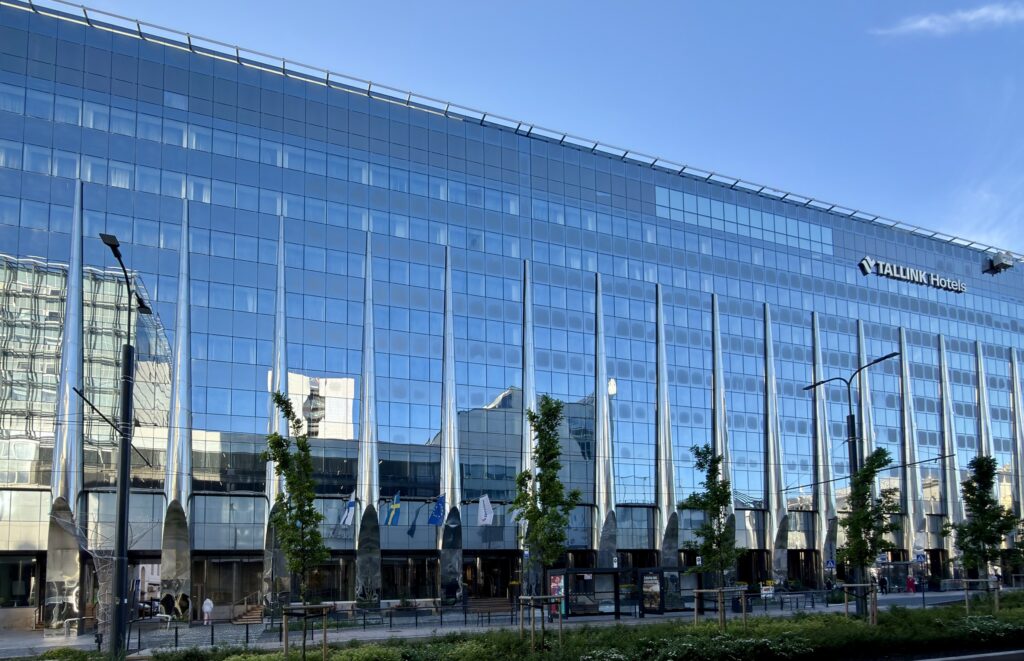
I was out a little after half past six, camera over one shoulder and no real plan beyond the light. Tallink City sits right in the modern centre, all glass and quiet, near-empty streets, and the walk only changes character when you reach Viru Gate. The two stone towers are the seam between the new city and the old one, and at this hour you can stand in the gateway and shoot it the way it is meant to be seen, without a single tour group walking through the frame.
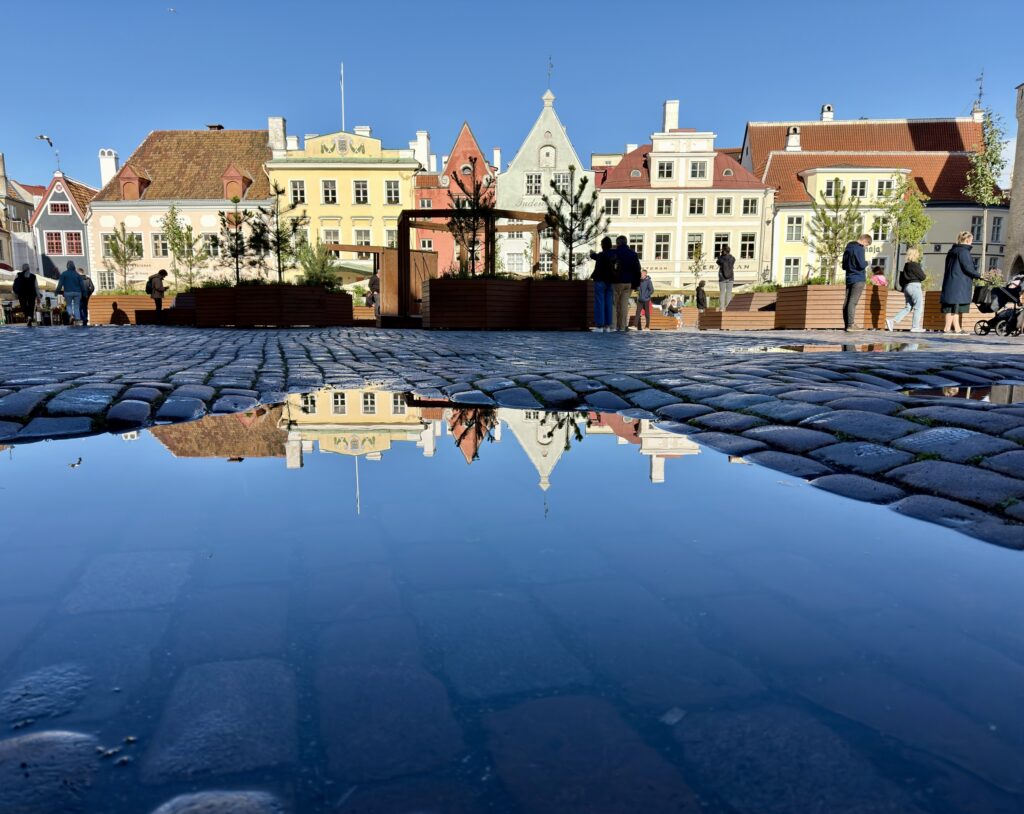
Inside the walls the old town was mine. Raekoja plats, the Town Hall Square, lay empty but for the chairs still stacked outside the cafés, the long terraces that by midday would be three deep in visitors. The façades take the early sun well, a run of ochre and dusty pink under the Town Hall tower, and there is something faintly absurd about having the most photographed square in Estonia entirely to yourself before seven.
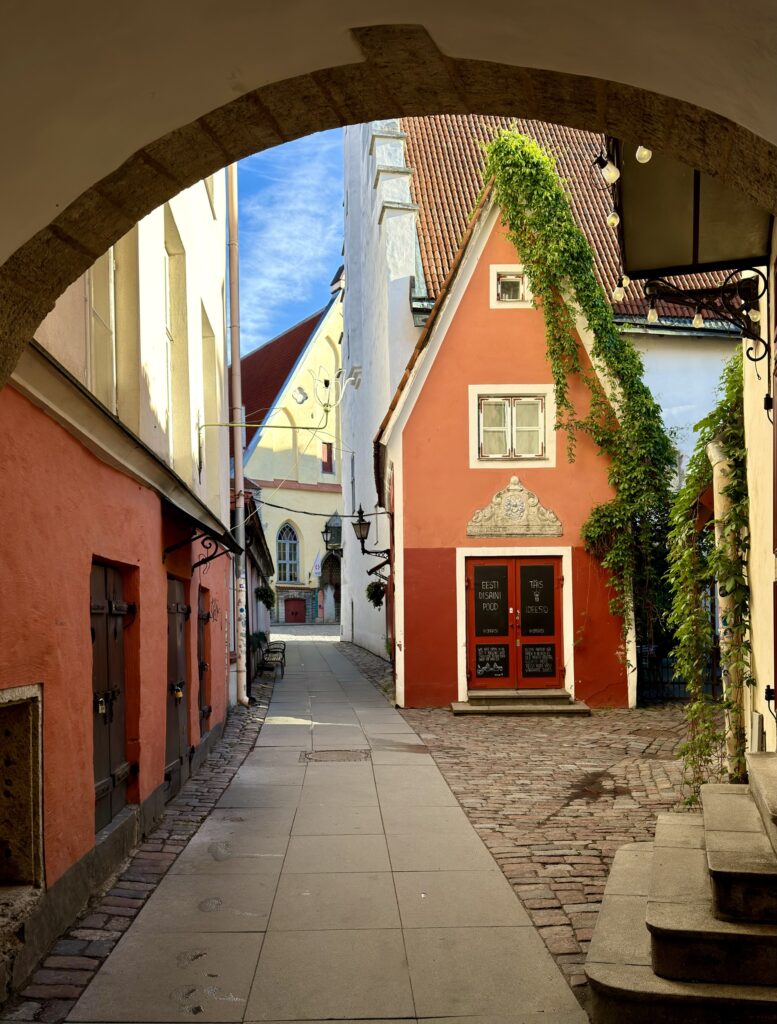
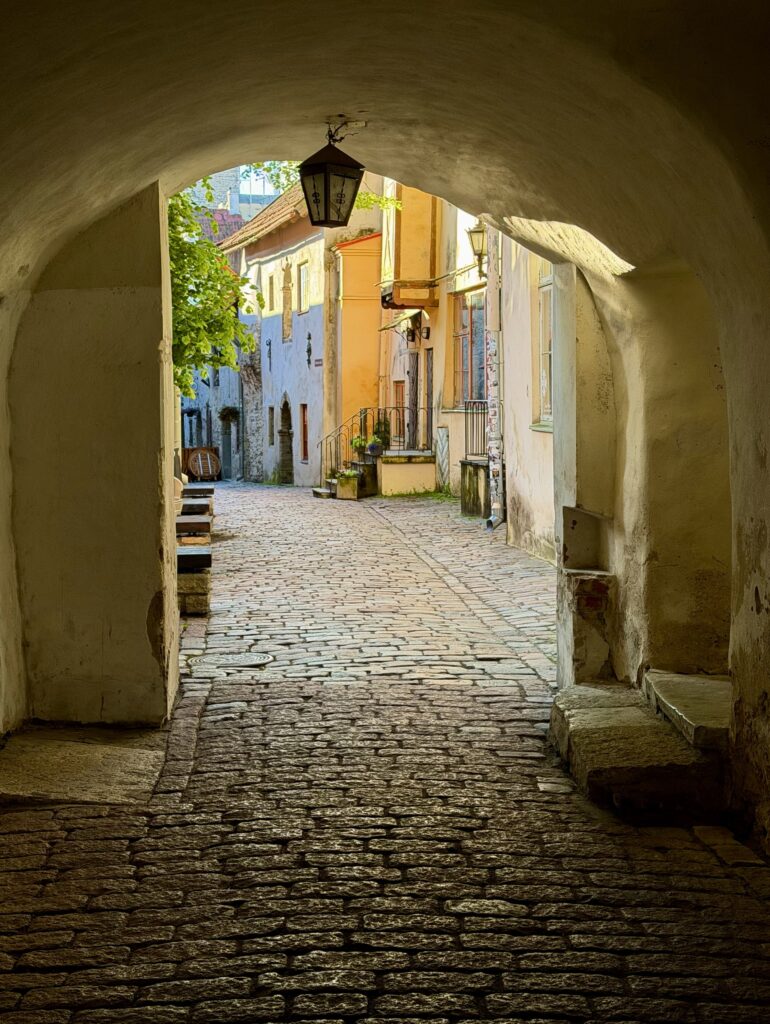
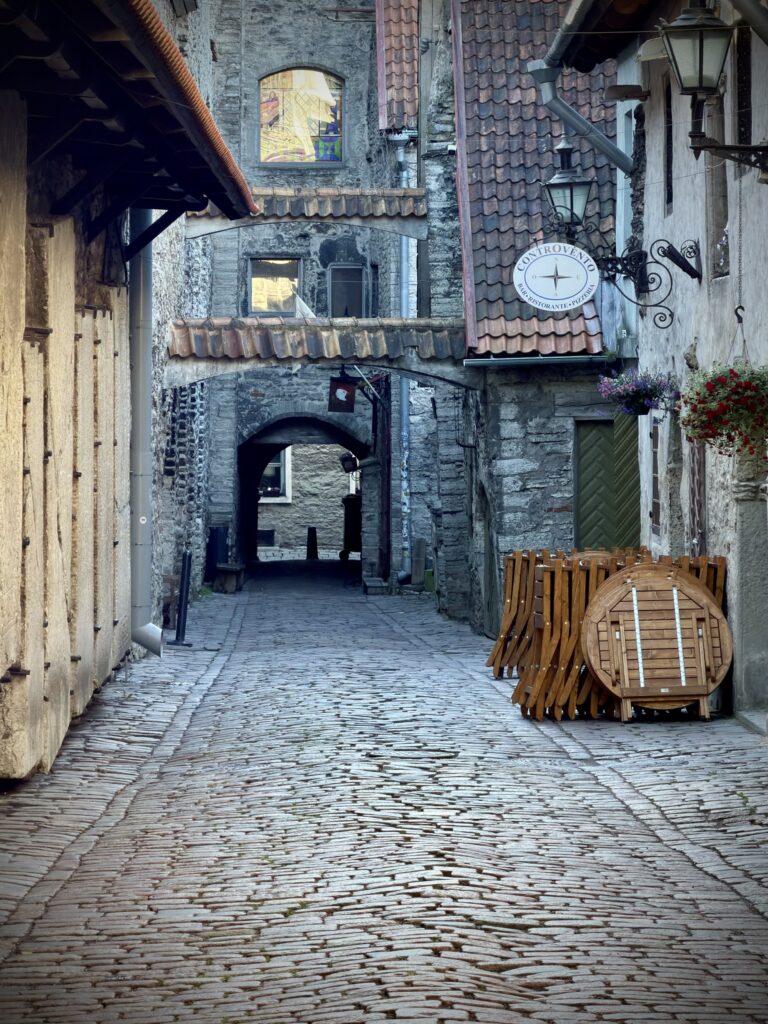
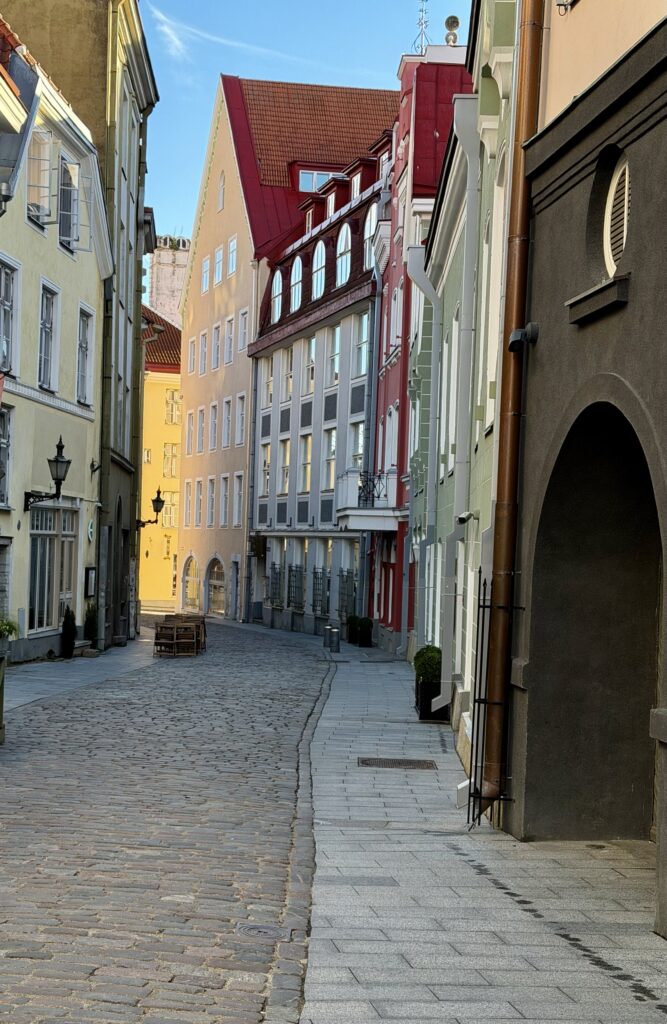
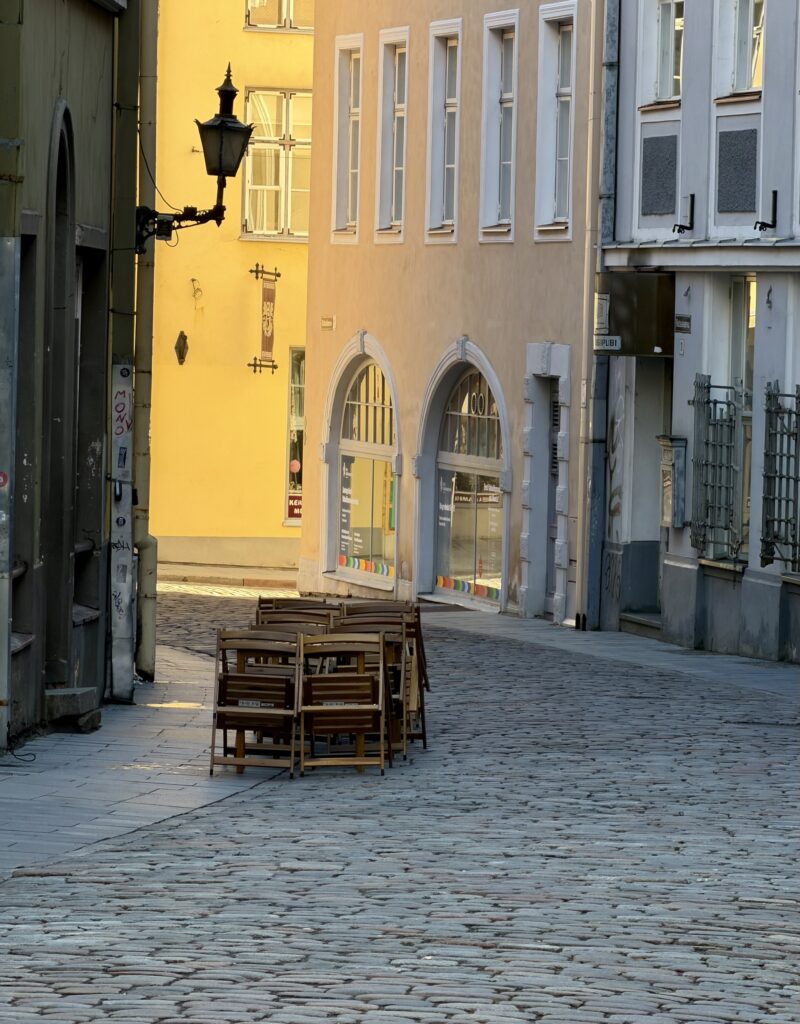
The narrow lanes are the real reward. Saiakang is barely a passage, an arch and a strip of cobbles, and Katariina käik, St Catherine’s Passage, is the kind of medieval lane that does the atmosphere for you: walls leaning close, the light raking straight down the stones, not a soul in it. What strikes you is how lived-in it all is. The old town is medieval history that people still work and sleep inside, not a museum with a ticket booth, and three years on that has not changed.
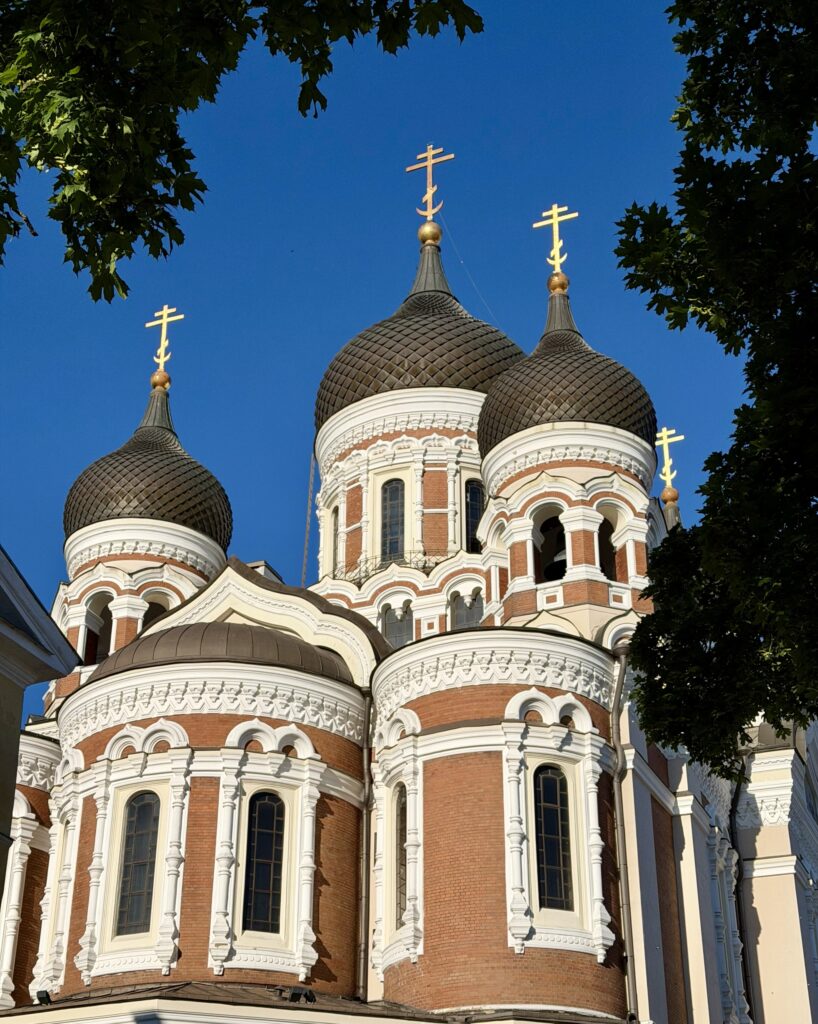
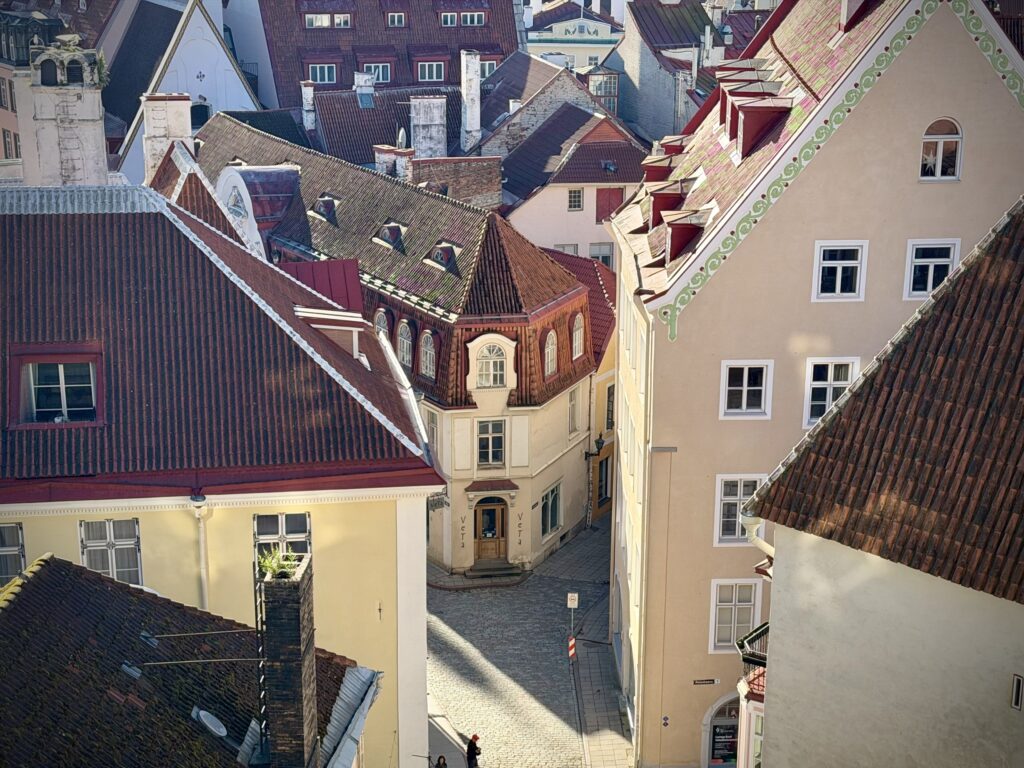
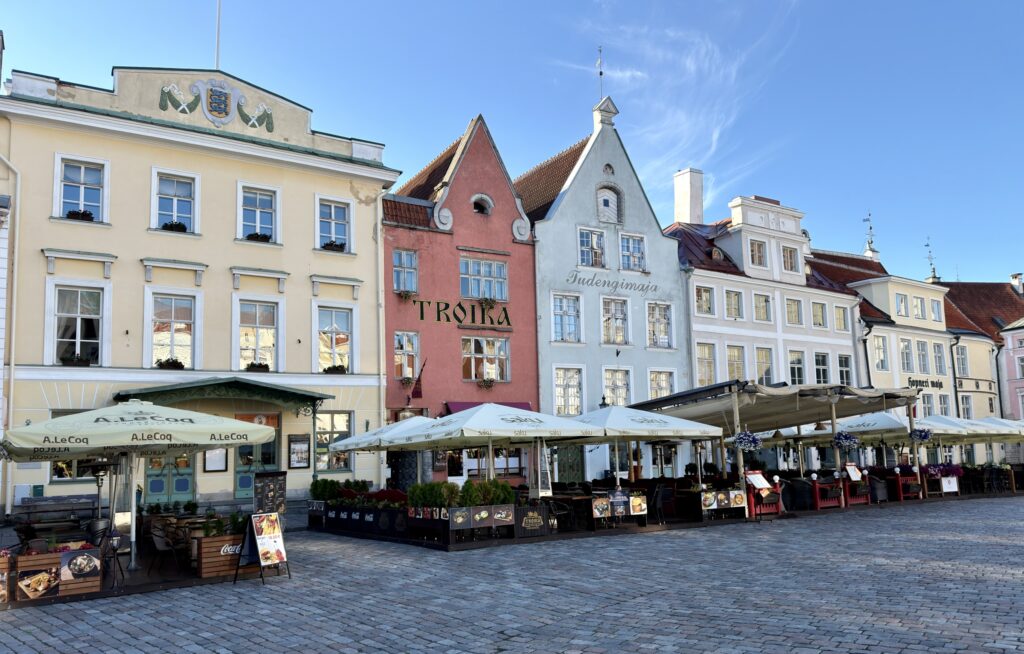
From Rataskaevu, its façades stacked down the street in layers, the route turns uphill. Pikk jalg, the Long Leg, climbs from the lower town toward Toompea with the side light running along the walls, and it makes a tidy enough metaphor for the day: a slow walk up before heading out to play golf. From the Kohtuotsa platform the whole old town opens below, terracotta roofs and church spires and a grey line of harbour beyond, and a few steps along at Patkuli the towers and walls assemble from another angle entirely. I finished at the Alexander Nevsky Cathedral, its domes still soft in the early light, before the first buses found it, and then headed back to the hotel still in time for breakfast.
Estonian Golf & Country Club
The internationally best known of Estonia’s clubs sits about 25 minutes east of Tallinn, on a slope running down toward the Gulf of Finland, almost due south of Helsinki on the far shore. It is hugely popular with the Finns, who arrive by the boatload, and it is easy to see why they make the crossing.
The Sea Course is the one ranked among Europe’s better layouts, and on a return visit I wanted to see whether it held up to the memory.
The first hole is still a hard place to start: a narrow par-5 falling away downhill and leaning toward the forest on the right, so that from the tee you genuinely cannot tell which line to take. It opens up as you come down toward the green, and only then do you understand where you should have aimed. Study the guide, and ask the starter, is still the honest advice.
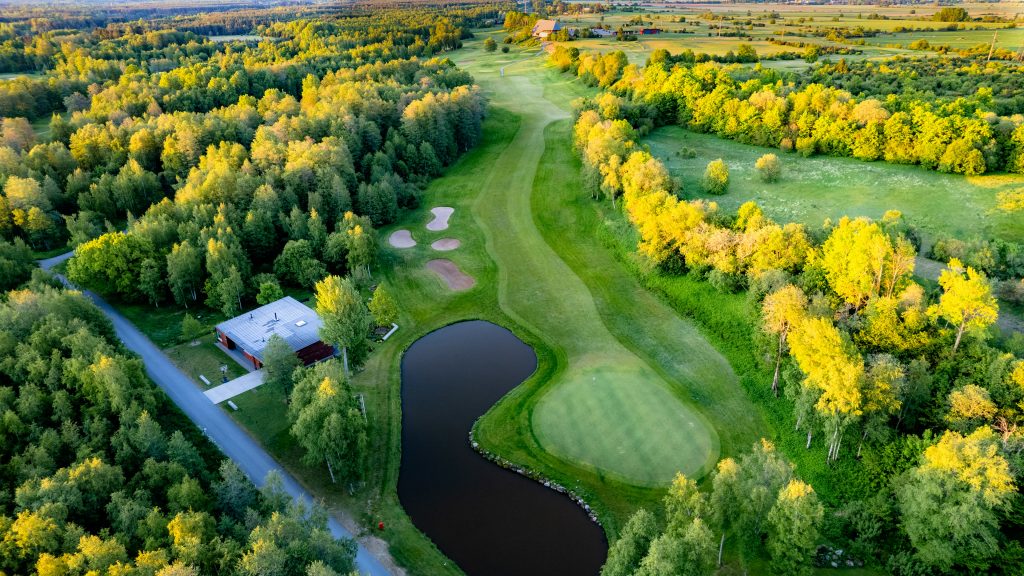
From there the second and third drop down through the trees to the shore, where the course throws off the forest and turns briefly seaside. The long par-4 that follows is rated the hardest hole on the card, with water in play and nothing to stop the north wind. The middle of the round, the sixth and seventh, runs back and forth through the centre of the property with broad waste areas dividing the fairways, before the eighth and ninth climb back up to the clubhouse.
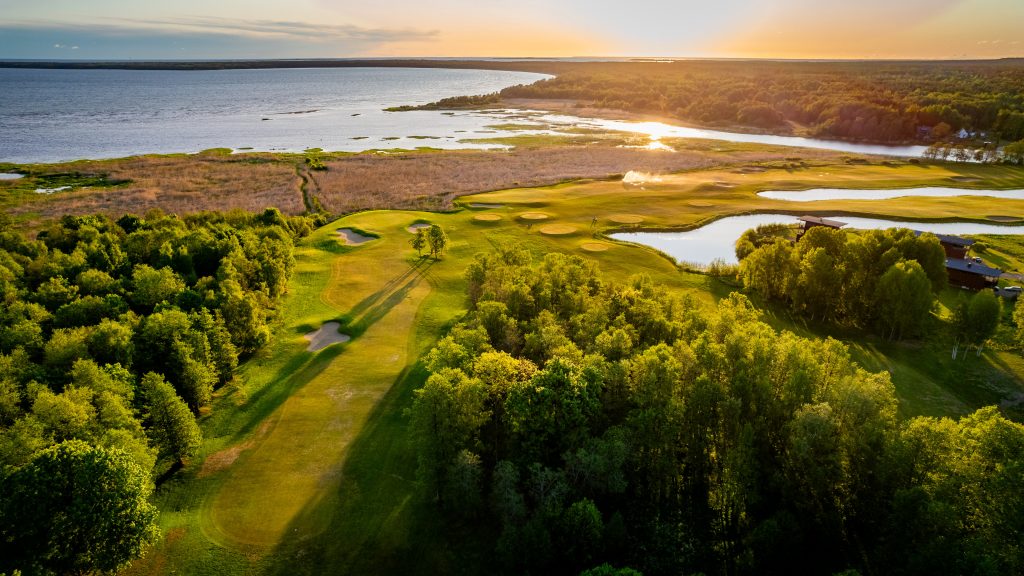
The back nine starts gently with a short par-3 and then works down to the open ground by the water again. Hole out on the fourteenth and you meet one of the course’s signatures, a long, narrow suspension bridge over the Jägala river. Relax, you do not have to cross it. The fifteenth is the longest hole on the back and the second hardest, the closest to the gulf, with water down the left and a real fight whenever the wind comes from the north-west. The closing stretch climbs back through the forest, and the eighteenth is a long, uphill par-5, well over 500 metres from the back tee, finishing under the windows of the clubhouse.
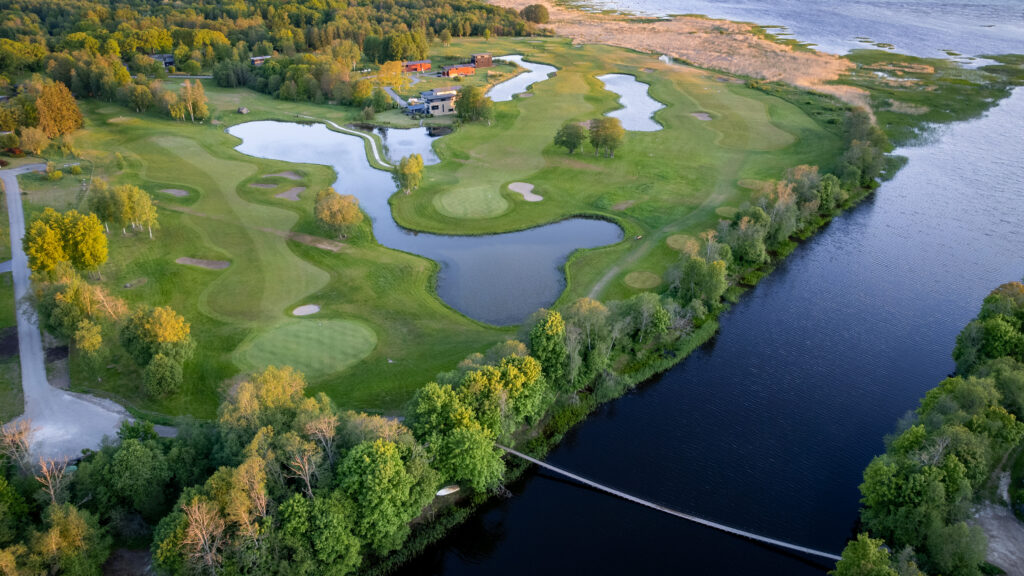
What the memory got right is the character: most of the round feels private, tucked into the forest, and then the open holes by the water shake you out of it. Those are the most exposed, the most demanding, and probably the best holes on the course.
The course that isn’t there yet
Here is one of the reasons I came back: When I played here in 2023, the club had a second eighteen, the Stone Course, and a stated ambition to become one of Europe’s top destinations. That ambition now has a designer, and her name carries a particular weight for any Swede.
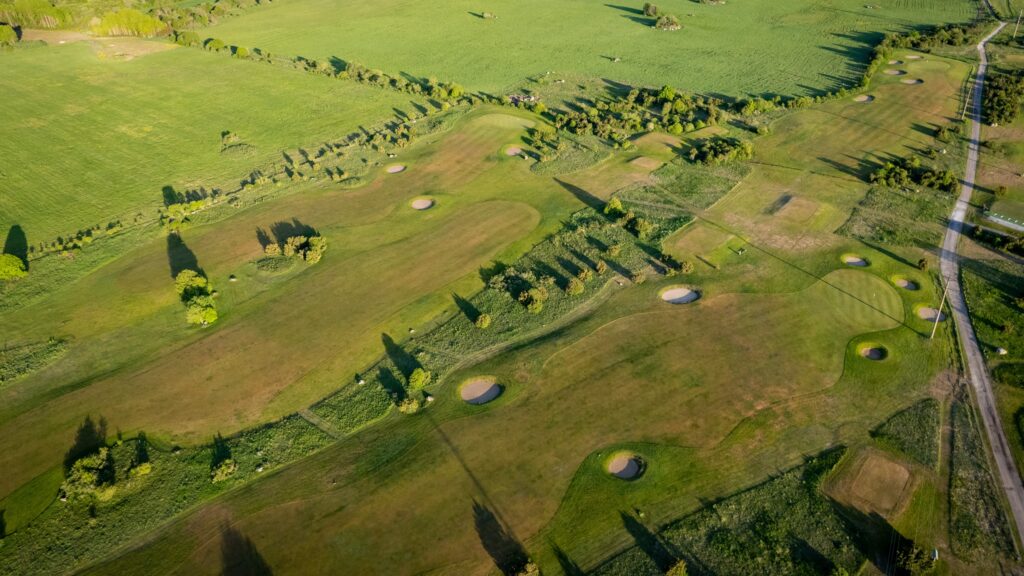
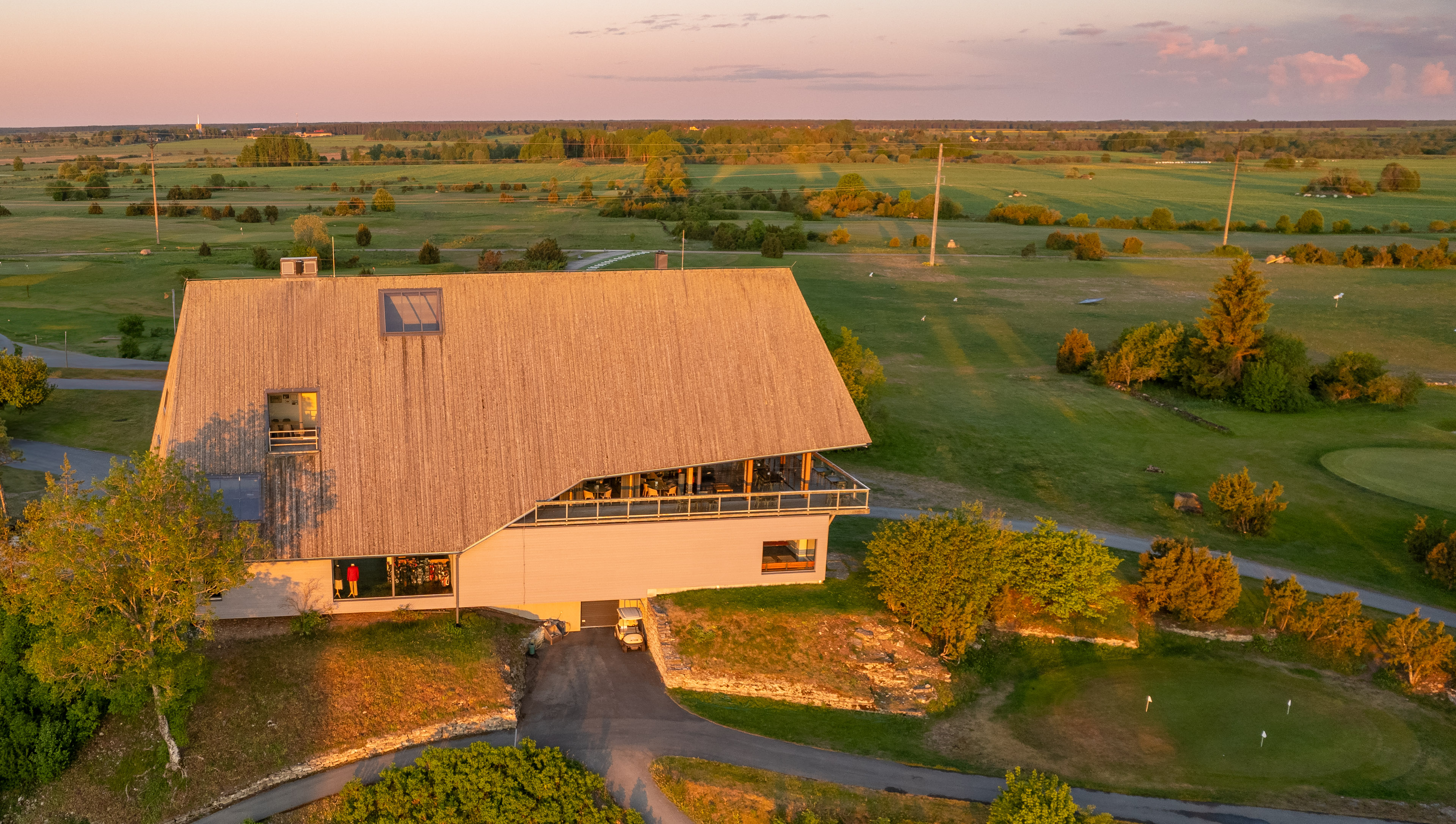
Annika Sörenstam is building her first golf course in Europe, here, on the high ground above the Sea Course. The Annika Course replaces the old Stone Course, and it is being designed in partnership with European Golf Design, the architecture arm of the European Tour, with architect Gary Johnston walking the site alongside her. The land sits on a flat shelf above a limestone escarpment that falls away to pine forest and the existing Sea Course, with long views over the Rebala heritage landscape. The plan is for firm turf and long native grasses, a links-like look up on the plateau, stretching to around 6400 metres as a tournament venue but, in Annika’s own framing, a course families and ordinary golfers can still enjoy. The first nine are due to open in late summer 2027.
It is a genuinely big thing for a country this size. A legend of the women’s game, arguably the greatest of all, choosing Estonia for her European debut, on a piece of ground a short drive from a medieval capital. The grapes-into-wine line I reached for in 2023 suddenly looks less like a metaphor and more like a business plan.
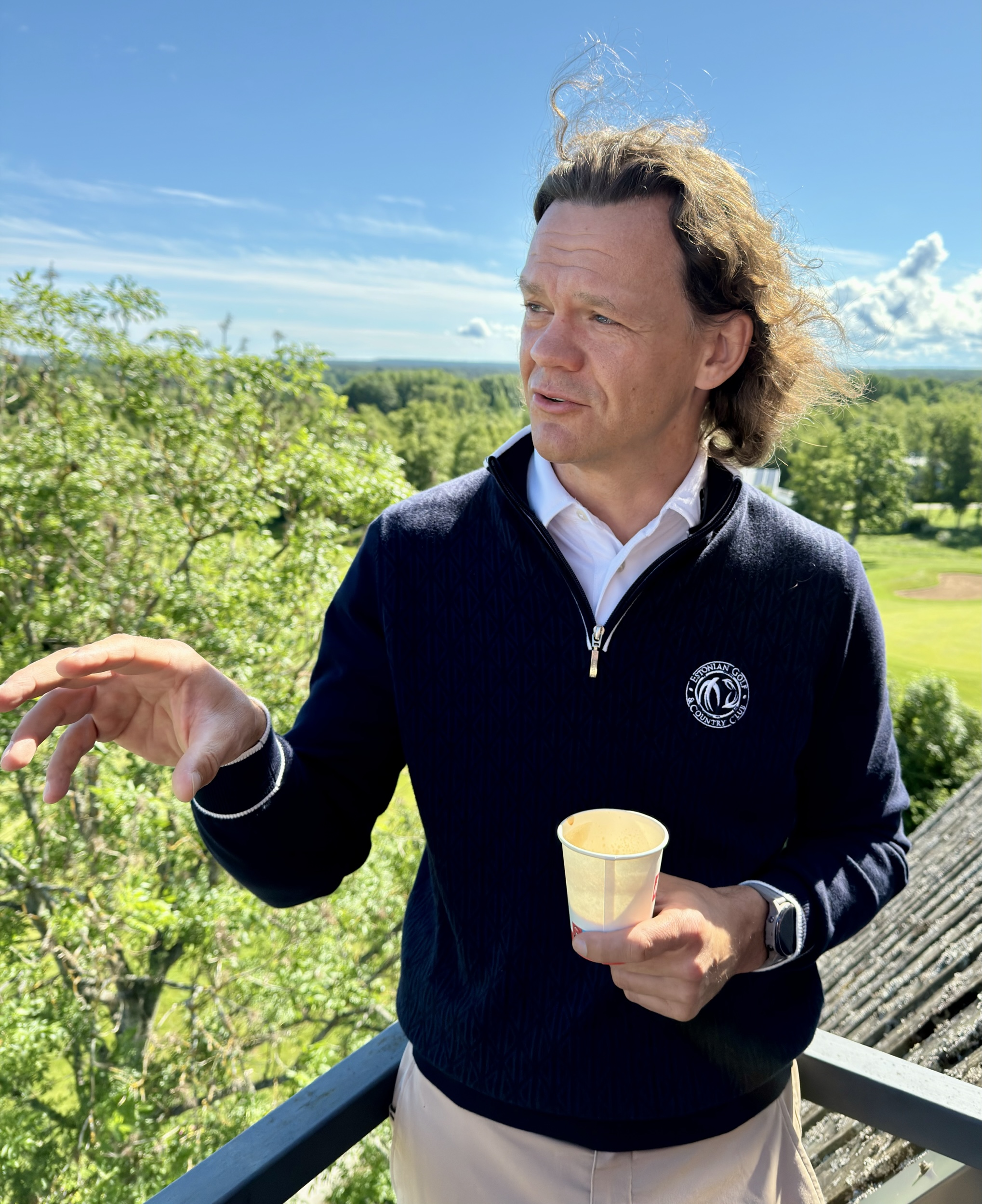
We sat down with Hanno Kross, club manager at Estonian, for a discussion about the process and how it is working with Annika. Read the full interview here.
Down to Pärnu
The morning transfer south to Pärnu is normally a smooth couple of hours on good main roads. This year is the exception: the Tallinn to Pärnu road is being rebuilt, so leave the schedule some slack and treat the extra time as part of the trip rather than a tax on it. But for a few short delays, the trip went smoothly for us this morning.
Pärnu is Estonia’s summer town, all calm avenues of Jugend houses and a long beach of pale sand. It has been a spa town since the nineteenth century, and after a windswept round there is no better place to be reassembled. We are at the Hedon Spa on the seafront.
Pärnu Bay Golf Links
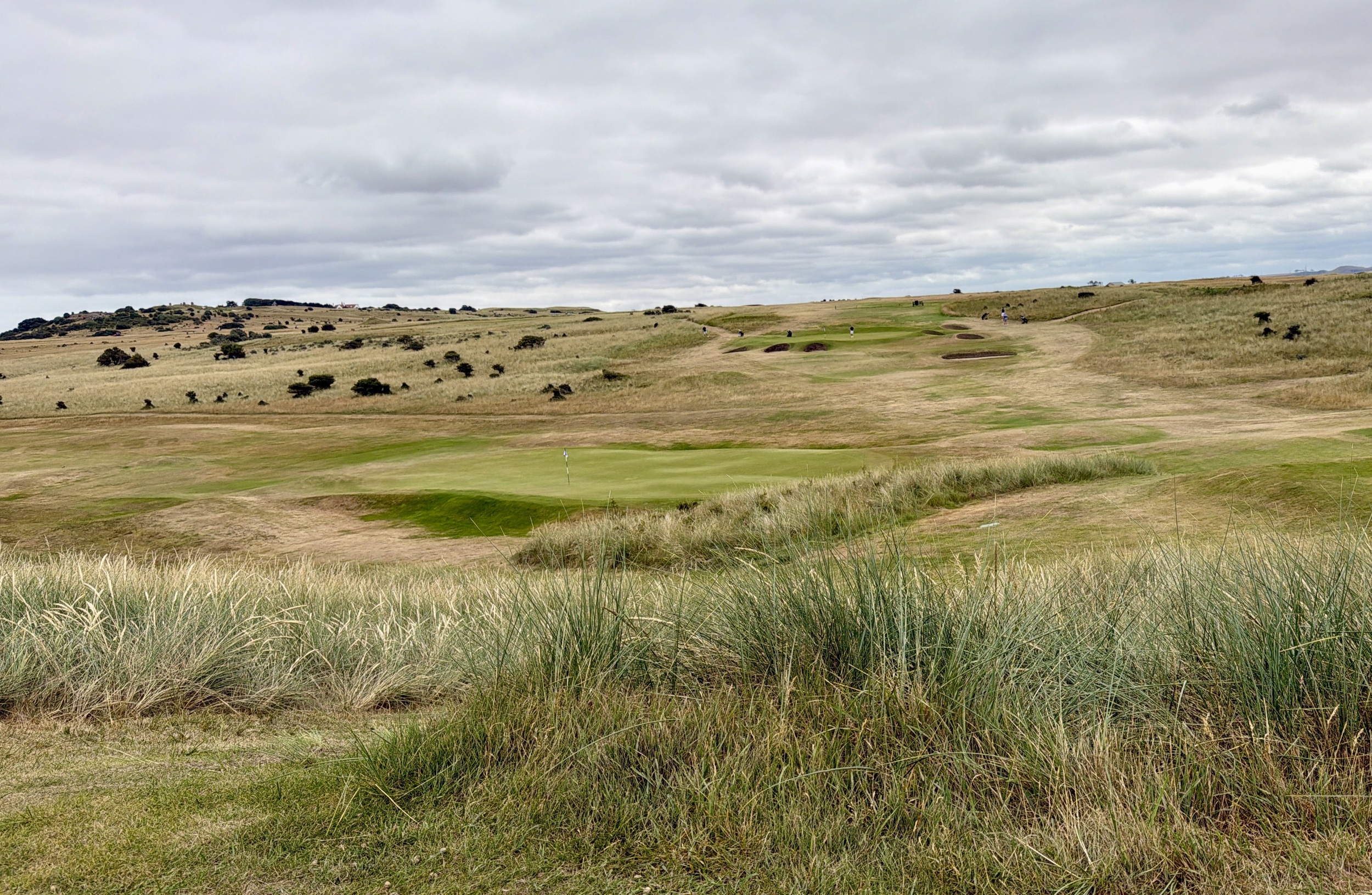
Pärnu Bay sits where the name promises, along the water at the northern end of the Gulf of Riga. That gulf is a big, open sheet of water, so the course is fully exposed to the south-westerlies. Without wind it is not really links golf at all. The good news is that wind here is rarely in short supply.
This is Estonia’s only true links, built entirely on sand. You understand the rules on the first hole. Miss the fairway and you are in sand, or in a waste area to be correct, because all the sand is classified that way. You may ground the club, and technically you need not rake behind you, though you tidy up anyway bof course. The same goes for the hollows around the greens; many of them is are waste areas too.
There are no mown tee boxes and no second cut around the fairways. Everything is shaved to fairway height, which on links manners is short, and that gives the greenkeeper enormous freedom: tees can be set wherever the day’s wind demands, moved forward into a gale or back to stretch the course for a tournament. Miss both fairway and sand and finish in the rough, and you usually find the ball without much drama; the grass is high in the links way but relatively thin.
The front nine reaches a little inland, but the wind threads easily between the sparse, tall pines that line many of the holes. The trees are seldom in play, more a piece of scenery, and a handsome one. The seventh, eighth and ninth are the pick of the outward half, with strategically placed fairway bunkers enough to make strategy matter more than raw strength.
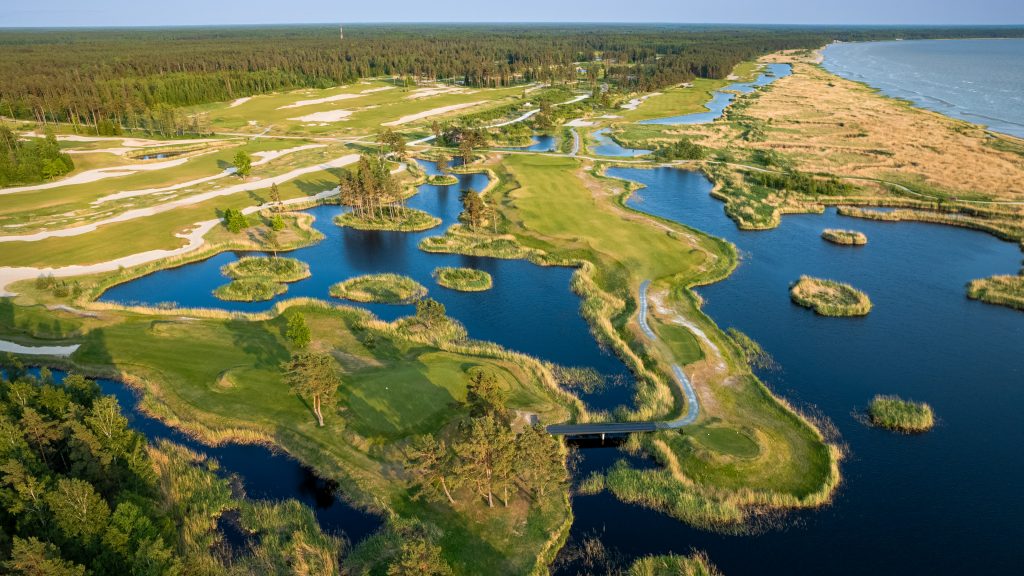
The back nine pushes out to the far corner of the property, hole ten, eleven and twelve, to the largest hazard on the course, a beautiful wetland of open water and small islands left exactly as nature drew it. The thirteenth is a par-4 reachable for anyone who carries it a fair way, reachable but not safe, because the ground around the green tilts in unhelpful directions. The fourteenth is a short par-3 out to the coast, the green flanked by water on both sides and guarded by a well-placed pine on the line. The closing four all run right at the edge of the Gulf of Riga, open to the weather and to some spectacular sunsets. The fifteenth and sixteenth are short par-4s that demand precision more than length, water down both sides. The seventeenth is a lovely par-3 with a wall of tall pines behind the green. And the eighteenth is a par-5 of nearly 500 metres with sand the whole way down both sides, pine forest left, water right, a raised green sitting in full view of the clubhouse terrace. It looks narrower than it is, but sand and water do their work in your head, and the wind makes the line a guess.
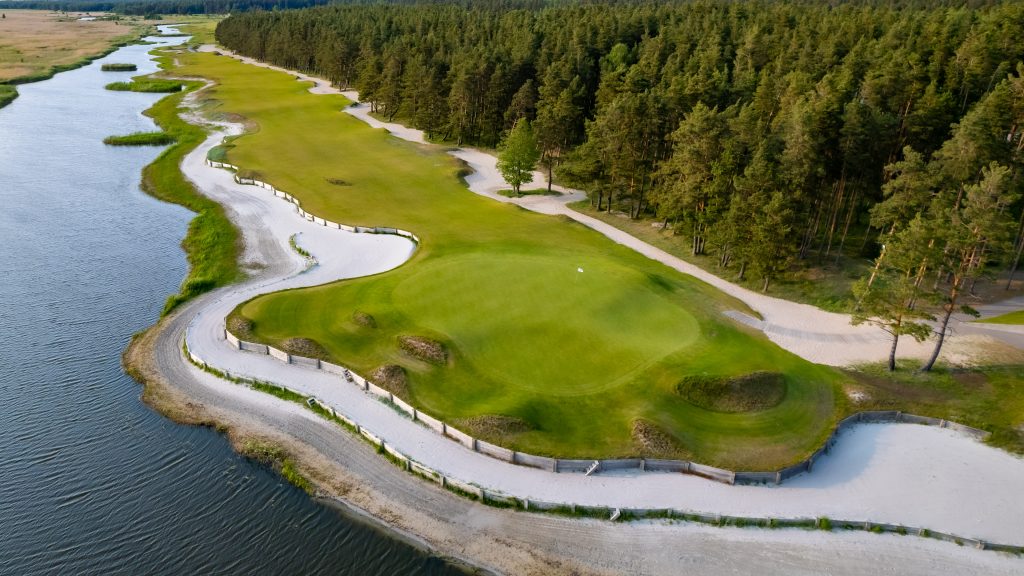
When we walked off last time I wrote that it felt like having been out sailing in rough weather: thoroughly blown out, and quietly pleased with what we had managed. Either way, Pärnu Bay remains a genuinely unusual links experience this far north, and I would not hesitate to recommend the detour. If you make it all the way to Estonia, you should make it to Pärnu Bay.
The food
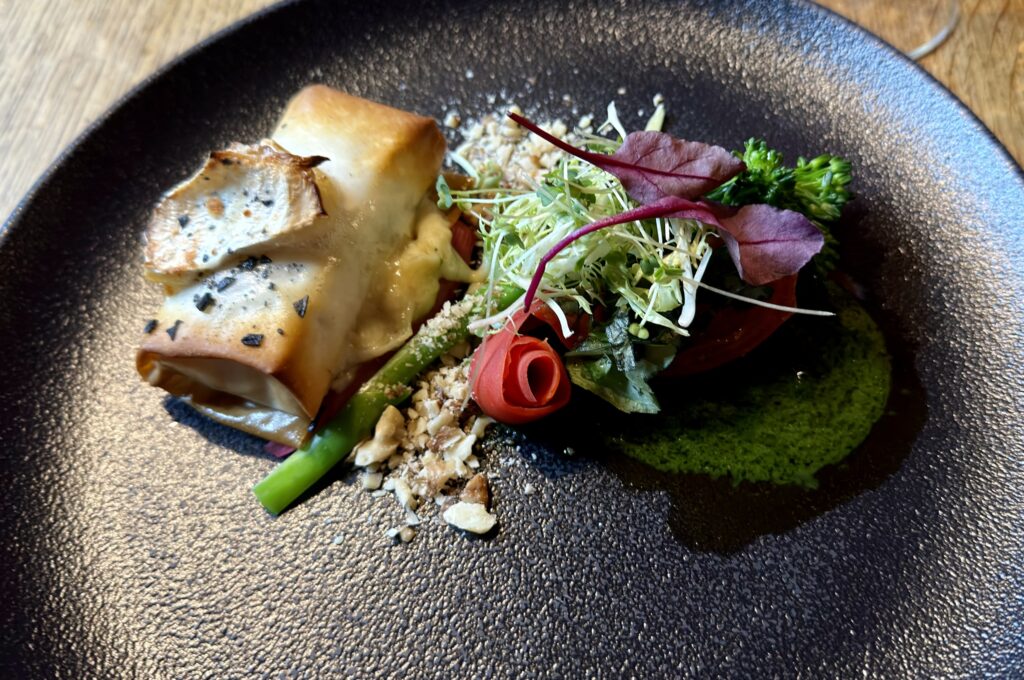
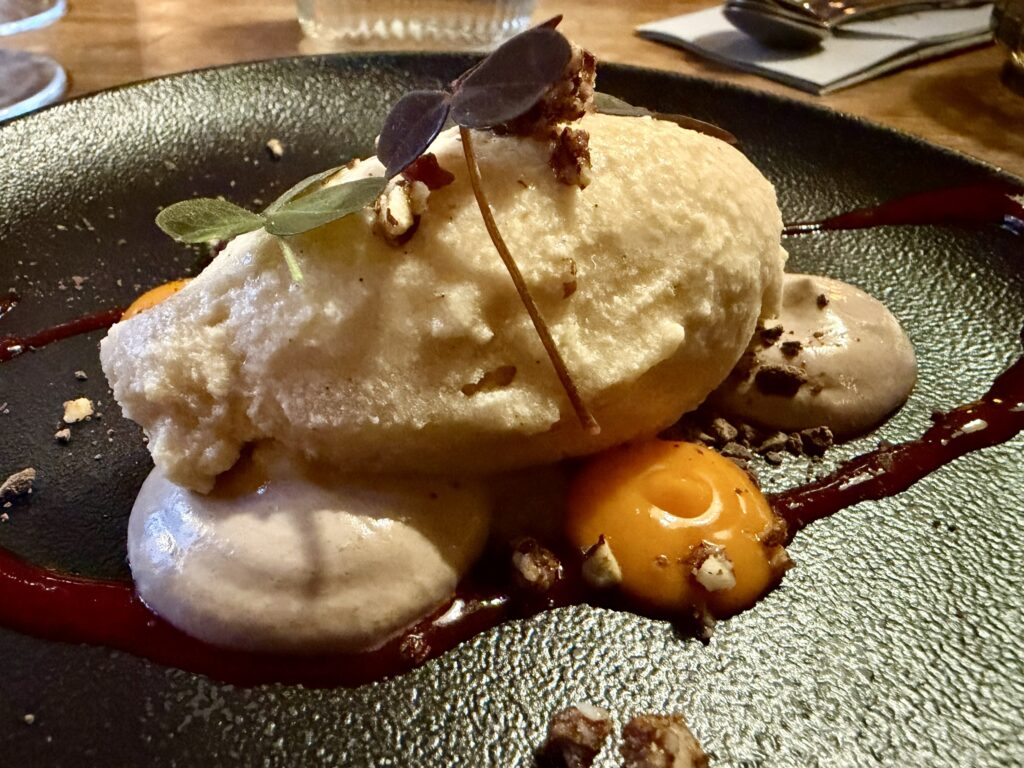
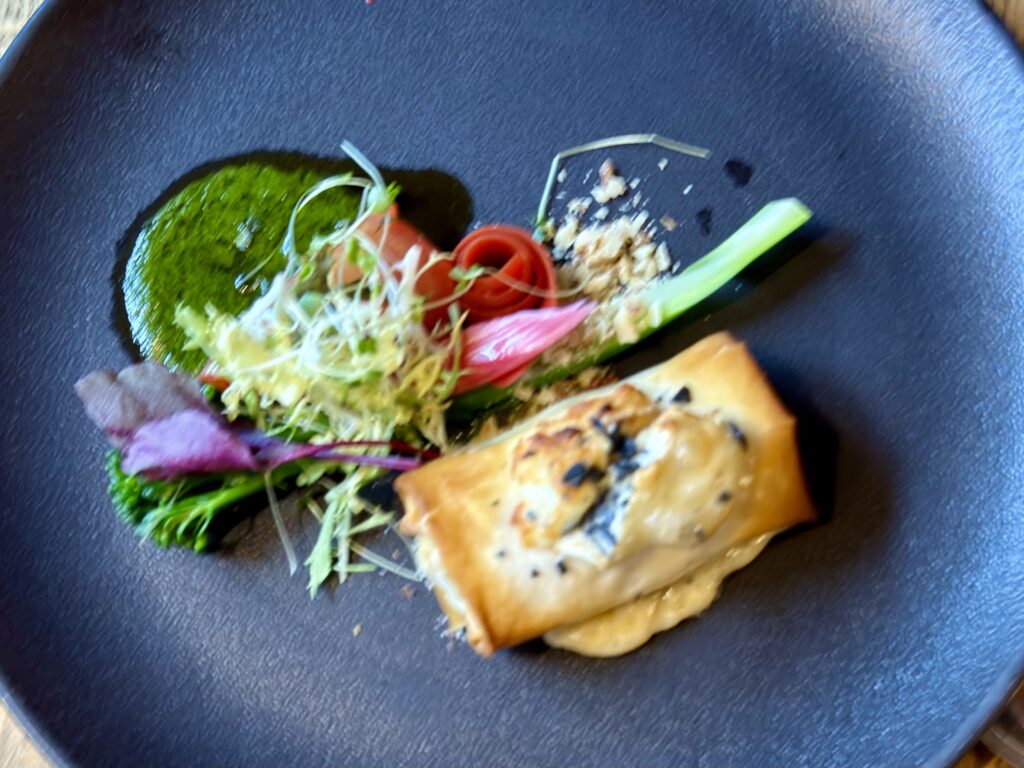
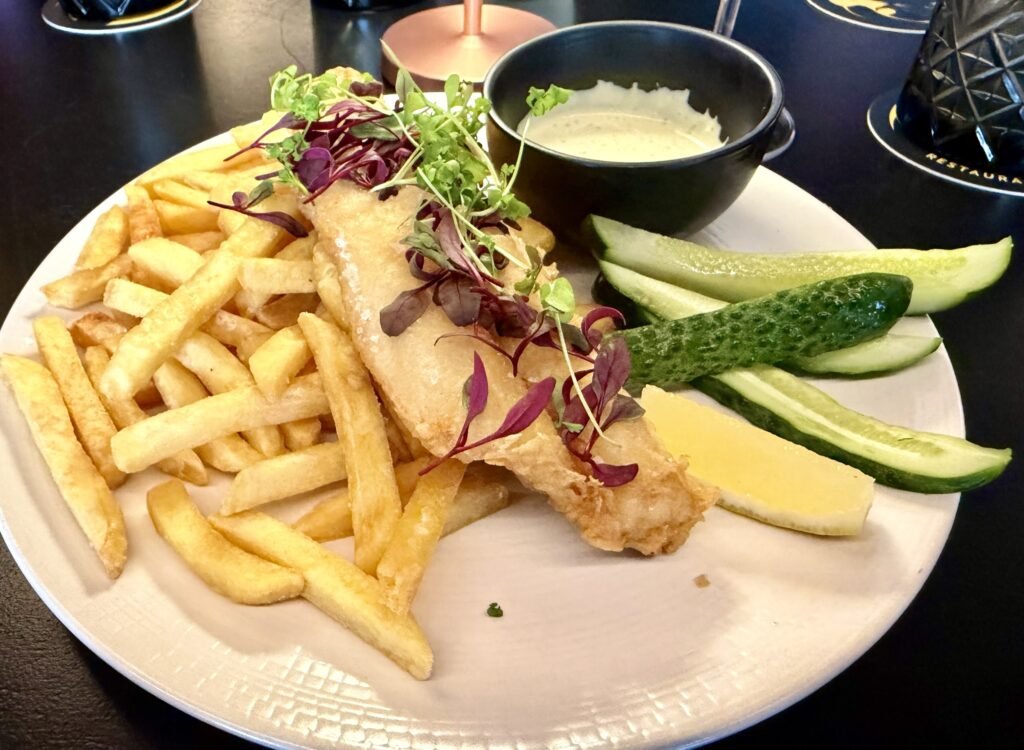
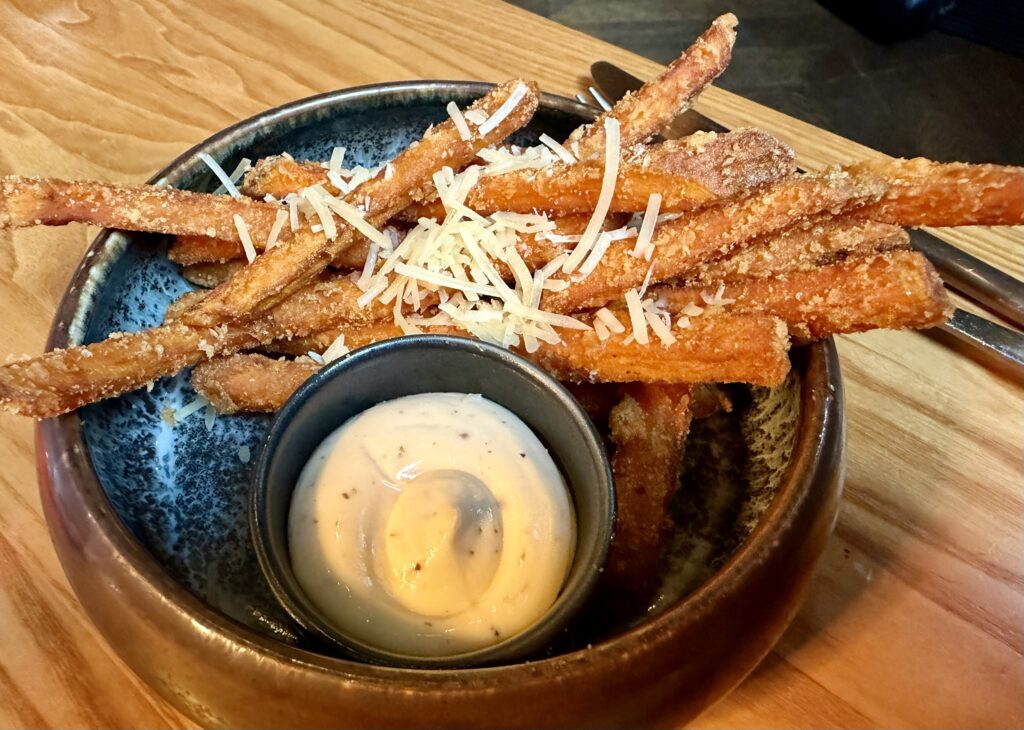
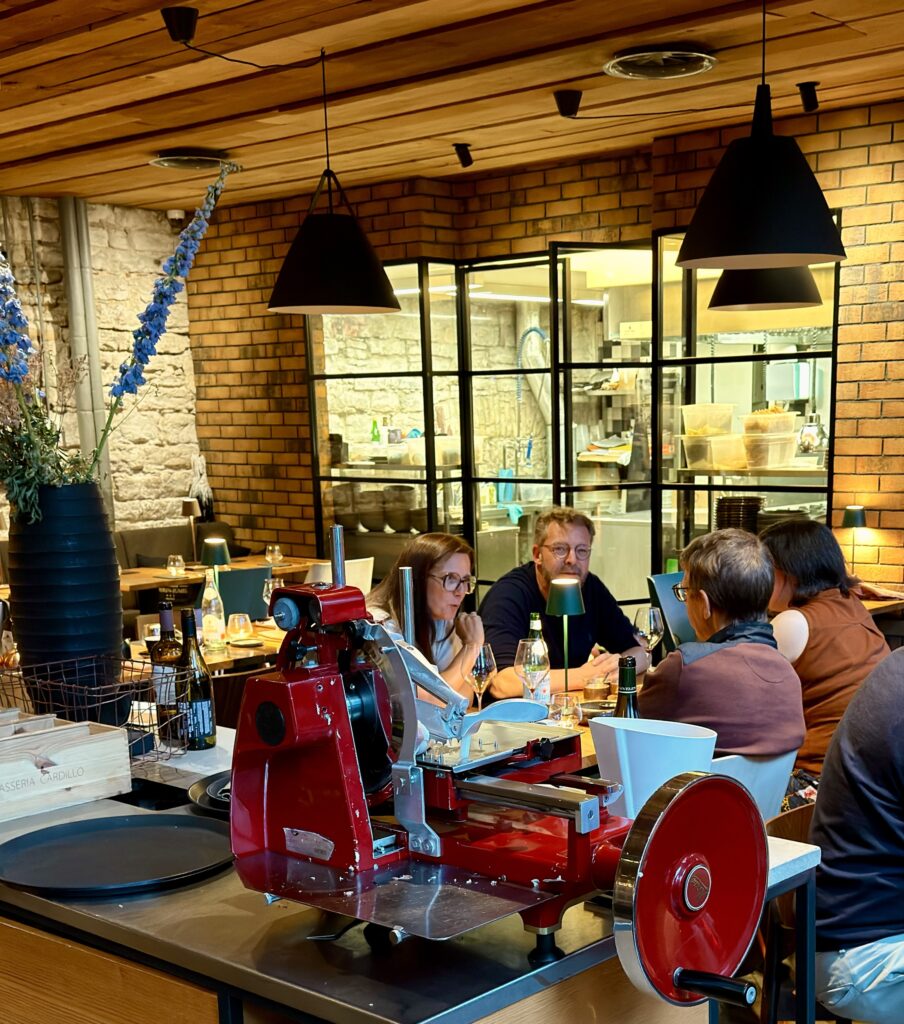
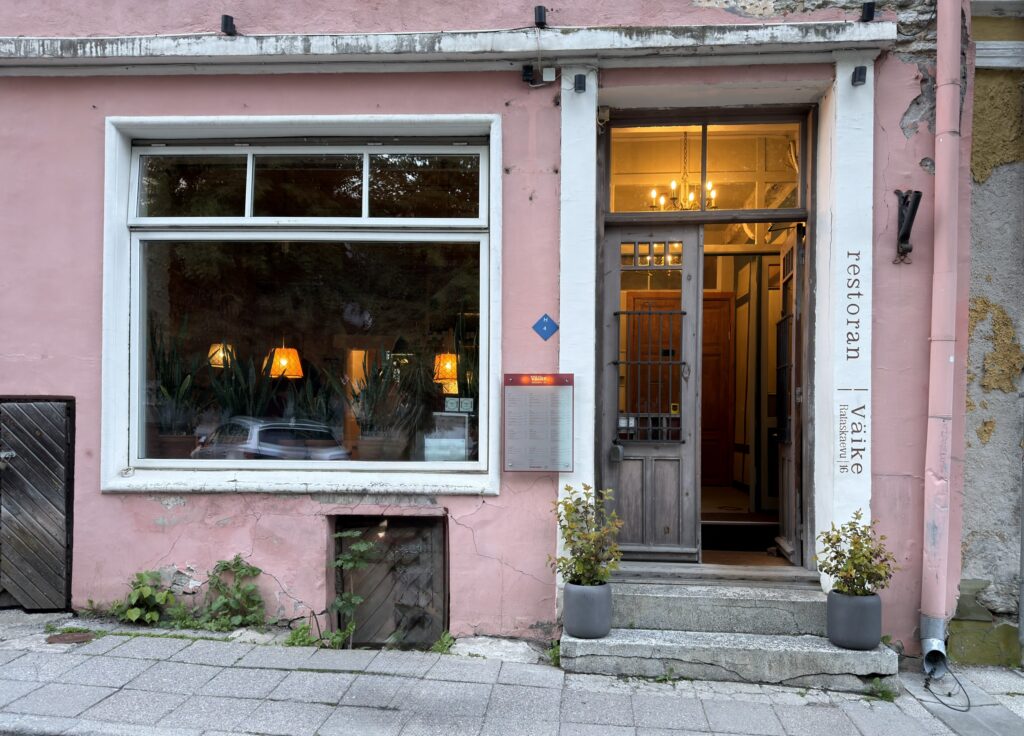
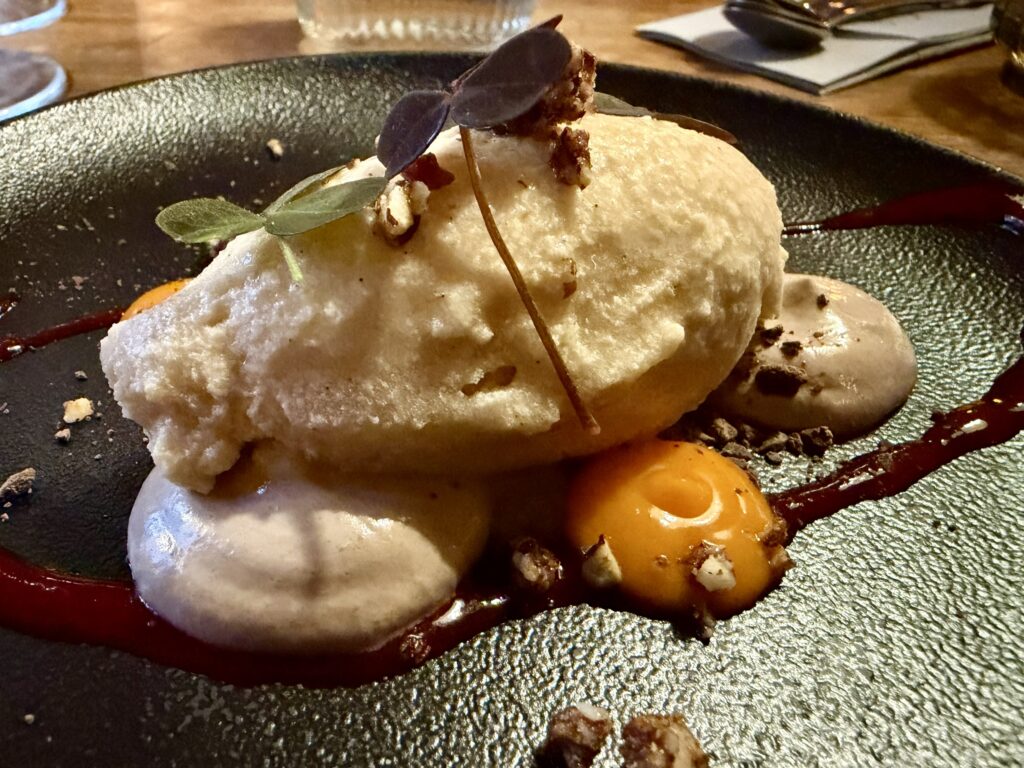
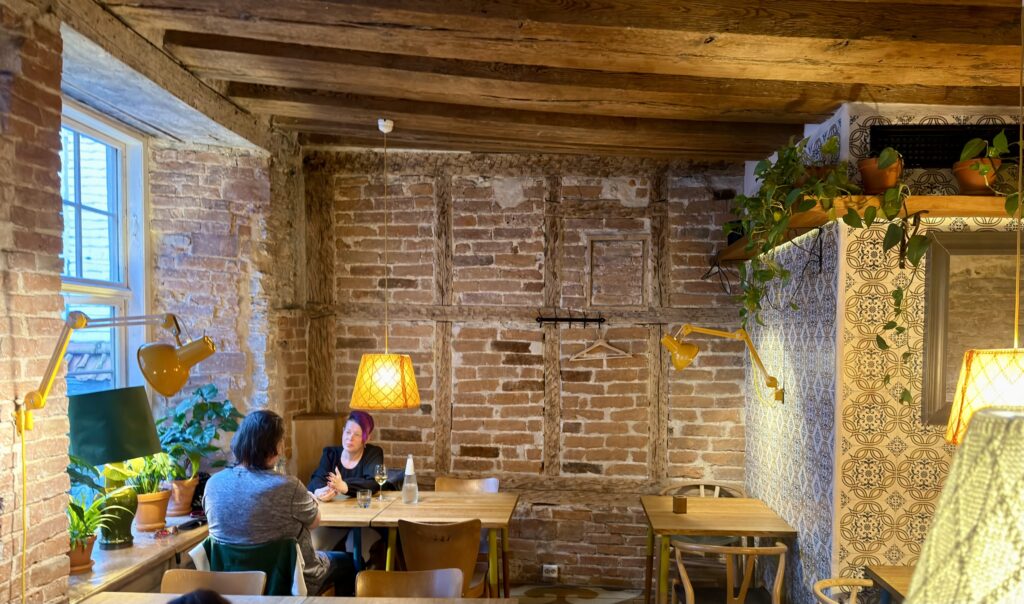
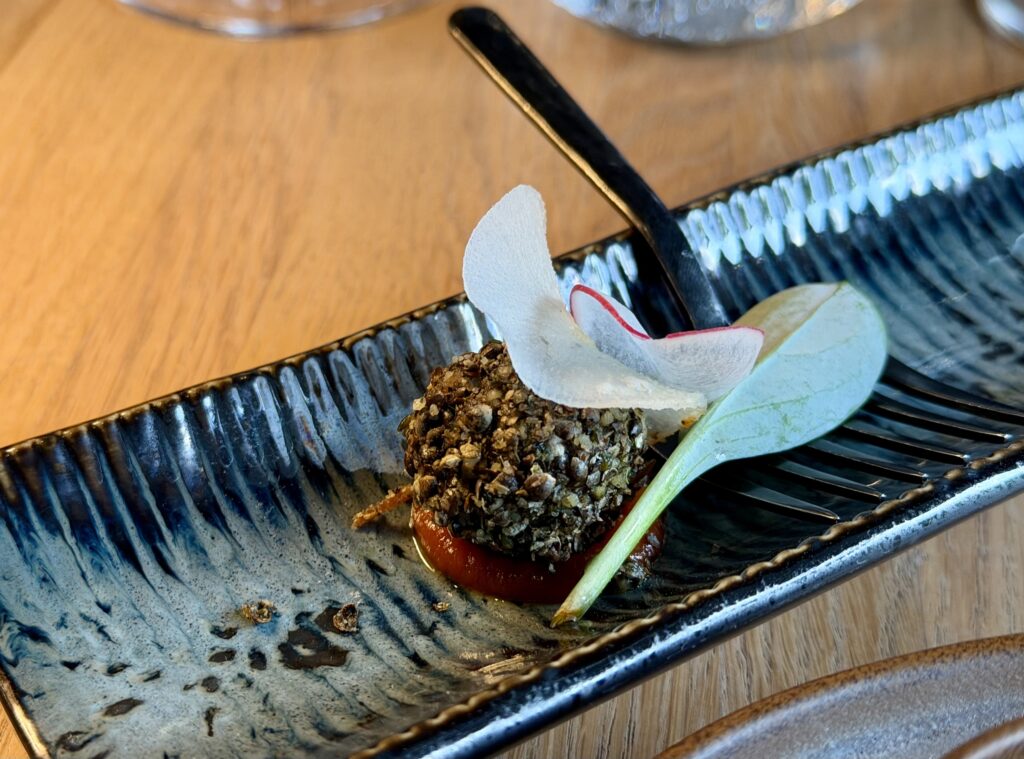
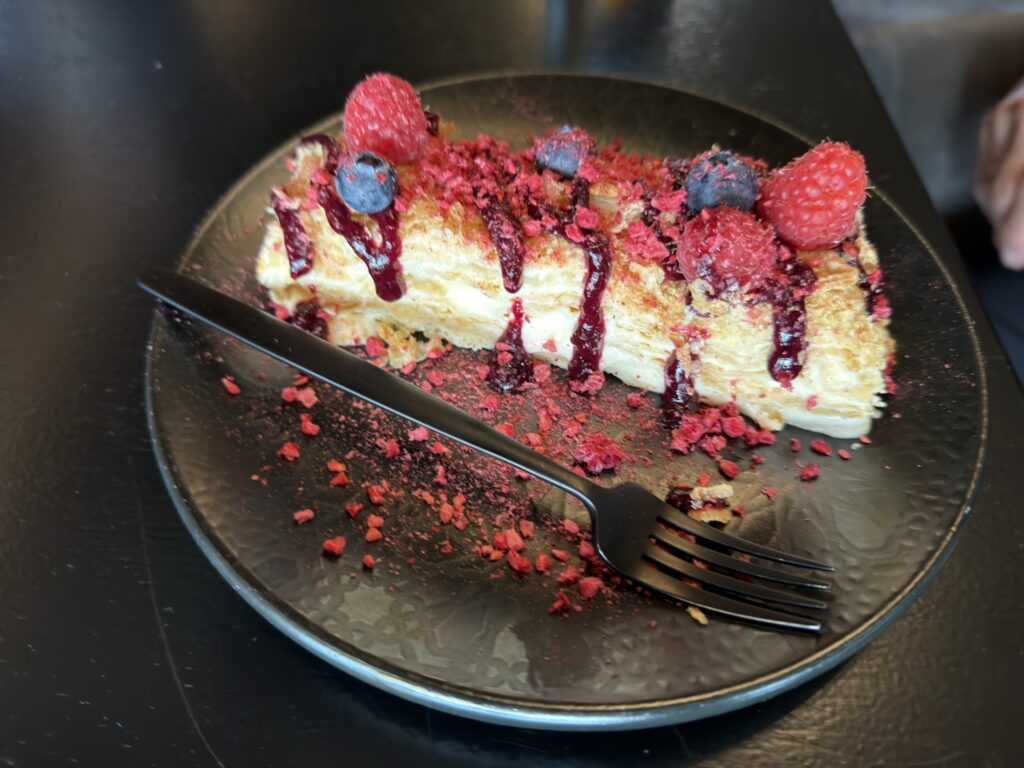
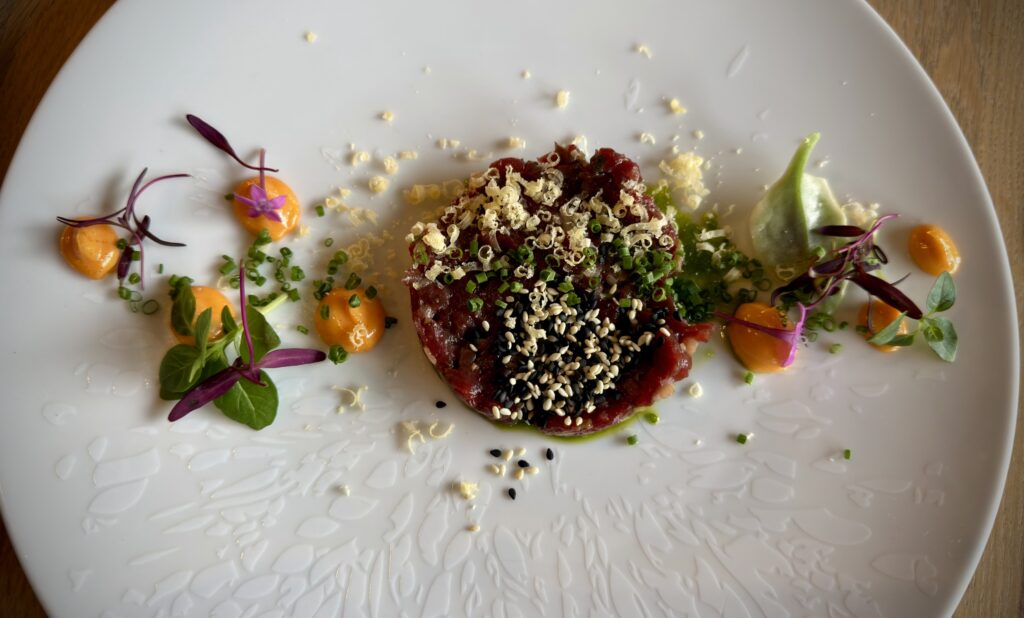
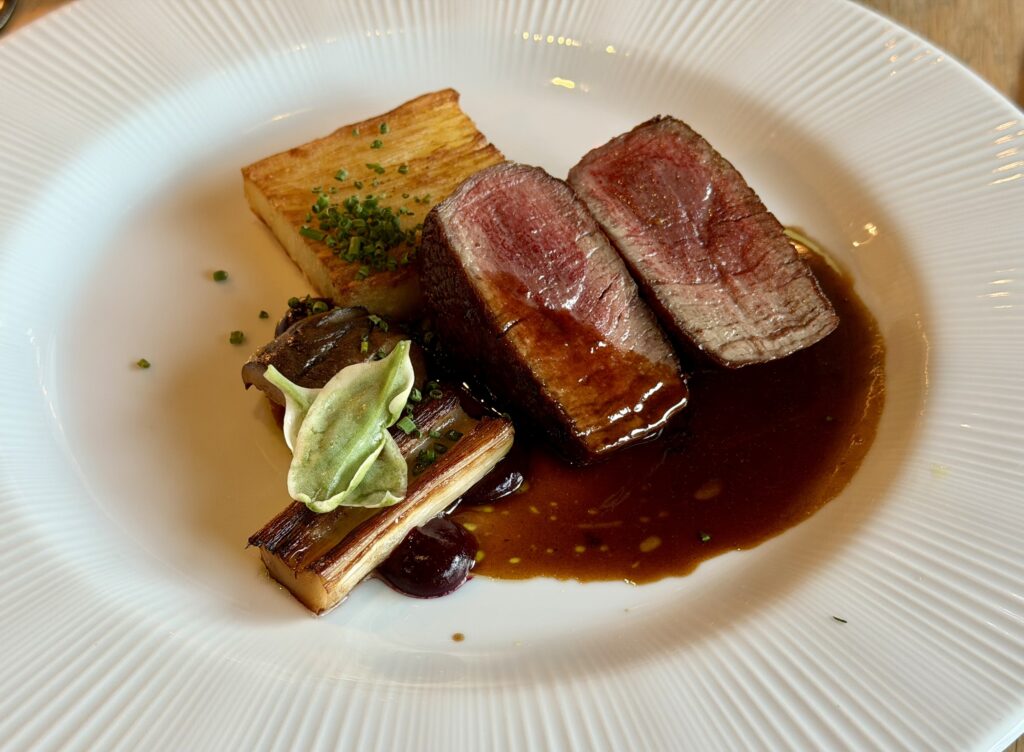
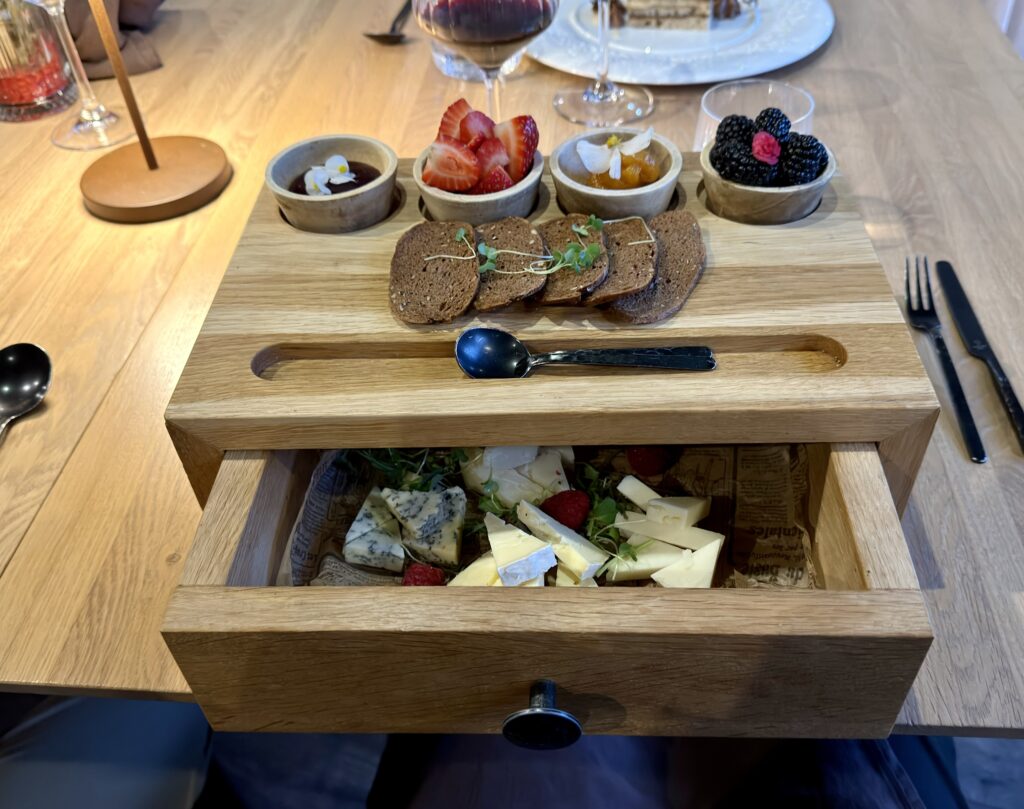
I am not going to pretend to file restaurant reviews; that is not my department, and the camera tells this part better than I can. What is worth saying is that Estonia keeps feeding you far better than you might expect, with each restaurant adding its own distinct character.
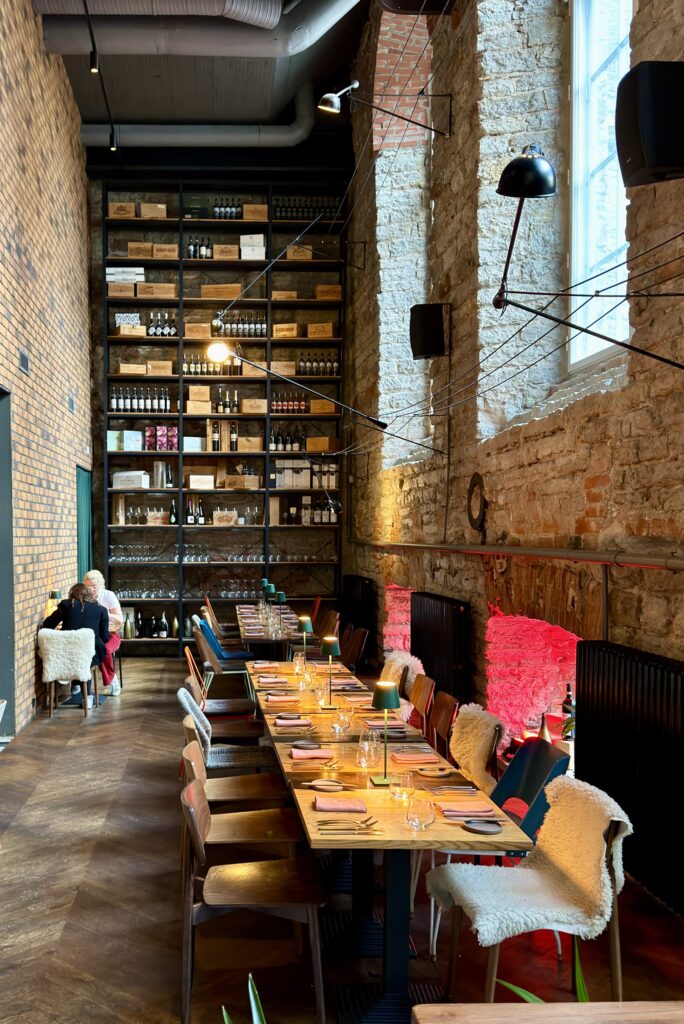
In Tallinn the first evening we went to R14, a wine-led restaurant in the handsome old industrial brick of the Rotermann quarter, a short walk from the hotel.
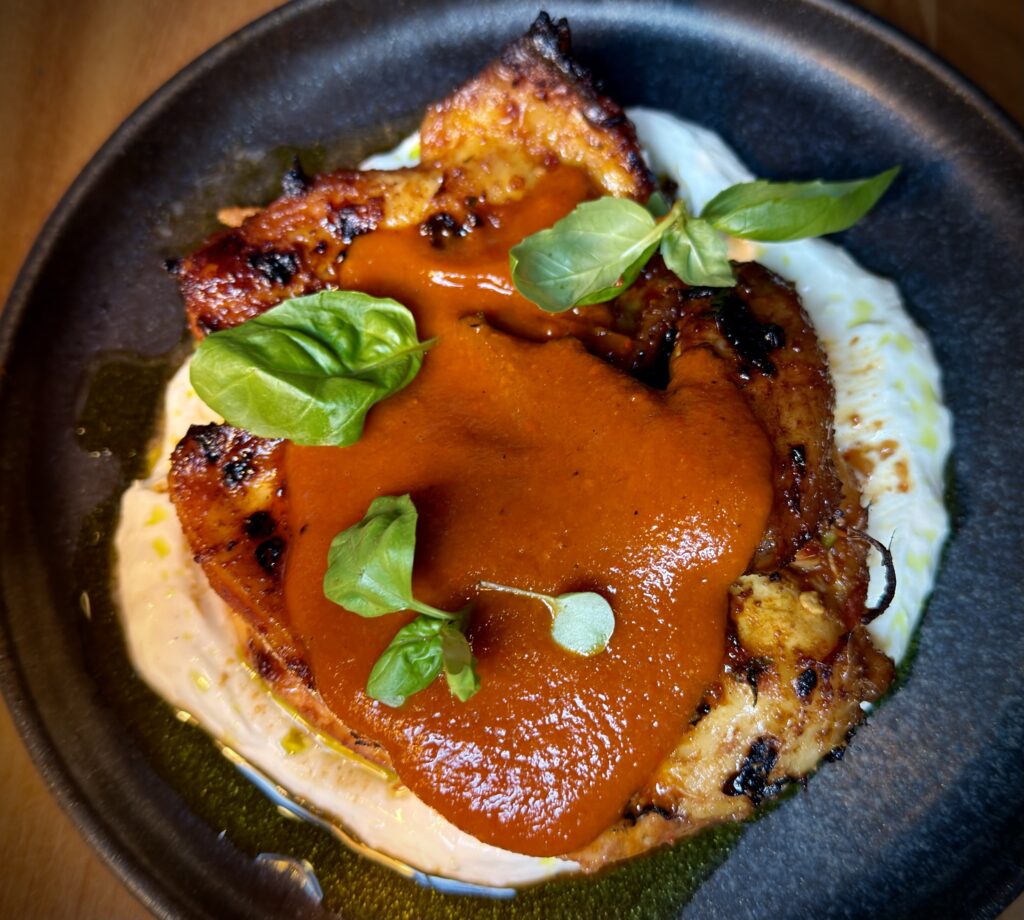
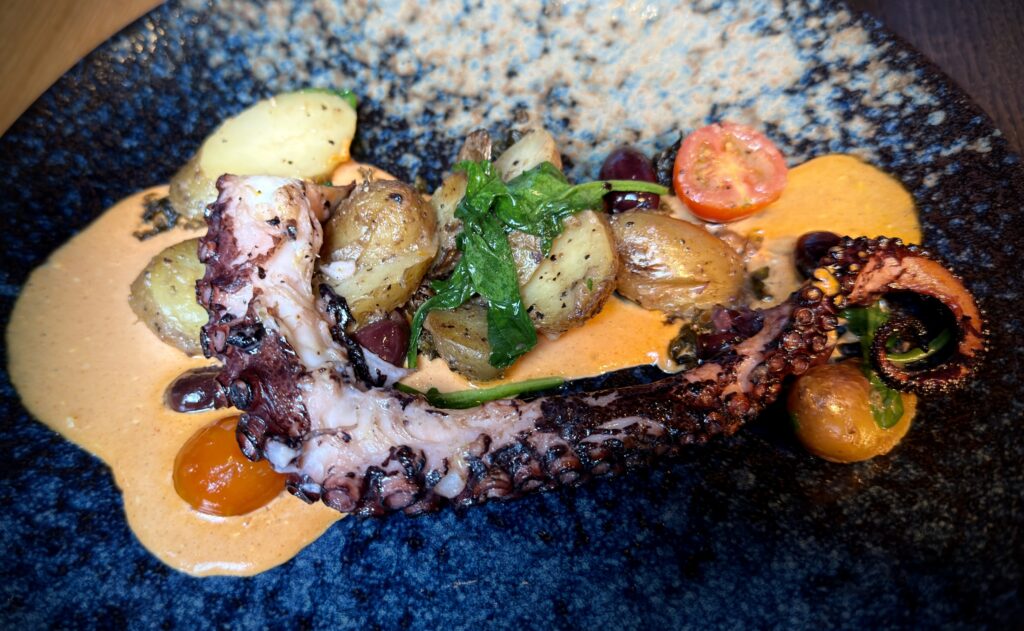
The second night we went into the old town to Väike-Rataskaevu, the smaller, more relaxed sibling of one of Tallinn’s most celebrated kitchens, the kind of cosy medieval room you would walk straight past without a reservation.
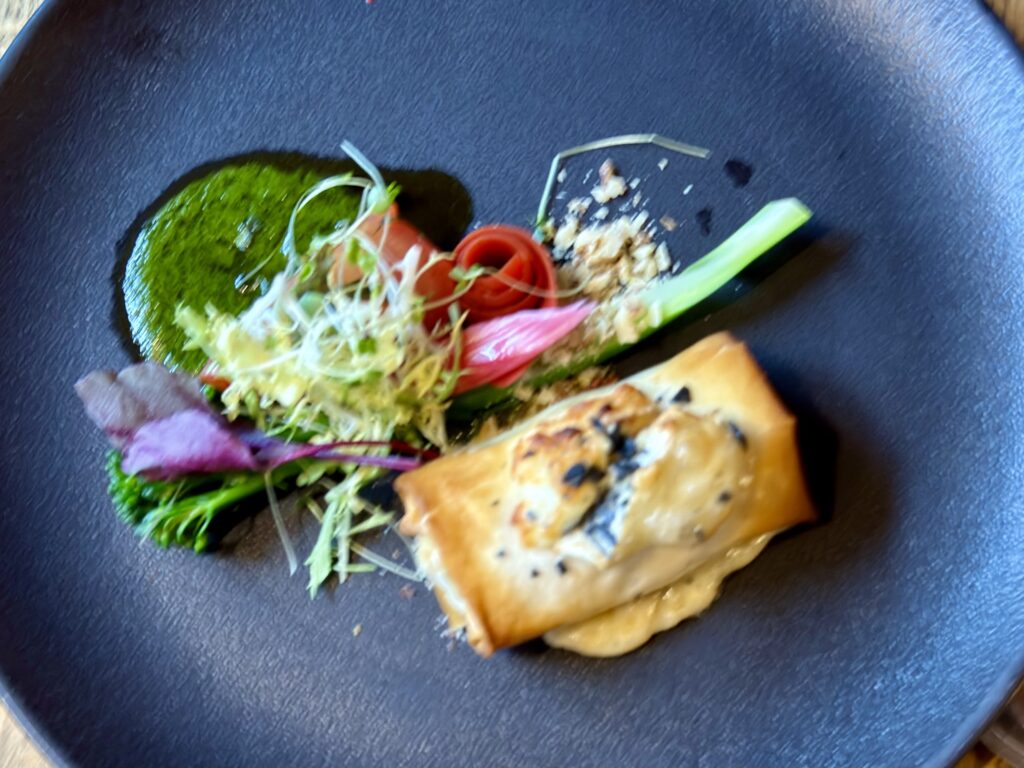
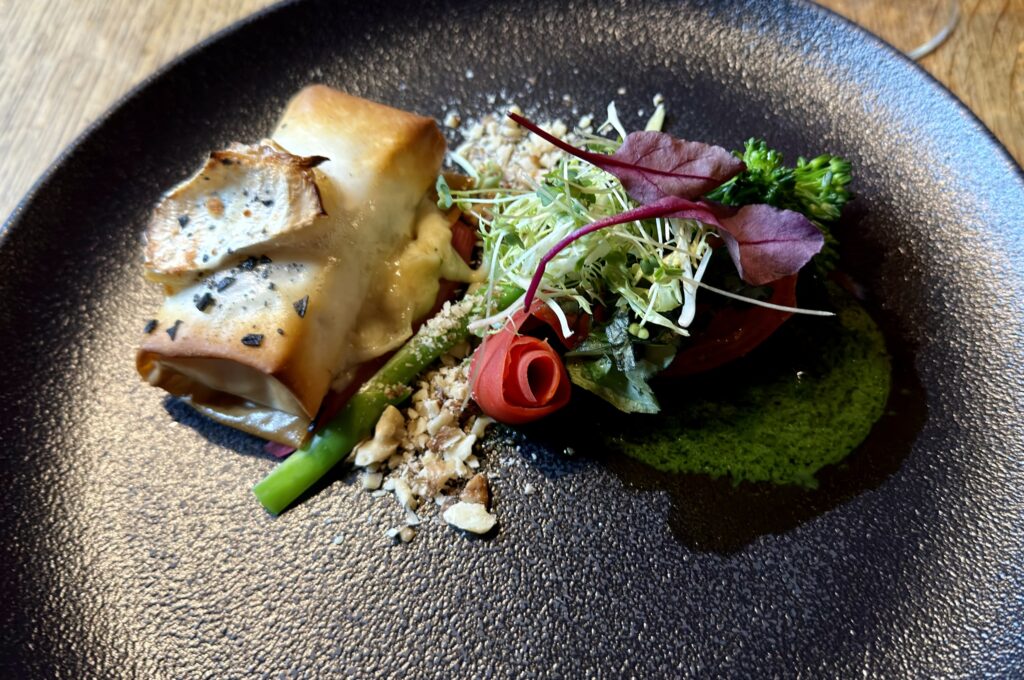
Down in Pärnu we eat in at the Hedon Spa’s Raimond, a seaside hotel dining room leaning on local and seasonal cooking.
A last morning in Pärnu
The trip ended the way it had run all week, with a walk before anyone else was up. If Tallinn’s mornings are medieval stone and rooftops, Pärnu’s are sea light and quiet avenues. The transfer to Tallinn was not until ten, so there was time for one last loop with the camera before breakfast.
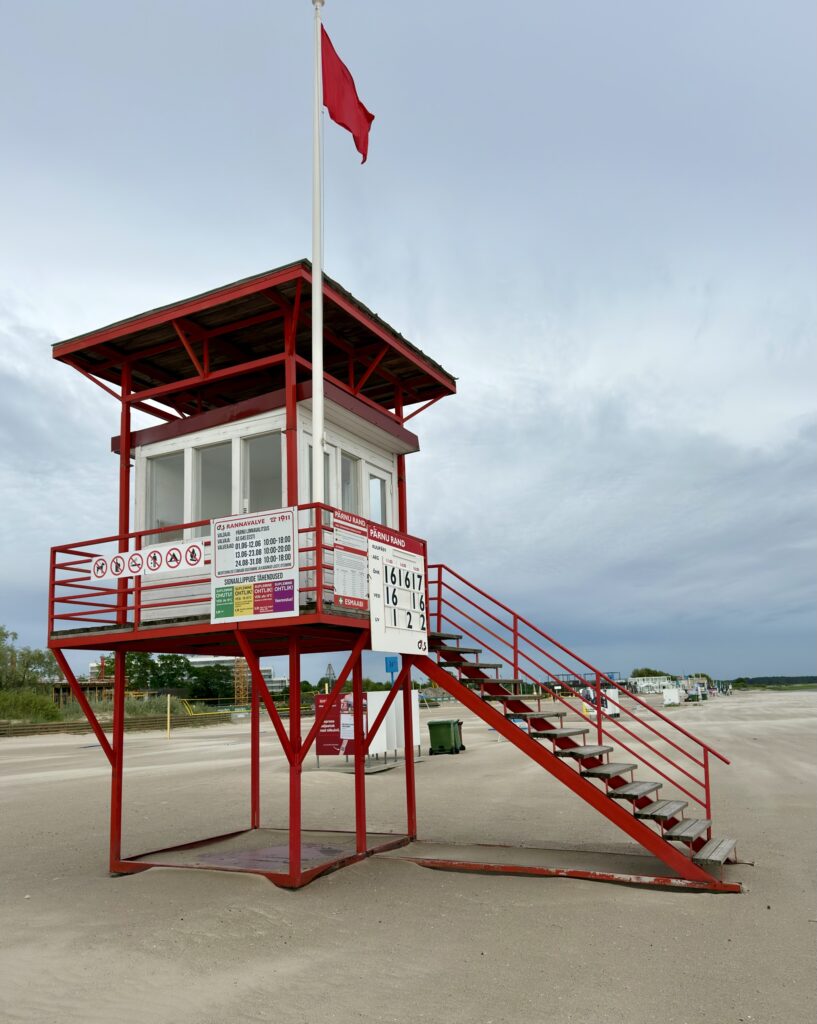
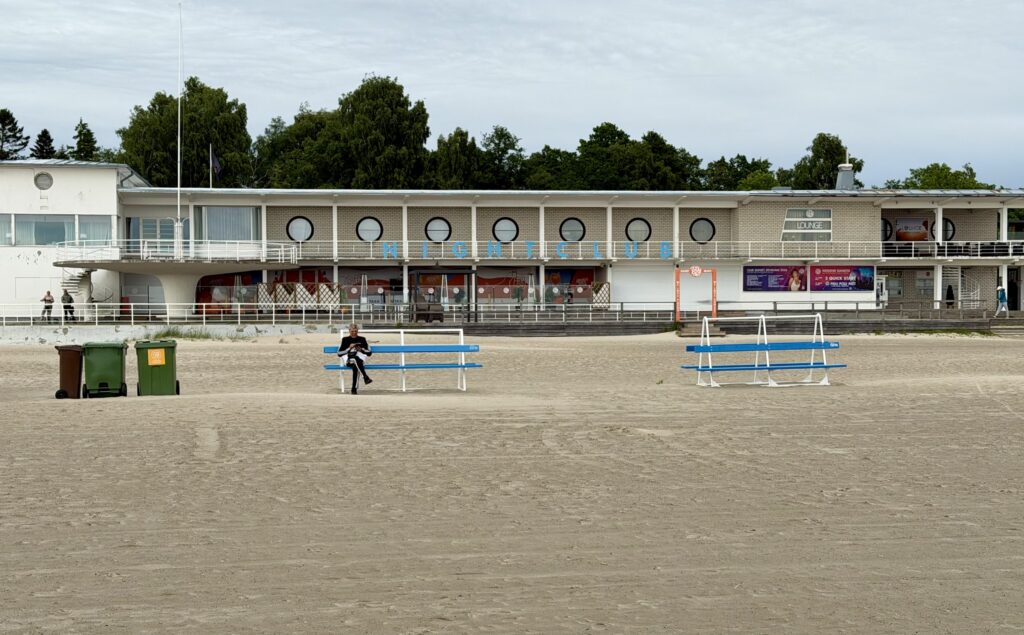
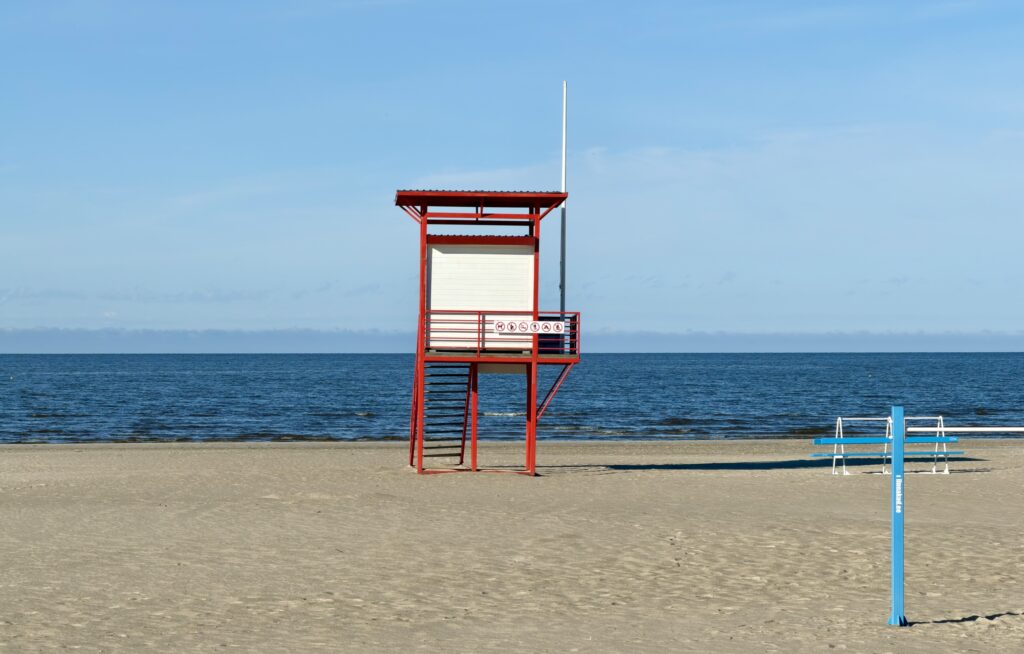
I went down to the water first. Hedon sits right on the beach, and at half past six the long curve of pale sand was empty but for a single early swimmer. The breakwater, the muul, runs a long way out into a flat, pewter sea, and the temptation is to walk the whole thing. Resist it, or you will miss the town. A few photos from the sand, the pier leading the eye out to nothing much, and I had my fill.
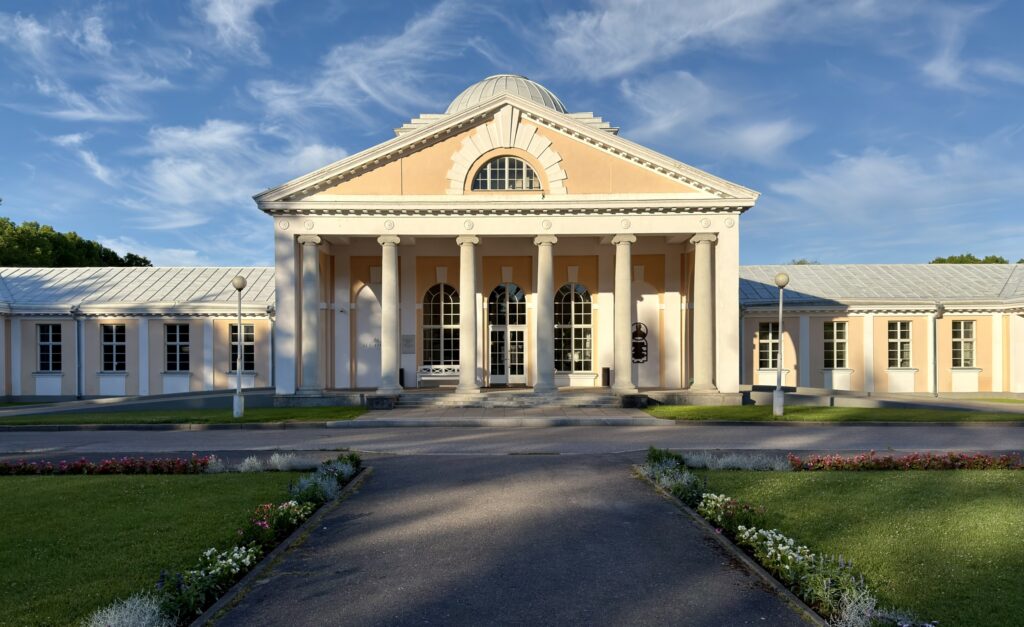
Back from the beach the old spa town shows its other face. The Mud Baths, neoclassical and symmetrical behind their fountain, and the white functionalist curves of the Rannahotell a little further along, are Pärnu’s reminders that people have been coming here to be looked after for a hundred years. Both face the morning sun, which does half the work for you.
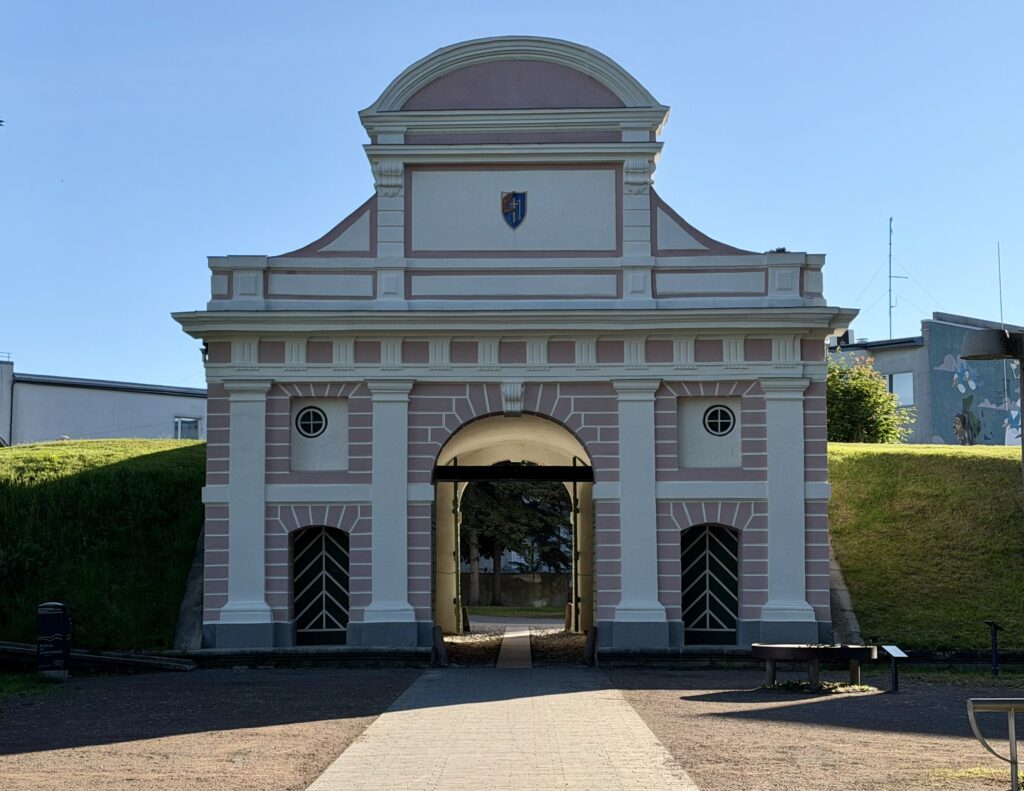
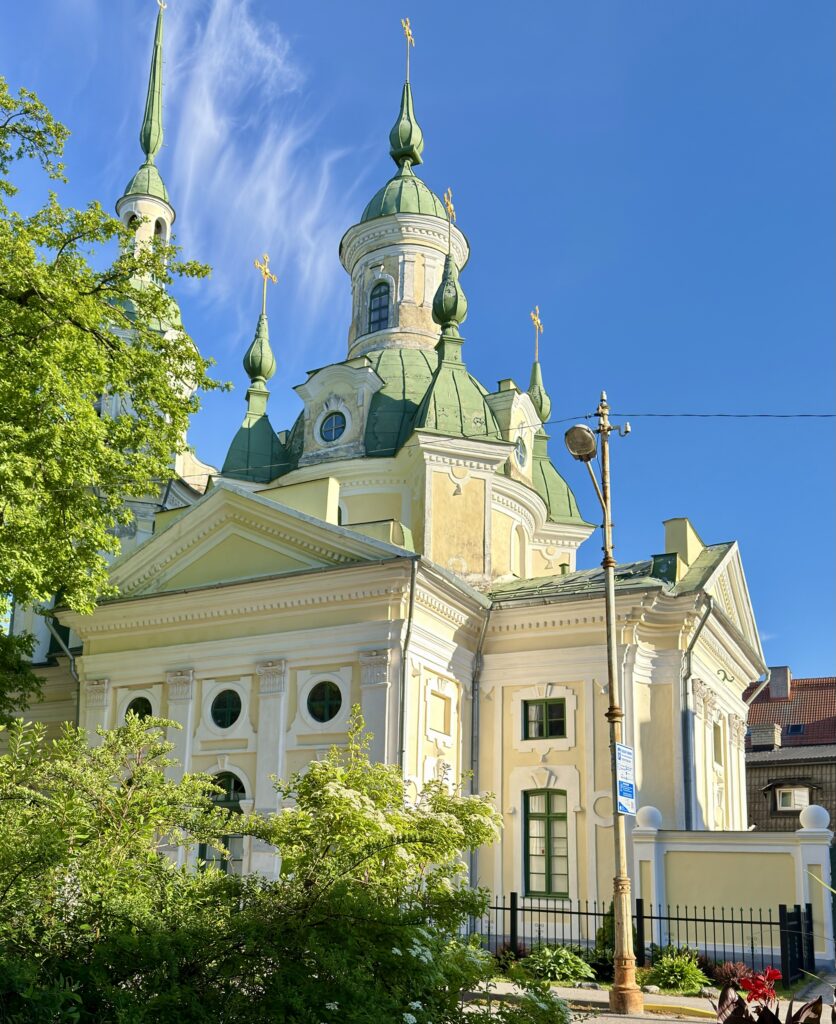
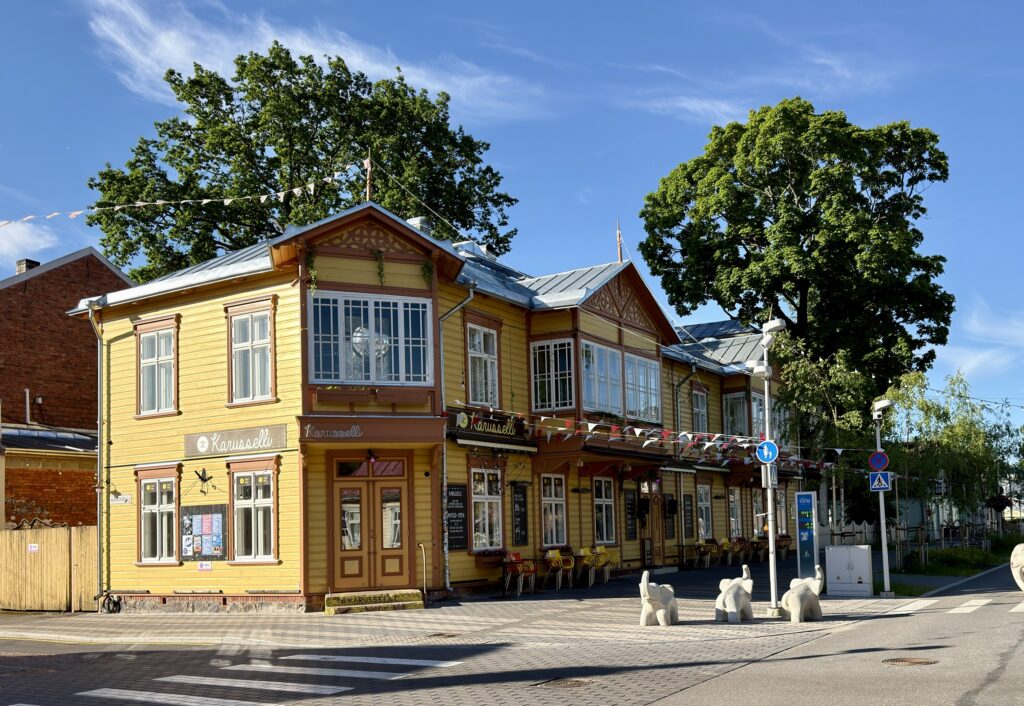
From there it is a short walk inland, through the trees of Rannapark and the willows of the Vallikäär moat, into the old town. You enter, as you should, through the Tallinn Gate, a seventeenth-century bastion gate and a quiet echo of the one I had walked under in the capital three mornings before. Rüütli, the main street, was still shut and still mine, a long perspective of pastel merchant houses and stacked, empty chairs. I lingered at St Catherine’s, its green baroque domes taking the early light, then turned for home down Supeluse, the avenue of wooden villas that runs from the old town back to the sea and sets you down, conveniently, almost at the hotel door.
Coffee, a last breakfast, and the bus to Tallinn airport. Two towns, two early mornings, the same small ritual: the place to yourself, the light on your side, and a round of golf either still to come or, this time, already behind us. Estonia is easy to like at that hour.
The verdict, three years on
So: have the grapes become the wine?
Three years ago Estonia was a discovery. Now it is a destination that knows what it wants. The courses I came back to see have held their quality, and the country has gone and committed to its ambition in the most public way it could, by handing a plateau outside Tallinn to Annika Sörenstam and asking for the best course in Europe.
The details have not changed. A compact capital with the airport almost downtown. A links on the south coast that bites when the wind is up. A spa town to put you back together. Food that keeps overdelivering. What has changed is the confidence. Estonia is no longer asking to be taken seriously as a golf destination. It is simply assuming you will, and getting on with building the proof.
I will be back for the Annika Course. Some grapes you want to taste twice.