Play It Again, Sam – Golf in Morocco

Translated by AI
The picture pops into my head in all its black-and-white glory. Bogart stands there with a cigarette in the corner of his mouth, leans over his golf bag and says with full authority: Play it again!
I have just hit my tee shot on the first hole at Royal Dar Es Salam in Morocco. After first teasing me with a crisp click and a nice climb, the ball returns to its customary flight out to the right. I long to hear Bogart’s voice rasp out the classic line: Take a mulligan.
Five courses, five unique experiences
When you travel to a country where golf is relatively new, the courses are often very similar. Someone has come up with a winning template, and the courses have been churned out one after another, each one much like the last.
Not so in Morocco. Over a few intense days we tested five courses in four different cities, and every one was a completely different experience. A positive one. We agree with Bogart: Play it again. We’ll be back.
First up: Royal Dar es Salaam
We start in the capital, Rabat. The Dar es Salaam golf club carries the prefix “Royal” because this is where King Hassan II played his golf. The course was laid out as early as 1923, long before Hassan II took back power in France’s former protectorate. But it was Hassan who made golf popular in Morocco.
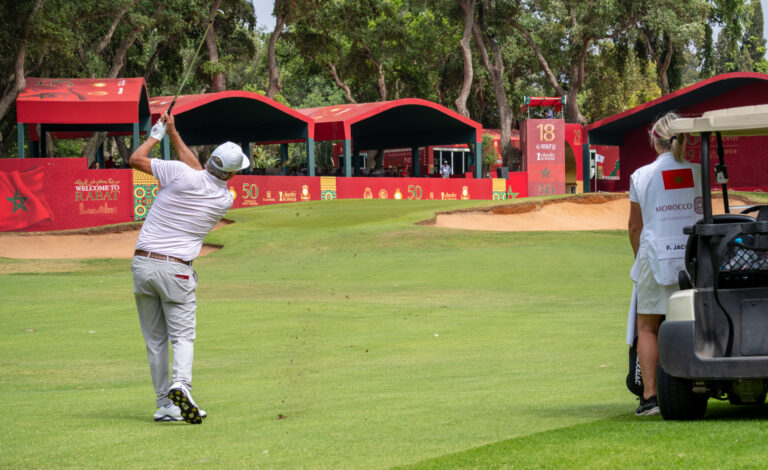
The atmosphere around the course is a little “royal” too. No package tours come here; it is mostly Morocco’s elite and invited guests who play. This is also where Morocco’s only European Tour event, the Hassan II Golf Trophy, is played every year around March. But the course is open to the public: book a tee time, pay a not particularly high green fee and play your way around.
We played the “Parcours Rouge,” the red course, which is the best one and the one the European Tour event is played on. It is a high-class course. Some call it the best in Africa, but we wouldn’t go quite that far. Most holes are fairly narrow and wind between full-grown eucalyptus trees. The atmosphere is calm and sober, and you often feel like the only group on the course. The course is flat and can look quite easy at first glance. It isn’t. It is long (6,427 meters, about 7,029 yards), the fairways are narrow and the greens are well guarded by bunkers. The layout suits golfers of every level. Even the low handicappers in our group were challenged, although I myself got around without losing a single ball.
Before the back nine the course opens up a little, with a lake bordering four holes. The 9th, a par 3, is played to an island, a welcome change after a few hours in the “forest.” More water awaits on the following holes, but it doesn’t really come into play that much.
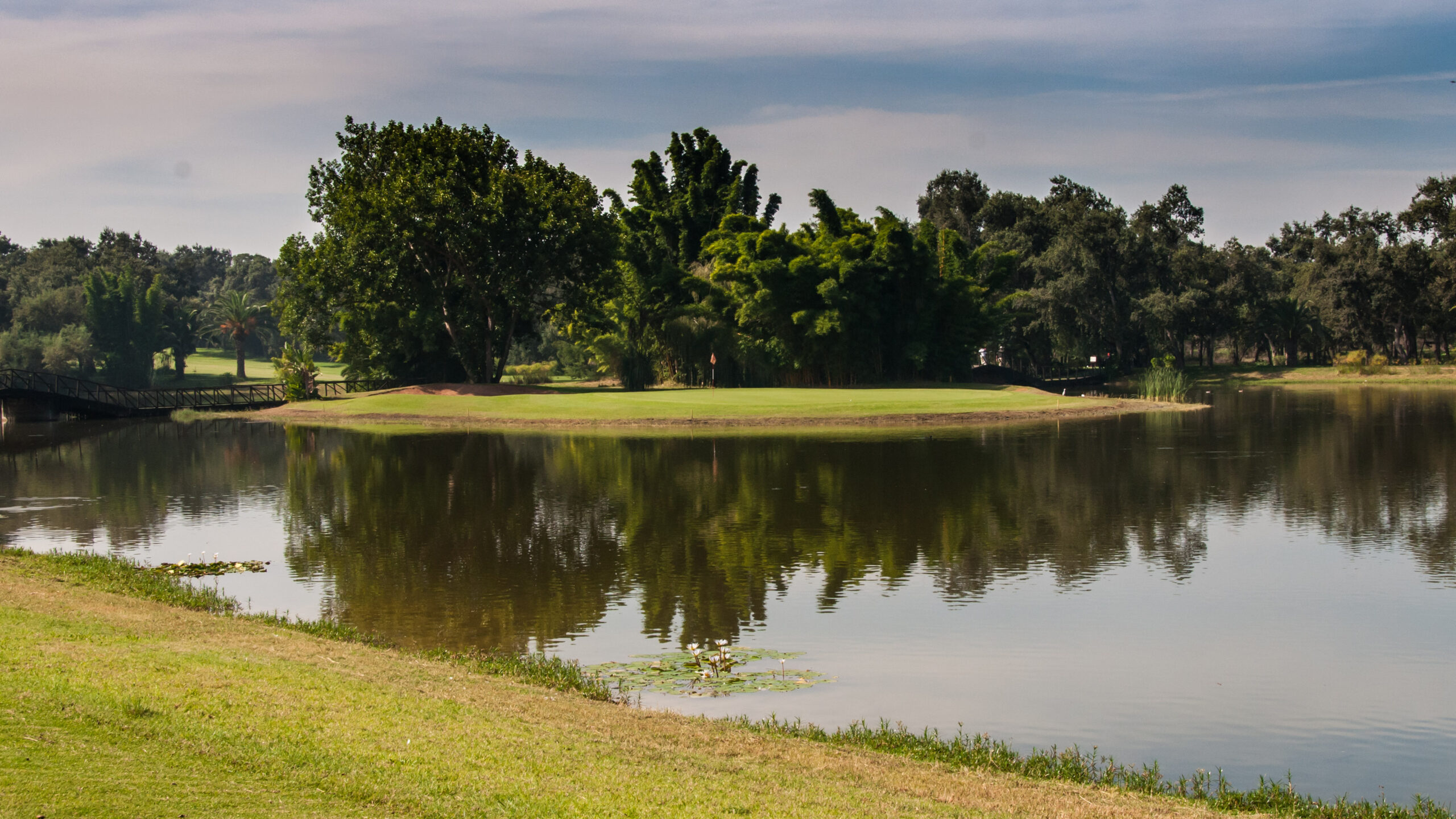
As befits a “royal” course, the clubhouse lacks nothing. The food is first class, and so is the service, as soon as you set your patience meter to Moroccan mode. There’s no point being in a hurry. Play the round at whatever pace you like, but make sure the rest of the afternoon holds no pressing engagements. Enjoy the food and the surroundings, switch off your phone and lean back with a drink in your hand.
Marrakech
Crosby, Stills & Nash sang about the “Marrakech Express” back in 1969. Forty years later I am sitting in the back seat of a minibus for the five-hour highway transfer to Marrakech. “Express” is not the first word that comes to mind. Times change. Marrakech is now a modern city of a million people, complete with an international airport. If you are coming here, it’s best to fly, because distances in Morocco are long and the roads vary in quality.
But in Marrakech the medina is still there, with its big central square, Djemaa el Fna. Here you’ll find snake charmers and jugglers, food stalls and dancing boys, all surrounded by hotels and cafés on one side and the Marrakech souk, the traditional African market, on the other. Or so I’ve heard. We didn’t have time for the medina; we were here to play golf!
Amelkis Golf Club
There are several fine courses around Marrakech, including Palmeraie GC and Marrakech Royal GC, but this time we chose Amelkis GC.
Amelkis is a modern-style course with plenty of water and bunkers. One of the low handicappers in our group rather unkindly called it a typical “Florida course,” perhaps because he knew it was designed by an American, Cabell Robinson. And it certainly resembles courses you find in Florida, but we didn’t think that was a bad thing. On the contrary, the course was varied and in excellent condition, with the possible exception of the greens, which were a little bumpy.
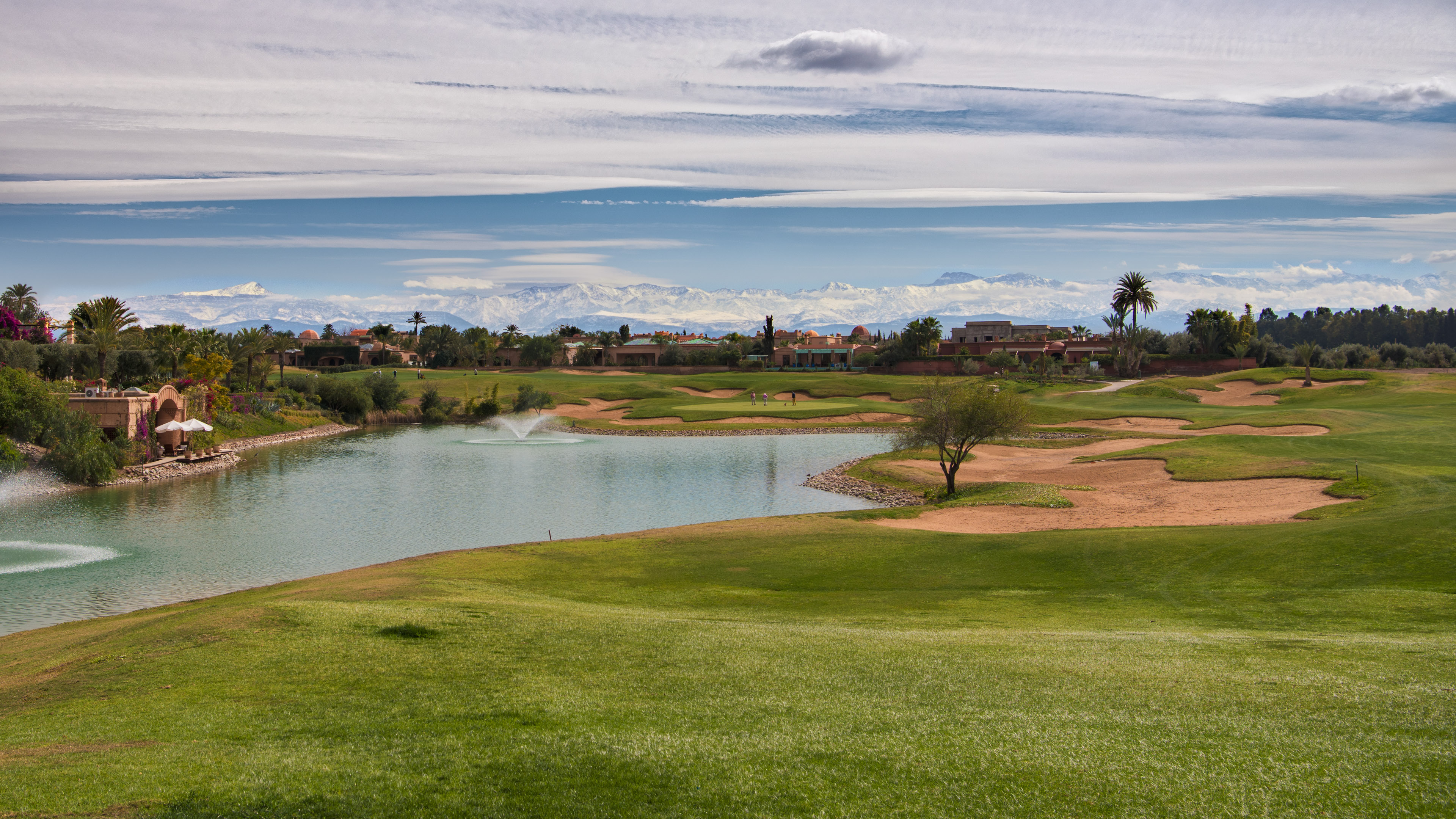
The course is relatively easy to play (we didn’t manage to lose a single ball) but not boring. The back nine is the most beautiful, with lots of water and more interesting holes. The course suits golfers of all handicap levels and is an excellent choice for a golf vacation.
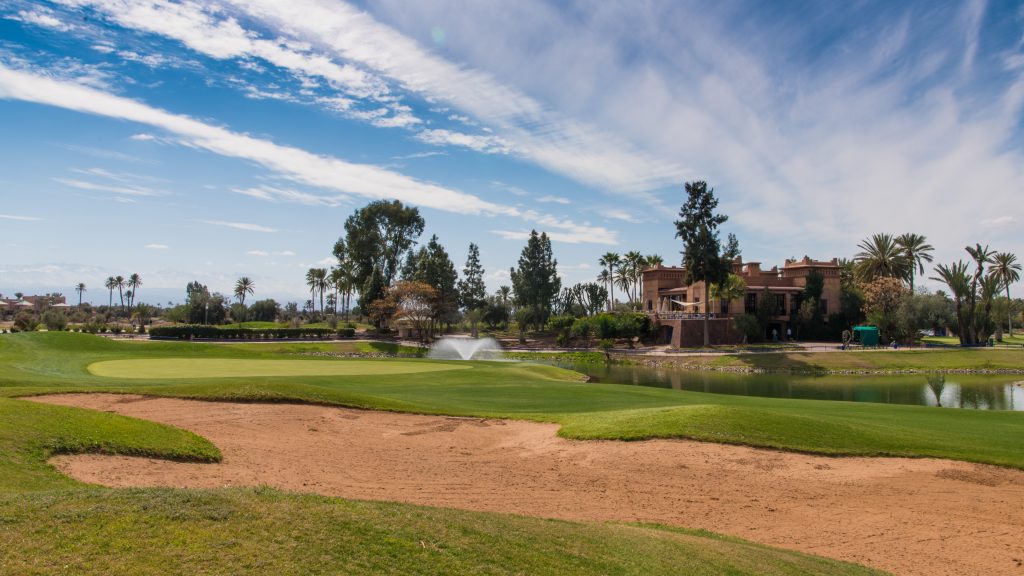
Lunch after the morning round is best taken on the outdoor terrace overlooking the 18th green. The food is excellent, but watch out for the wine. When we ordered unspecified red wine with our meal, we were a little surprised (to put it mildly) when the bill came and a bottle of Moroccan wine cost the equivalent of more than 40 euros (about $50). In other words, read the wine list before you order.
After golf we did actually make it into the medina, but instead of mingling with ordinary people we went to the Mamounia Hotel, inside the medina walls but in a completely different world. Winston Churchill invited Roosevelt here for a few days of R&R during World War II, Alfred Hitchcock filmed in the lobby, and celebrities such as Chaplin and the Rolling Stones have stayed here. The hotel has just been renovated for 176 million dollars, and it shows. The utmost luxury everywhere. Treat yourself to a stroll through the hotel and the garden. It’s free, unlike the rooms, which start at around 500 euros (about $580) a night. Then again, there are four staff per room.
Toward the coast
After the desert heat of Marrakech, it was nice to take the “express” to the coast and the charming art town of Essaouira. A new highway may one day turn Essaouira into a suburb of Marrakech, but for now it is a bumpy three-hour ride.
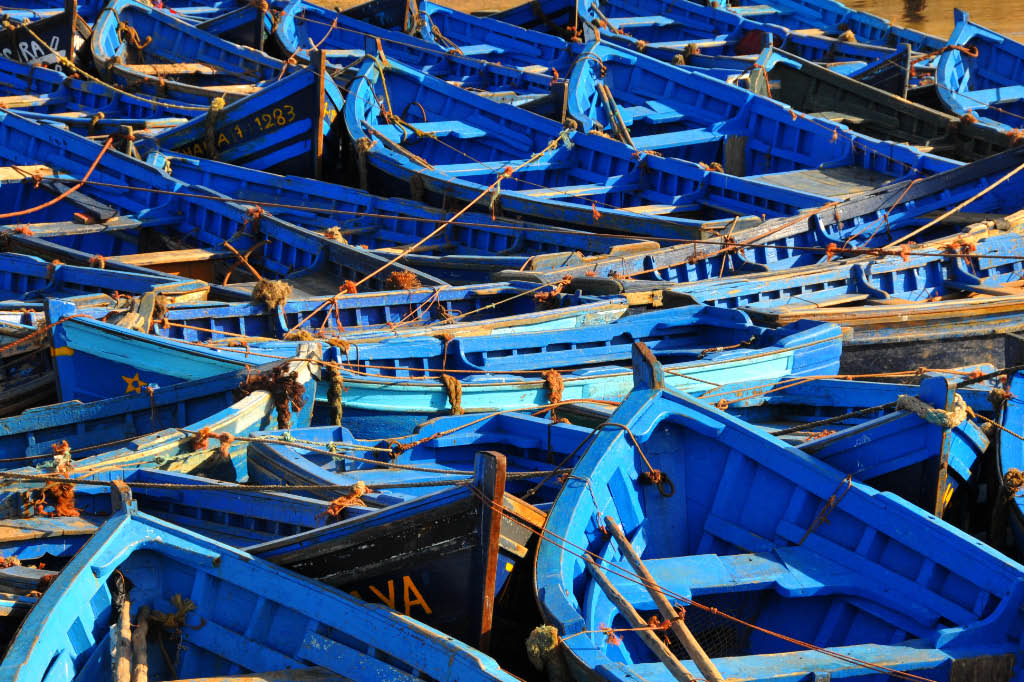
Essaouira was once an important port, where goods arrived all the way from Timbuktu via Marrakech for onward shipment to Europe and the New World. Today it is something of an artists’ town, with many galleries, and it is also called “Morocco’s Woodstock” because of the music festival that draws artists from all over the world every June. Jimi Hendrix, among others, put Essaouira on the map. The pace is slow, the climate pleasant, and the beach is long and sheltered by the island of Mogador. There is also a medina with lots of small craft shops. All this we learned from a Swedish art society we ran into at the hotel breakfast. We didn’t see the town ourselves, because we were here to play golf.
The world’s best free course
A few kilometers south of Essaouira we find Golf de Mogador, a new resort and golf course designed by Gary Player. Most of it is still a building site, but the first of two planned 18-hole courses is completely finished. And the green fee was definitely in our price range: free. But you have to hurry. The free offer only runs until the end of October 2009. After that the price goes up to 30 euros (about $35) until the hotel is finished, and then to 70 euros (about $80).
We’ll say it straight away. This was the best of the five courses we played on this trip. The layout was both interesting and challenging without being too hard for the average handicapper. The low handicappers in the group liked it too, a real challenge from the black tees. Simply a course for everyone. And in wonderfully good condition (80 greenkeepers saw to that), especially considering that it had only just opened.
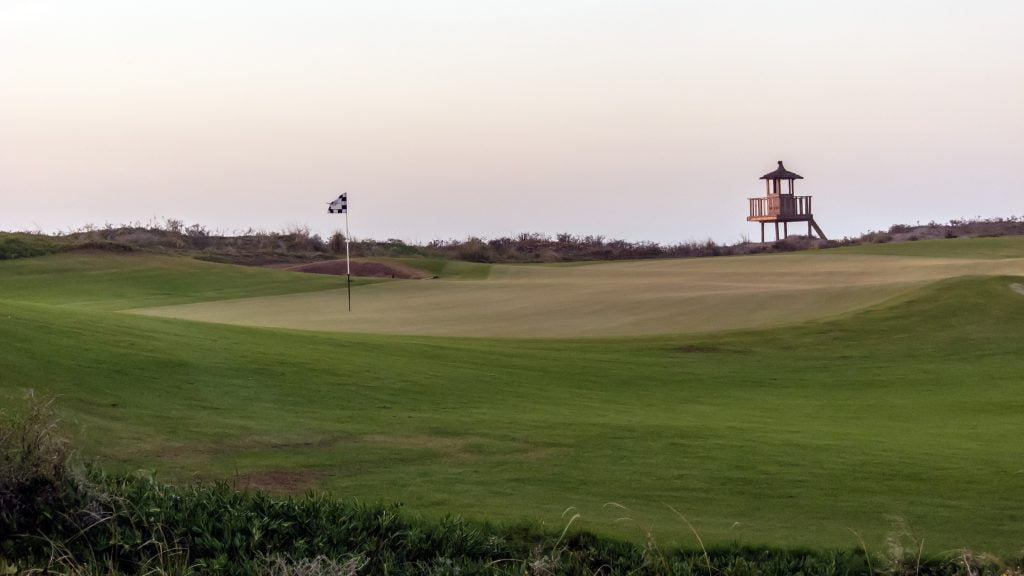
The course lies close to the Atlantic, and several holes have sea views, especially the 17th, where you can see the town of Essaouira and the island of Mogador. The only fly in the ointment was the two closing holes, the 17th with a blind tee shot and the 18th with a blind approach. No major objections, but a bit of a shame on an otherwise nearly perfect layout.
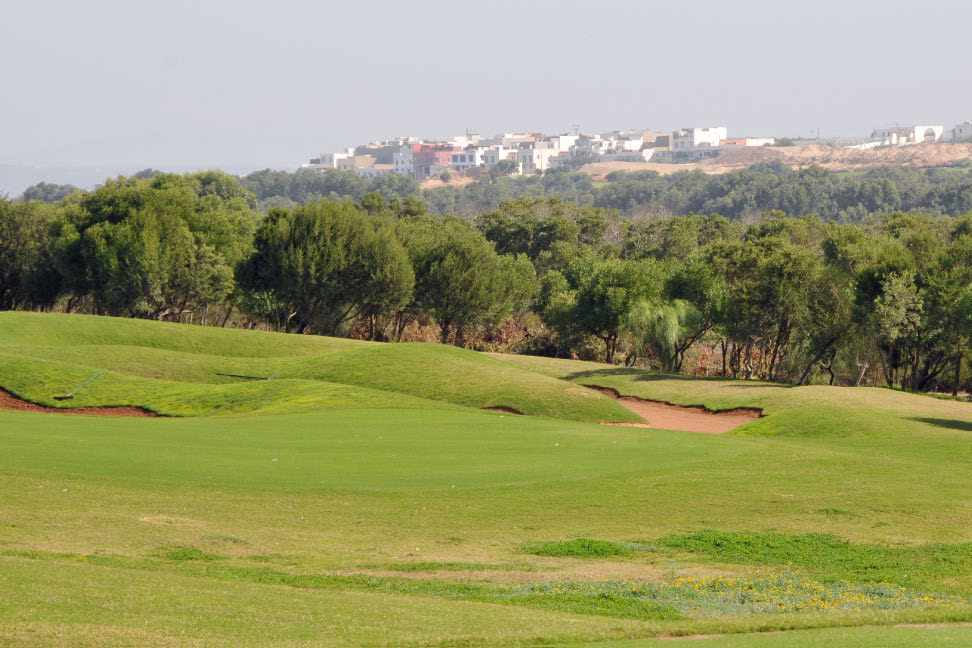
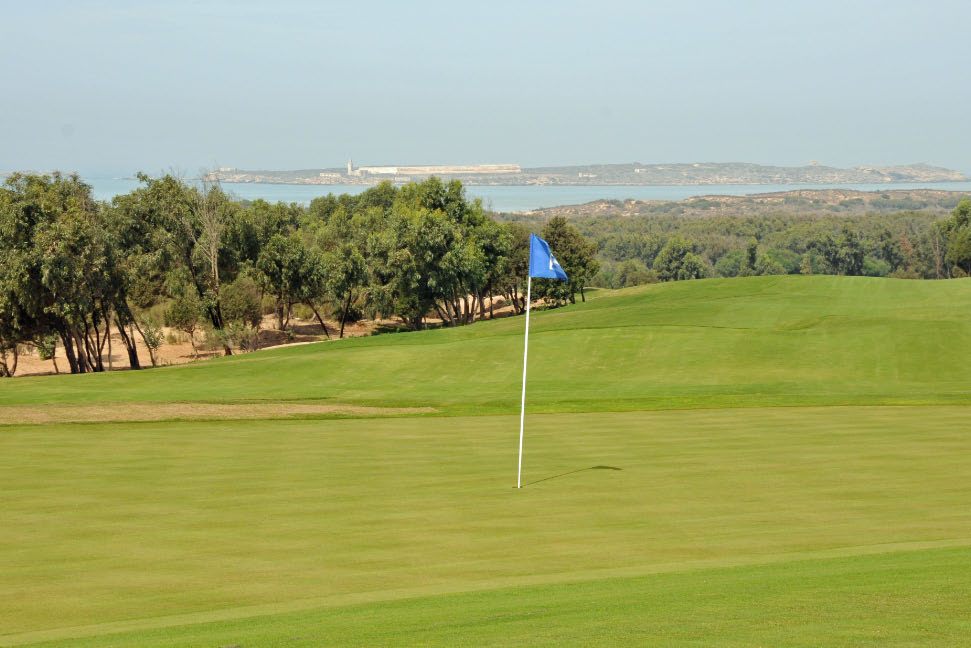
Another 18 holes are under construction. They are rumored to be even better, a little higher up with fantastic views. The hotel is also being built at full speed, and next to it a small Provence-style village is planned, open to everyone, not just golf guests. It promises to be an impressive resort.
Essaouira is about a 2.5-hour drive from Agadir.
American mall, Las Vegas, or Ireland?
Last up on this trip was Mazagan Resort, a mega-project by the controversial Sol Kerzner (Sun City), Dubai World (Jumeirah Golf Estates) and, once again, Gary Player. 350 million dollars have been invested in the project, which is due to be finished in the fall of 2009.
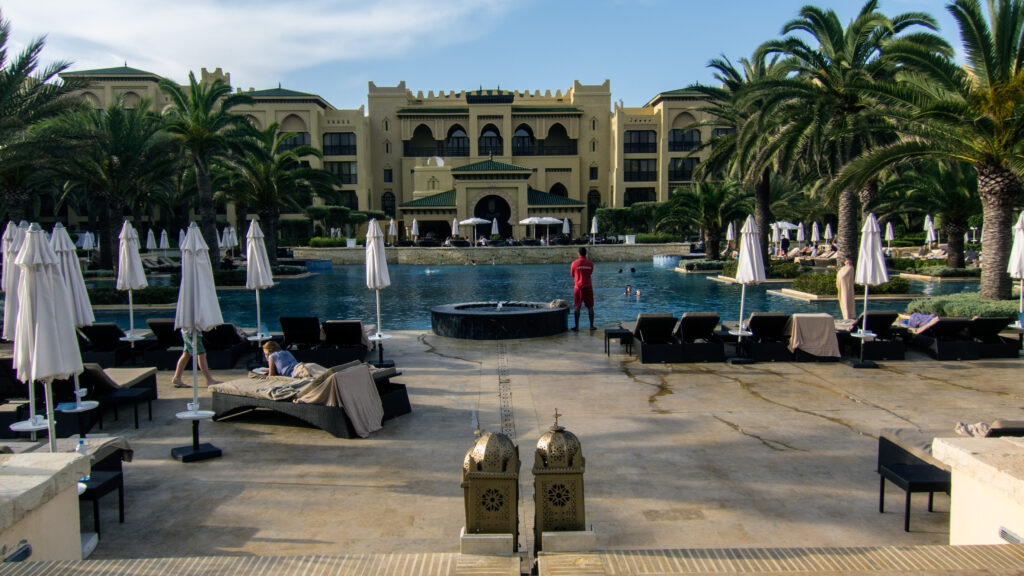
Mazagan lies just north of El Jadida, on the Atlantic coast a few hours south of Casablanca. When you come over the crest and first see the hotel, you think you’ve taken a wrong turn: the whole thing looks like a big American shopping mall, complete with a giant parking lot (who drives here?). Once inside the hotel, the impression changes, and now it’s Las Vegas. Five hundred rooms, marble everywhere, big open spaces, buffet restaurants and a large casino. You’ll want a compass here. I was staying in “sector 7,” as I was informed after I had strayed into sector 2 looking for my room.
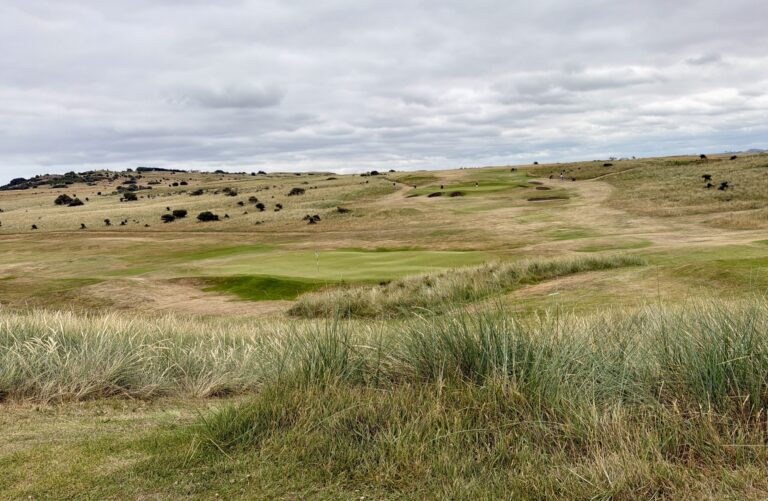
Out on the golf course, the impression changes again. Now it feels like Ireland, only warmer. An impression reinforced by the thick coastal fog rolling in from the Atlantic. Later in the round, when we reached the elevated 13th hole and looked out over the whole course, it again reminded us of an Irish coastal course, Dooks for example. Half the holes run parallel to the coast and have a definite links character. The rest are more like a parkland course. Exactly how it will feel in the end we’ll see in a few years, when the trees and villas are in place.
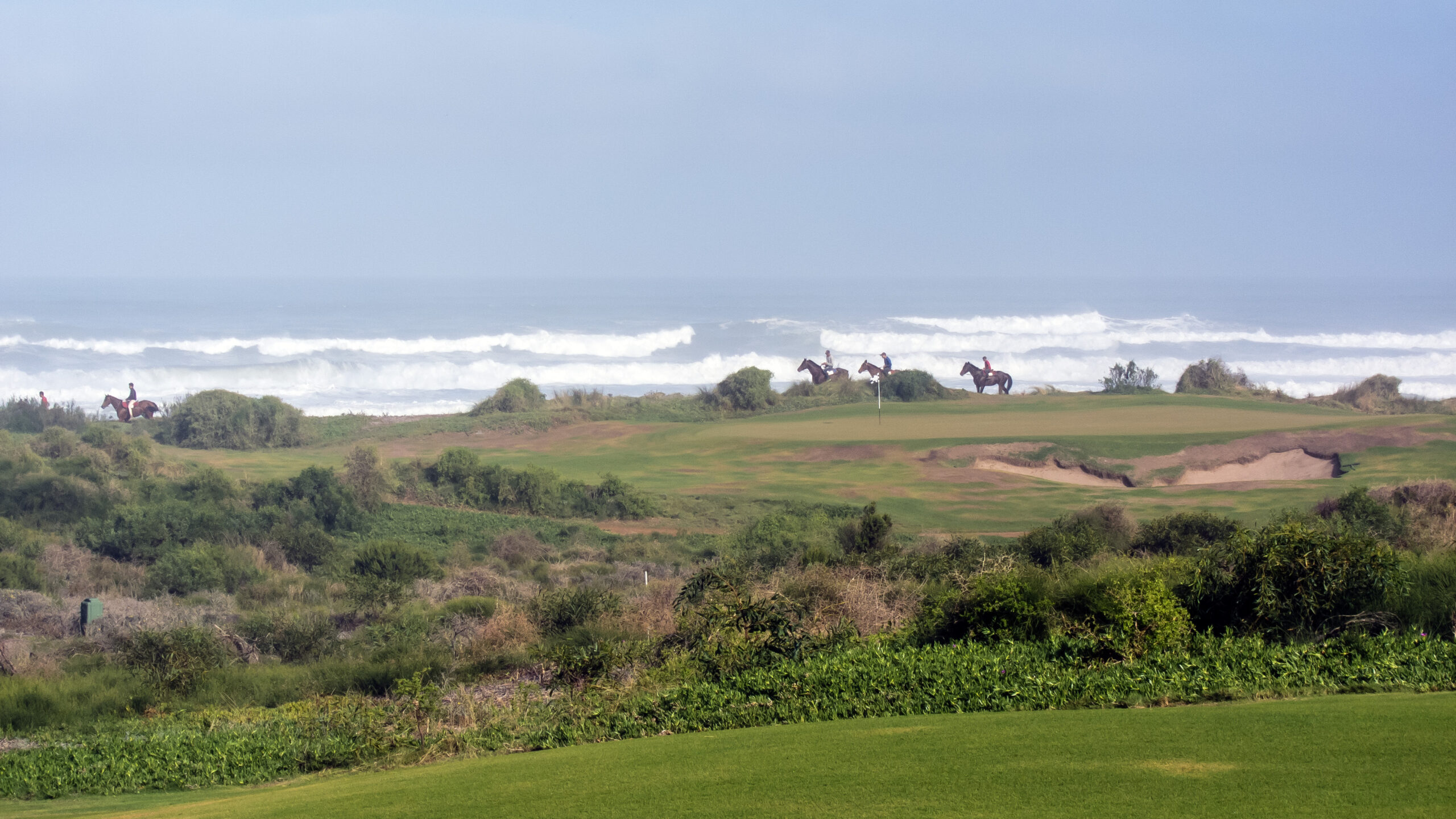
The course is relatively long but not particularly difficult, at least when the wind isn’t blowing. Most fairways are wide and open, without too many bunkers. It’s usually easy to find your ball even if you miss the fairway; the only complication is the tough ice plant that covers parts of the rough. The ball looks playable, but don’t be fooled. Ice plant leaves are “succulent,” which for a golfer is most easily translated as “chewing gum.” One of the low handicappers in our group looked very surprised when, after a fine shot from the rough, he looked up to follow the ball’s flight, only to find it still at his feet a few seconds later.
Mazagan Resort is definitely a course worth playing more than once. And the hotel turned out to be excellent once you had learned your way around. Lots of restaurants to choose from, a fine pool area and a seemingly endless sandy beach.
Extra bonus: Royal El Jadida
Early risers that we are, we squeezed in an extra round on the day we flew home: Royal El Jadida, a few kilometers south of Mazagan Resort.
El Jadida is a charming course on the coast just north of the town. It starts as a woodland course with several exciting holes, many doglegs where you have to play strategically rather than just bash away with the driver. After a few holes in the woods, the course opens up with several water hazards. The holes force you to choose the right club without being too difficult.
The back nine starts with several holes around an artificial lake. The 12th is not for slicers, but if you hit it straight you are rewarded with a short approach. The green is well guarded by bunkers, though.
The last three holes run along the Atlantic coast. The 16th is the signature hole, with a beautiful view of the sea behind the green.
Next to the course is the Hotel Sofitel, built in Mediterranean villa style. If you can afford it, stay in one of the two-story suites, with a view over the town of El Jadida from a balcony the size of a tennis court. The regular rooms aren’t bad either, and prices are moderate. An excellent base for a golf week.
Unfortunately the greens were not in their best condition when we were there in October 2009. The club says it is working on it, but it may be a good idea to check before you go.
Morocco as a golf destination
So what do we think of Morocco as a golf destination? All in all, a very good choice. Every course we played was well worth another visit. The hotels were all good. The one fly in the ointment, as we mentioned, was the expensive alcohol, at Scandinavian price levels in both hotels and golf clubs. A little sad to enjoy a few beers after the round and then get a hefty bill.
We don’t recommend driving around as much as we did. The roads vary in quality and the traffic is at times very heavy. Best of all is probably a golf package to one of the cities, letting the local golf host guide you to the courses.
This article by Bo Sjosten was originally published in Swedish on our sister site Golfjournalen.se. It has been translated by AI.