Freddie Jacobson: “I Play Smarter Golf Now” – Top 10 at the 2026 Hassan II Trophy

Translated by AI
After a share of ninth place at the 2026 Hassan II Trophy, Freddie Jacobson sums up a week of strong play, painful three-putts and a course that punishes the slightest mistake. He also talks about life on the senior tour, the fitness regime behind his form, and how his real estate company in Kungsbacka, Sweden, has become a second career alongside golf.
You’re coming off a share of ninth place at the Hassan II Trophy. How would you sum up the week?
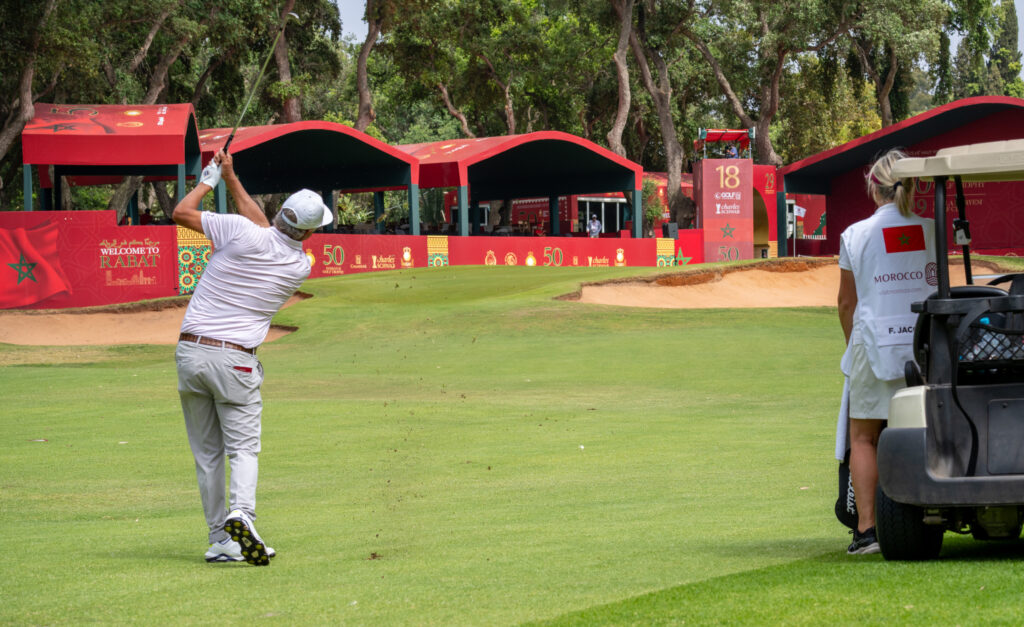
Freddie Jacobson: I actually played really well, especially today. What bothers me most is a cheap three-putt on the first hole and a few short birdie putts that didn’t drop. When you hit really good approach shots, you want to get paid. I’d have liked to hole the putt on 16 as well; it was a tough hole in the wind, and that putt lipped out. At the same time, it feels like a good score was within reach. The gap to the top isn’t huge, even if the leader pulled away a bit. To be up there you need four or five under par a day, and if you only manage two, you slide down the leaderboard.


What was the big difference in your game between today and yesterday?
Freddie: There was a bit more wind at the end today, but otherwise conditions were pretty similar. I played the front nine better today; I could easily have been three under there. Instead it was about one under, plus a bogey on 10. My game was solid, and that’s probably what I’ll take away: there was a low score in there.
You were known as a very sharp putter when you broke through. How do you see your game today?
Freddie: I’m still strong around the greens and with my irons. The difference from before is that I’ve become better off the tee. I make fewer mistakes off the tee and I’ve kept my length thanks to good fitness training. At the same time, living in Sweden, you notice that you lose a bit of touch in the short game during periods when you can’t practice on grass. But this week I only made two bogeys where I missed the green; the rest came from three-putts, and of course that costs you.
You talk a lot about strategy and focus. How has the way you play golf changed over the years?
Freddie: I play smarter today. I’m still aggressive, but there’s more thinking behind the decisions. I put a lot of emphasis on being present on every shot and not throwing shots away through carelessness: taking your time, going through your routine. At this level the margins are in the small things. If you start rushing, things can slip away quickly, and then it’s hard to turn around.


How much do the heat and the course affect your game?
Freddie: Quite a lot. When it’s 35 degrees instead of 20 [95°F instead of 68°F], I hit full wedges maybe five to ten yards farther, sometimes more downwind. You have to adjust for that. Then there are new grass types, new sand and different firmness on the greens every week, so you always spend extra time getting a feel for pace, roll and how the ball reacts around the green. The course here really separates the field, with undulating greens and small plateaus, so you have to be on the fairway and have good distance control with your irons. Play badly and you get punished; play well and there are plenty of birdie chances.
Your fitness looks very structured. What does a typical tournament day look like physically?
Freddie: I often do a gym session in the morning and then a shorter workout out at the course before I start hitting balls. I focus on Achilles tendons, calves, hamstrings, hip flexors, quads and mobility in my back. The goal is for my body to feel as similar as possible every day. After the round it’s stretching, and ice if possible. Even if you ride in a cart between a lot of shots, you still walk six or seven kilometers (about four miles), and with two workouts that’s quite a challenge for the body. I’ve got better at this over the years; when I was younger I had neither the same routines nor the same knowledge.
How would you describe life on the senior tour?
Freddie: It’s more “back to basics” compared with the main tour. Most players travel with their caddie and a small team, not a full entourage. That makes it more social between the players, especially before tournaments and in the evenings. But don’t think it’s any less competitive; everyone here is an extreme competitor. When the first round starts, everyone goes into their bubble. For me that’s a big part of it, continuing to test myself. At the same time, it’s a very good way to keep my body and health in shape.
How important is money to you at this stage of your career?
Freddie: Honestly, I wouldn’t travel around like this if there weren’t a chance to make money. I wouldn’t be commuting with jet lag from Sweden otherwise. The tour has been pretty stable financially, and if you’re in the top tier it’s good enough. If you end up in the middle and live in Sweden, it doesn’t add up with all the travel, flights, caddies and other costs. I actually think I average about the same per tournament now as I did on the PGA Tour, and that’s pretty good. The key is to make the most of your first years as one of the “younger” players on the senior tour, while you still have the length.
How long do you see yourself continuing at this level?
Freddie: As long as I stay healthy, my back is OK and I’m enjoying it. I take it a week, a day, a year at a time. I see the first five years here as the most important ones to push hard; after that, everything is a bonus if I can keep the level up. You see good examples in players like Jiménez and Langer, who have shown what’s possible well into later life with the right discipline.
You also run a real estate company back home. How does that fit into the bigger picture?
Freddie: We’ve built up a real estate company in Kungsbacka over almost 15 years. Among other things, we’ve built a store for Coop, a building that the STC gym chain and the regional authority, Region Halland, are now moving into, and more space to be leased. During the years I played less golf, the full focus was on construction, tenants and renovation. It’s been a lot of work, but also a way to put down roots at home after many years abroad. Now I have both tournament golf and the business, and I really enjoy that combination.

Text and photos: Anders Ellqvist and Bo Sjosten
This article by Anders Ellqvist and Bo Sjosten was originally published in Swedish on our sister site Golfjournalen.se. It has been translated by AI.