
Another Links Gem in Northwest Ireland

Translated by AI
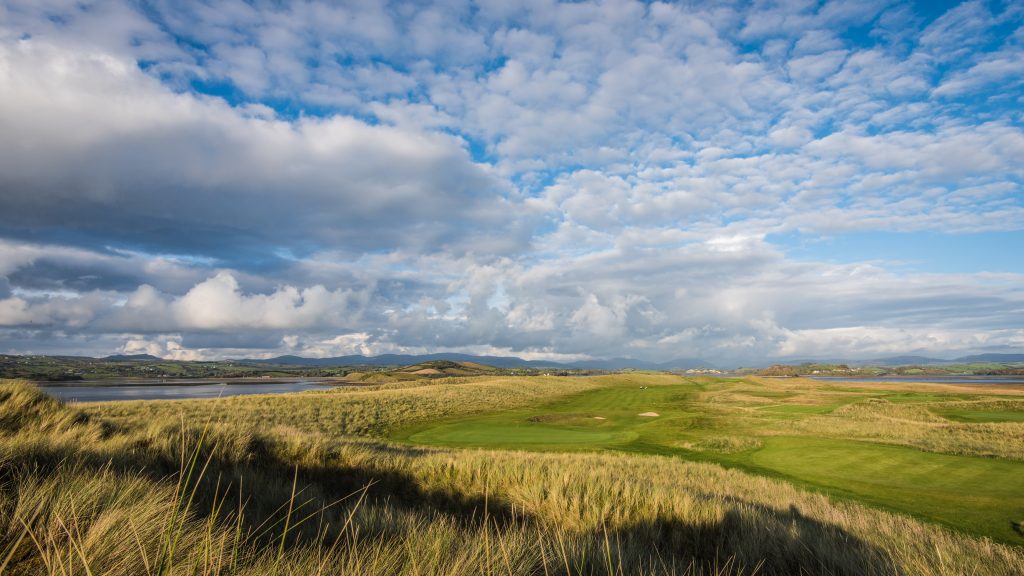
On our road trip along the Wild Atlantic Way in northwest Ireland, we have now reached the club named after the county itself: Donegal Golf Club, also known as Murvagh after the beach that borders the course.
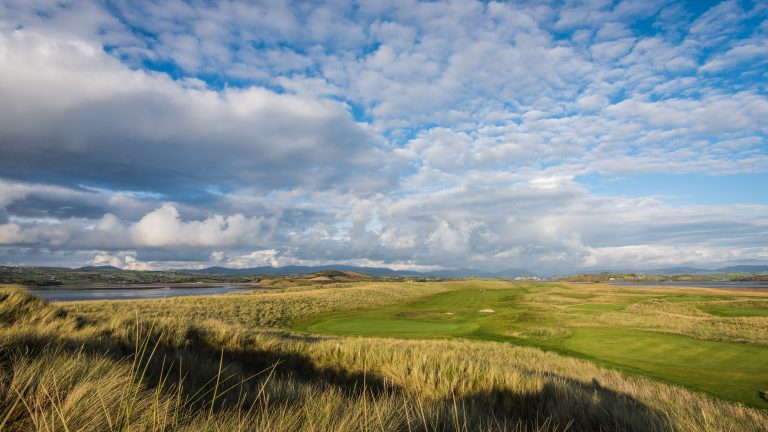
For the third day running, we come to a course where Pat Ruddy has had a hand in things. Here at Donegal Golf Club, too, he was called in to modernize the course in the 1990s, including the bunkering. We think we’re starting to get the hang of his style: if you look down the line to plan your next shot and there’s an area you can’t quite see, there’s a bunker there. Crafty, but a little exciting at the same time. Another of Pat’s contributions was to lengthen the course, which now measures a full 7,200 yards from the back tees. Think twice before choosing the back tees, especially if there’s a bit of wind. And there almost certainly will be: the course lies on a small peninsula, fully exposed to the westerly Atlantic winds.
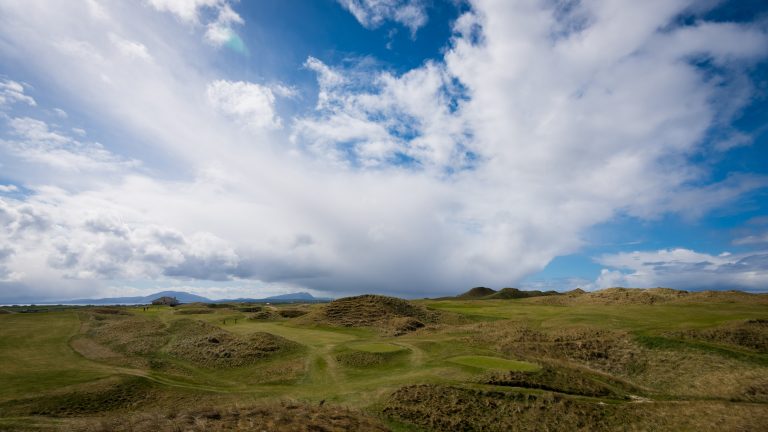
The course was designed in 1973 by Eddie Hackett and consists of two 9-hole loops, the front nine running counterclockwise on the outer loop and the back nine clockwise inside it. In other words, you get to play with the wind from every possible direction.
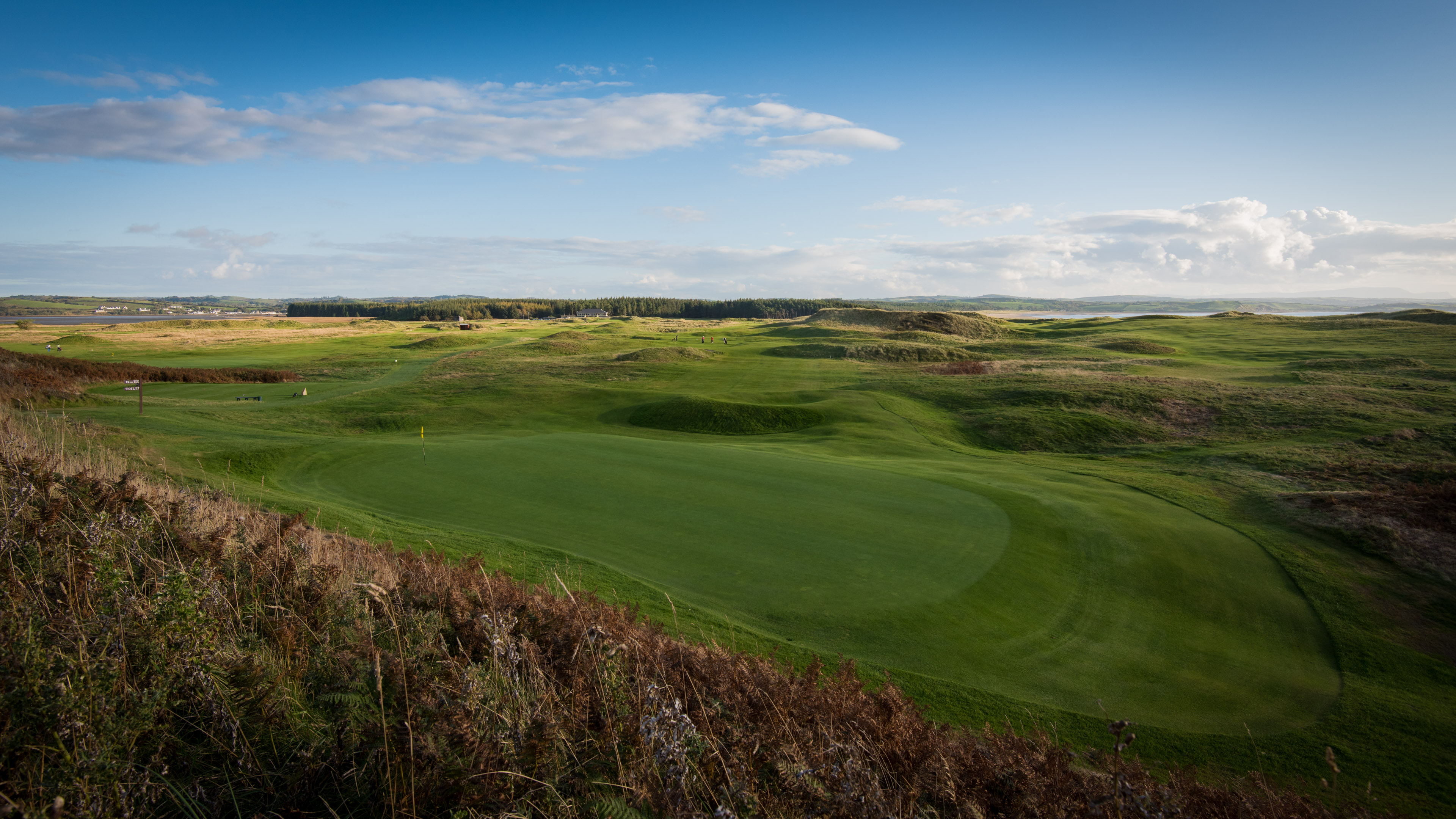
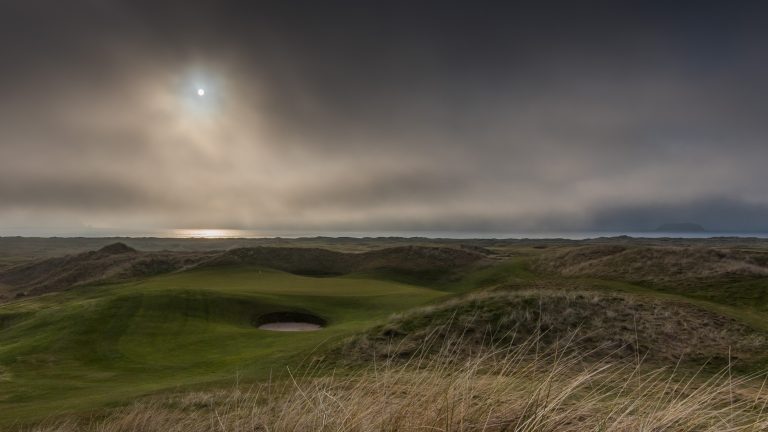
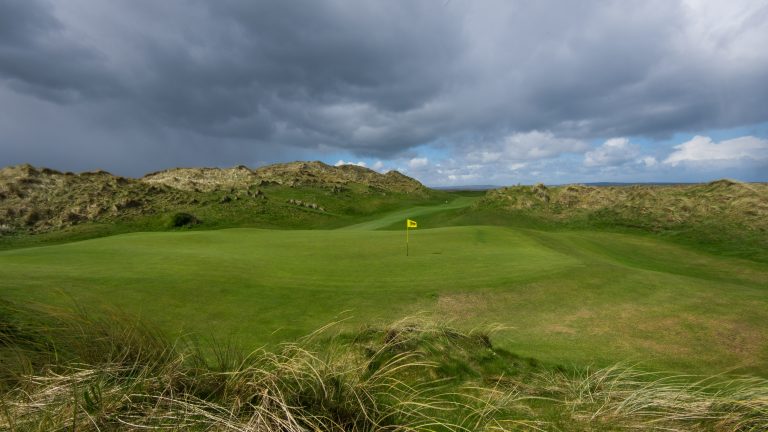
The course starts a little tamely with a few “meadow holes” farthest from the sea, but from the 5th it turns dramatic. Here we enter the dunes, and golfing life immediately gets more complicated: a par 3, 177 meters (194 yards), uphill, to a half-hidden green with a ravine in front and tall dunes all around except for a narrow opening. And, of course, bunkers on the right that you can’t see from the tee… Into the wind, club selection gets difficult; you may not even have a club that gets there. And there are no alternative routes. But it’s a beautiful golf hole, and we wouldn’t change a thing even if we could.
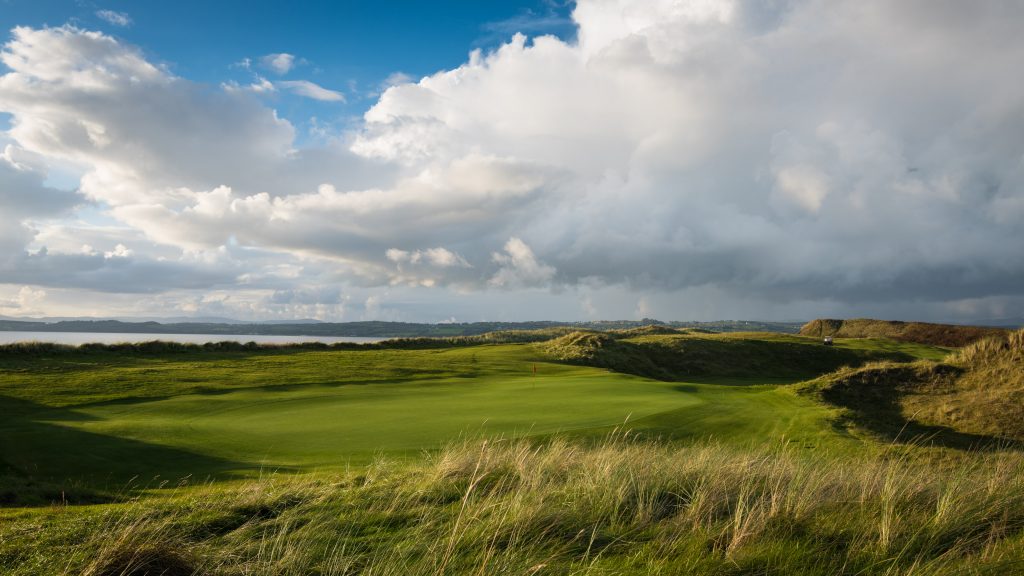
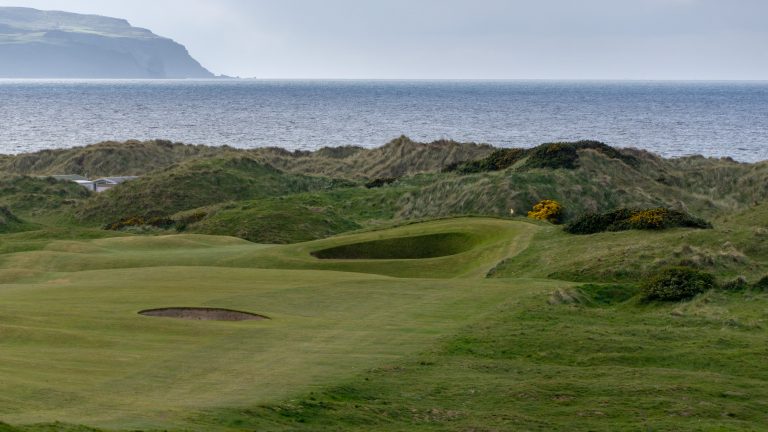
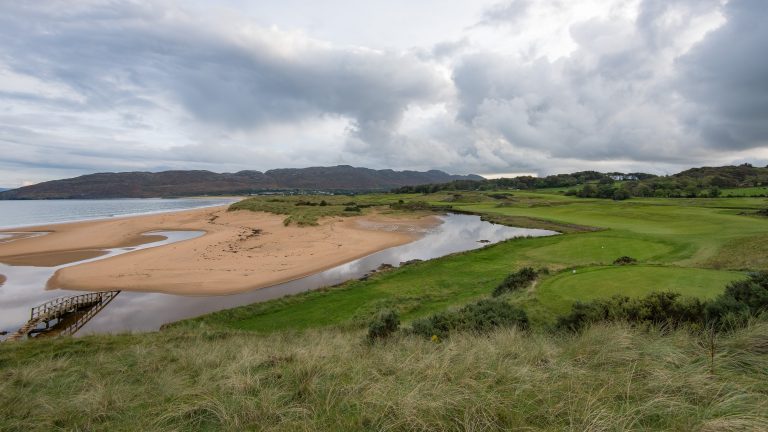
Holes 6, 7 and 8, par 5-4-5, then run along the top of a big dune by the coast and Murvagh Beach. All three are fine holes, but our favorite is the 8th, a par 5 you have to play more than once to really understand, with alternative routes and assorted craters to lose yourself in. No hidden bunkers, though; it’s hard enough as it is. The three coastal holes are also without doubt the most beautiful on the course, with views of the Atlantic.
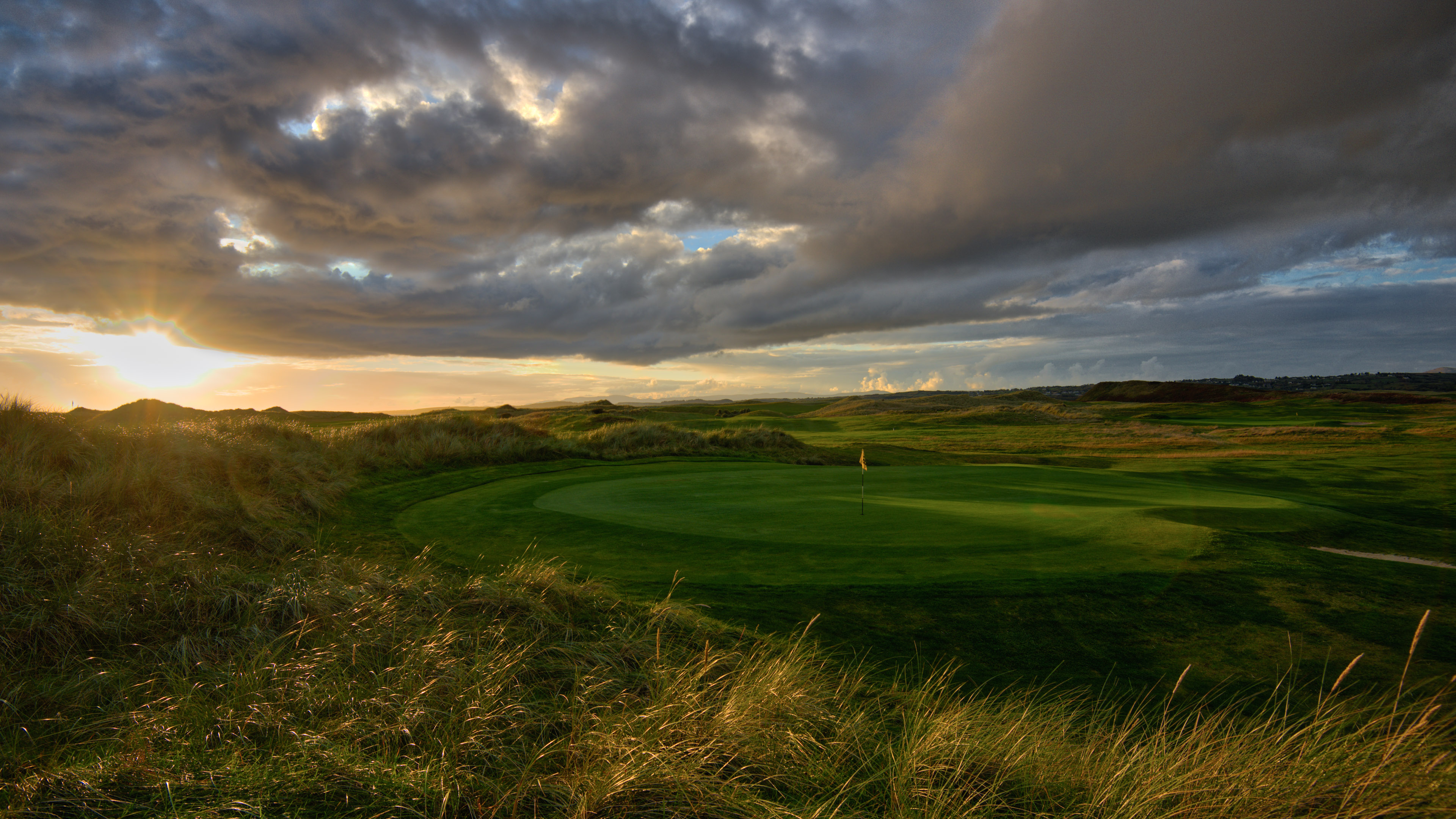
The back nine, as mentioned, runs inside the front nine. Here, too, we find rolling terrain with many fine holes. Take the 12th, a full 544 meters (595 yards) from the back tees, with two streams crossing the fairway and eight bunkers to catch balls, a whole bunch of them in the middle of the fairway for anyone who doesn’t plan carefully. The 16th is another hole that tests the best, at 227 meters (248 yards) and with a green lined with, you guessed it, bunkers. The finish is fine, with a tee shot you have to thread through a V-shaped valley in the middle of the fairway. Not really a problem, but it fools the eye into thinking the hole is harder than it is.
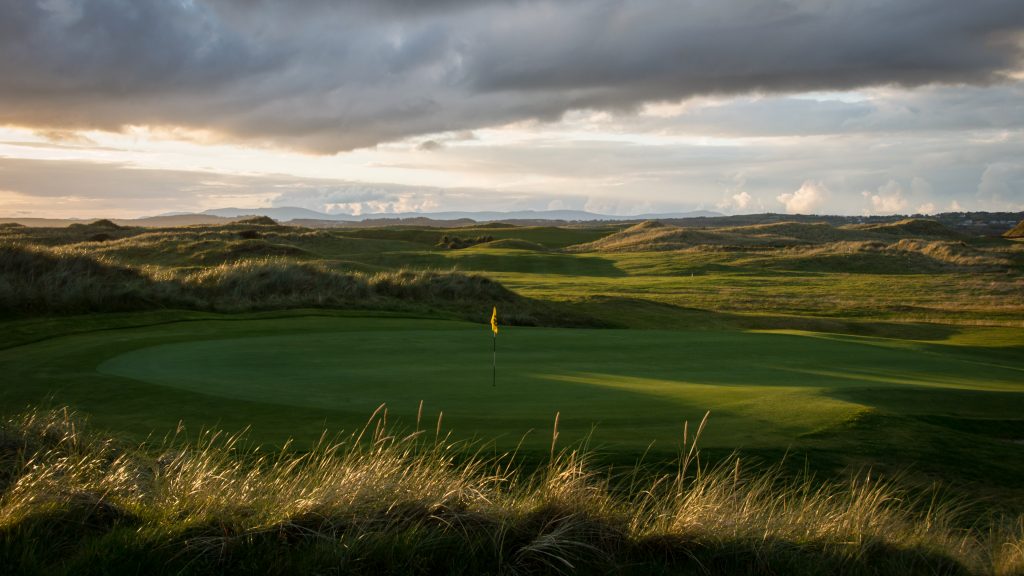
After the round we celebrate our survival with lunch (and a Guinness or two, need I even mention that by now?) in the modern clubhouse, which, like so many clubhouses we’ve come across in Ireland, has two floors: pro shop and locker rooms downstairs and a restaurant with panoramic views of the course upstairs. You could easily spend the rest of the day here licking your wounds. If you have time to stay until sunset and the weather cooperates, you will be richly rewarded.
Alla inlägg i serien från Irland
This article by Bo Sjosten was originally published in Swedish on our sister site Golfjournalen.se. It has been translated by AI.