
Enniscrone Golf Club – A Sand Dune Paradise

Translated by AI
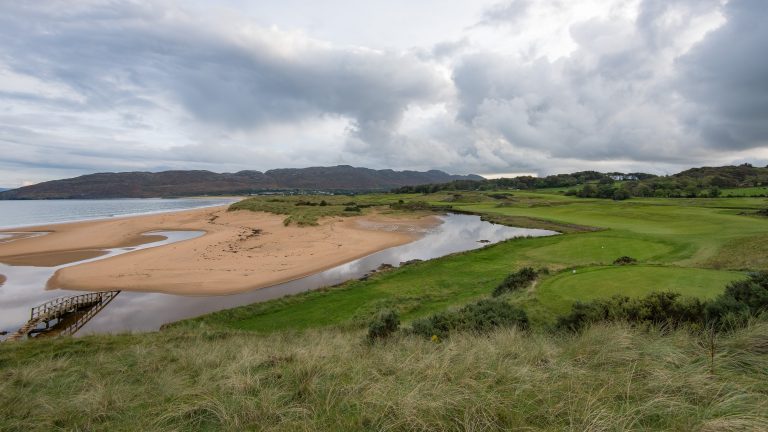
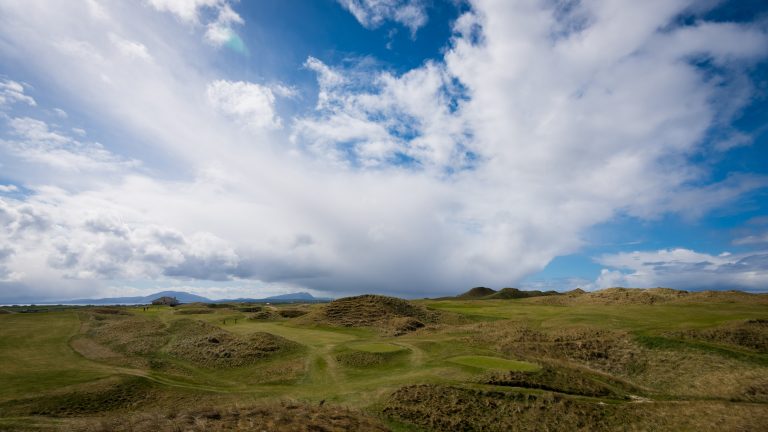
After our rest day we head for the coast again, and the Wild Atlantic Way takes us down to Enniscrone at the mouth of Killala Bay. Enniscrone Golf Club lies on a small peninsula that juts out exactly where the bay opens into the Atlantic. A more perfect setting for a links course is hard to imagine.
Enniscrone Golf Club is a hundred years old, but it wasn’t until the 1970s that the course took its current shape, when Eddie Hackett came and polished, well, a bit of everything. The result was impressive, to say the least. Hackett changed the routing and laid out new holes through the dunes, which are impressive in their own right and among the highest in all of Ireland. The club was still a little remote and fairly unknown, but in the 1990s it got more publicity and more visitors. Its improved finances meant it could hire another well-known architect, Donald Steel, who added six more magical holes among the dunes and built a fine nine-hole course from the holes that were “left over.”
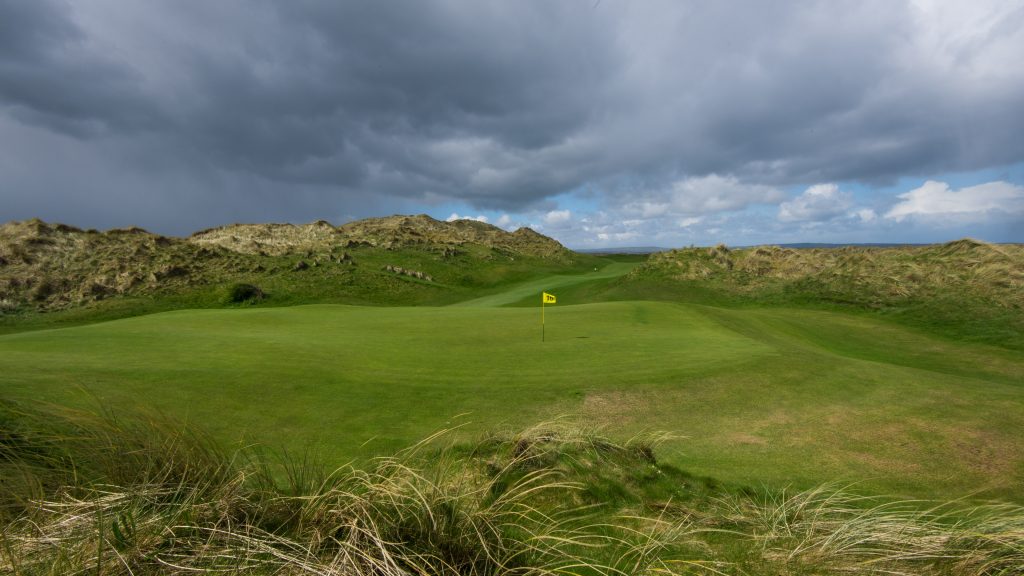
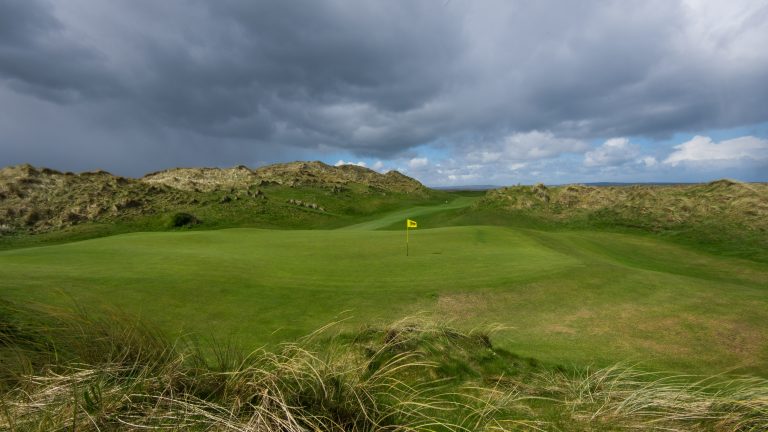
We arrive at Enniscrone just in time for our tee time and head straight out onto the course, which starts on the meadow right in front of the clubhouse. The tee shot is on flat ground, but on the approach we already get a taste of what’s to come. The green sits up on the right, completely surrounded by dunes except for a small opening we have to thread our way into. The challenge has begun.
The next three holes, par 5-3-5, run through the dunes, and we have to study the course guide carefully to understand where to aim. Luckily we have a local player with us who can help us with the lines. It quickly becomes obvious that the right strategy matters far more than brute strength on this course.
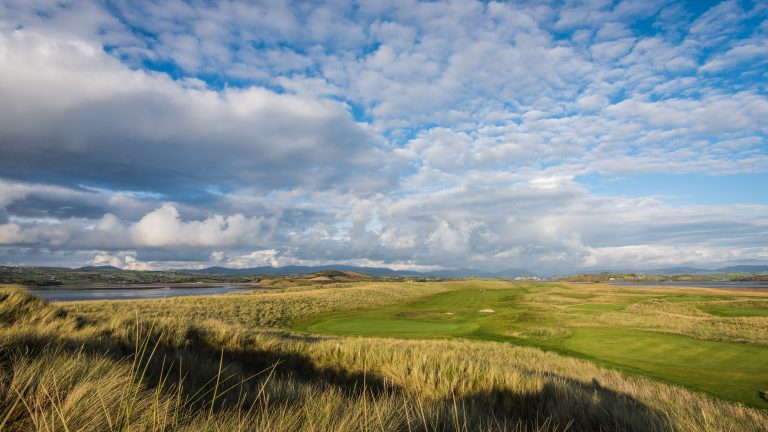
A stretch of holes in the middle of the round is played on somewhat flatter ground. I have played the course once before and remembered these holes as a little dull, but this time I change my mind; they are really good too. Especially 9, 10 and 11, which run along the water on the south side of the peninsula with views of the still snow-capped peaks to the south. Several of these holes have elevated, very tricky, firm links greens. Once again our local guide comes in handy and warns us about lines to avoid.
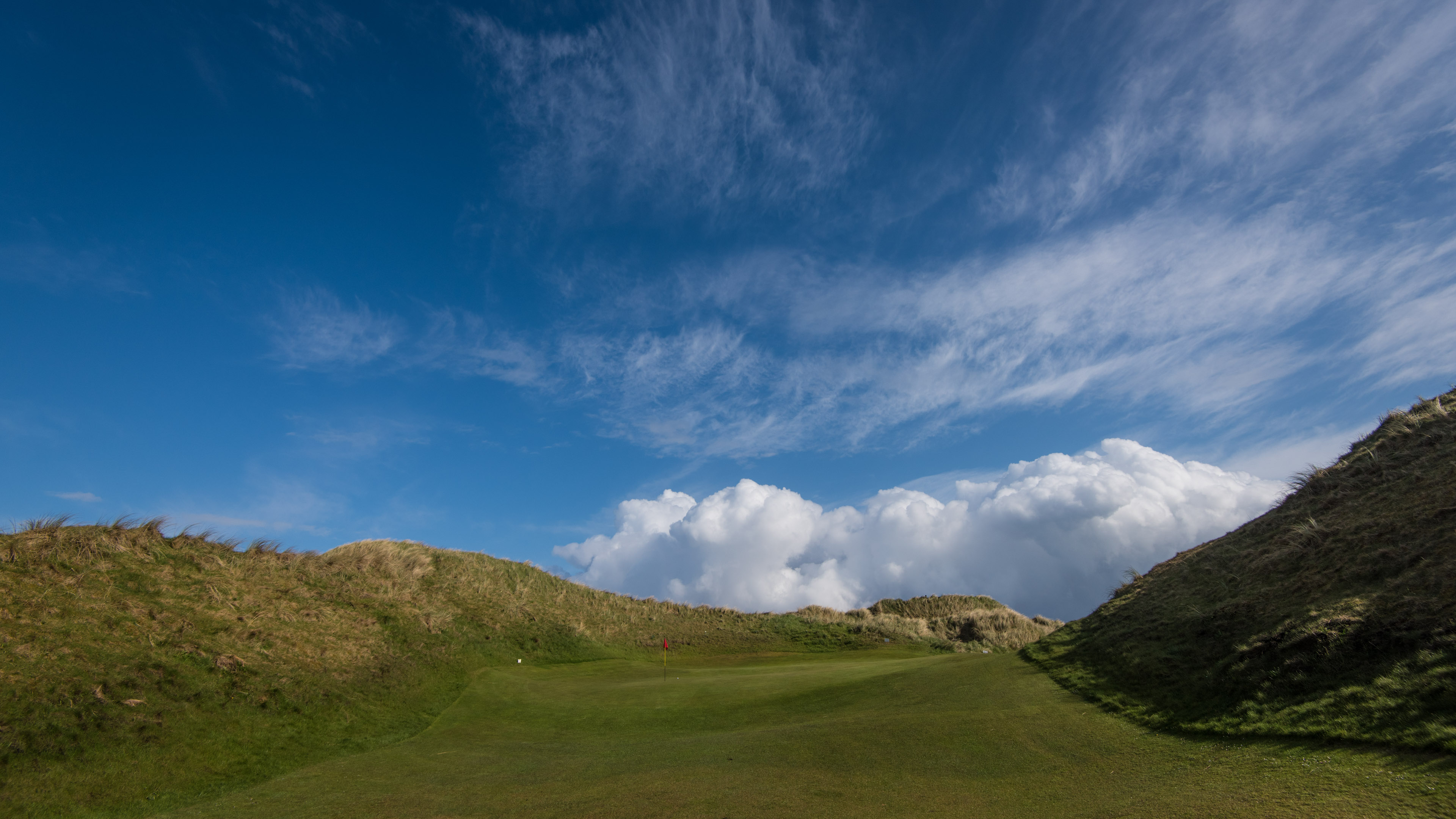
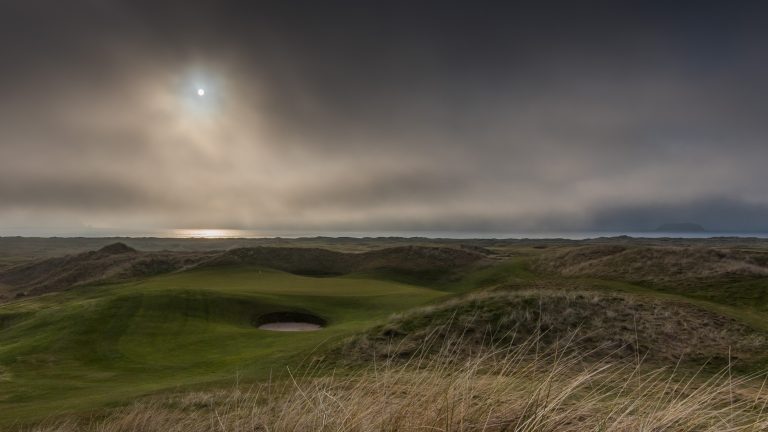
We have slowly been climbing, and on the 11th and 12th we head back into the dunes in earnest. The 12th has a blind tee shot and an approach to a green with a ravine in front and dunes on the other three sides, as pretty as can be. The 13th is played from high up and doglegs right. You can’t see the green from the tee, but long hitters can reach it with the drive. Sound dangerous? How do you know when the group ahead has left a green you can’t see? The problem is solved with a “traffic light” controlled automatically by sensors that detect when players leave the tee and when they leave the green for the next hole. Brilliant, and one of the most exciting holes on the course for the better player.
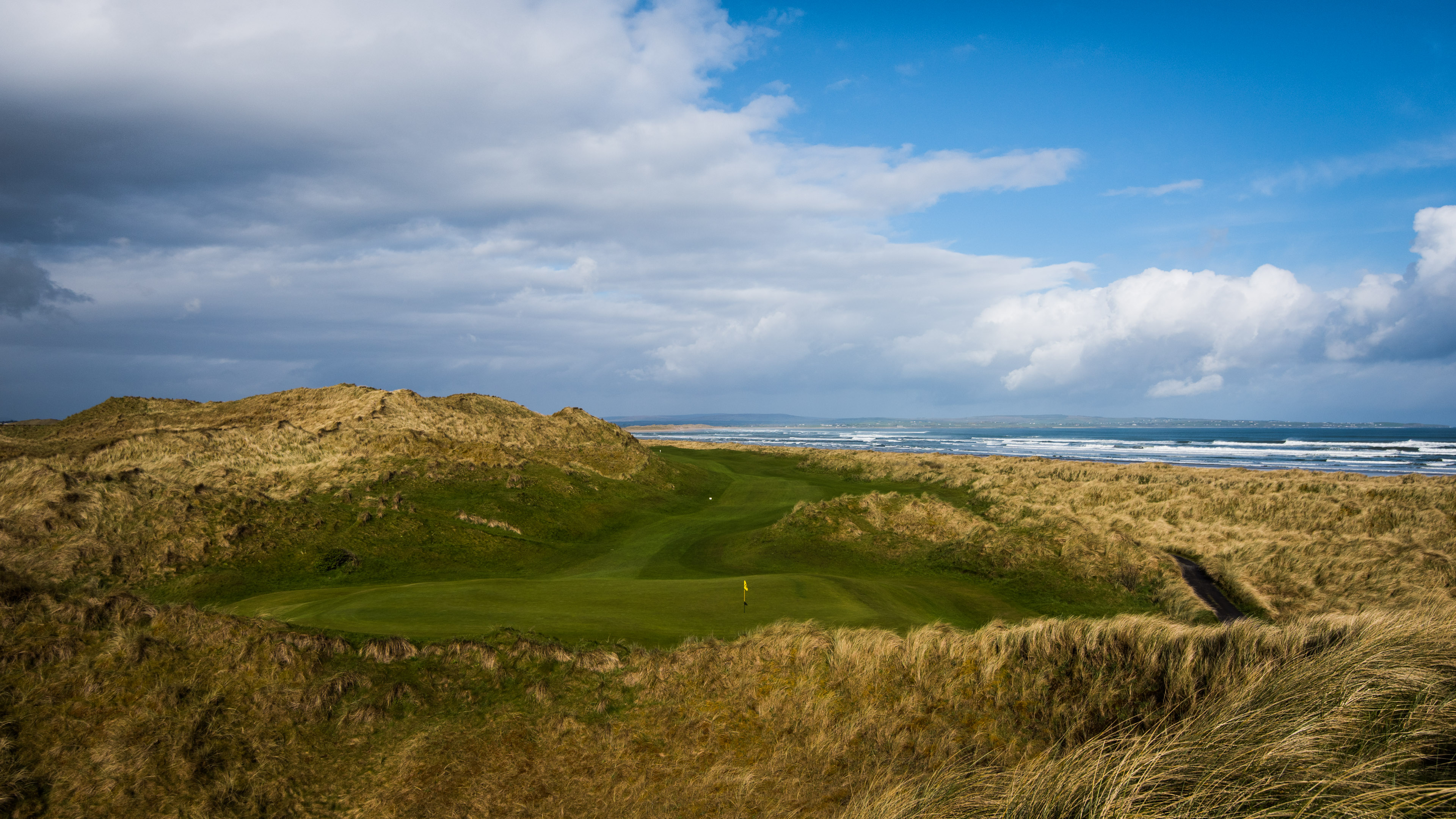
The 14th, a long uphill par 5, takes us across the peninsula to the north side. Here we find the most beautiful holes of all, 15, 16 and 17, all played between the dunes along the water. The view from the 17th tee back toward the 16th is magical and perhaps the most photographed view on the whole course.
After lunch in the clubhouse I borrow a golf cart and take my camera out onto the course. I drive around between the holes, taking pictures and simply enjoying it. What a course, what a wonderful place.
Alla inlägg i serien från Irland
This article by Bo Sjosten was originally published in Swedish on our sister site Golfjournalen.se. It has been translated by AI.