
Carne Golf Links – At the End of the World

Translated by AI
On a road trip that has taken us farther and farther from civilization, we now head to the very edge of the wilderness, as far west as we can go. Our destination is Carne Golf Links in Belmullet.
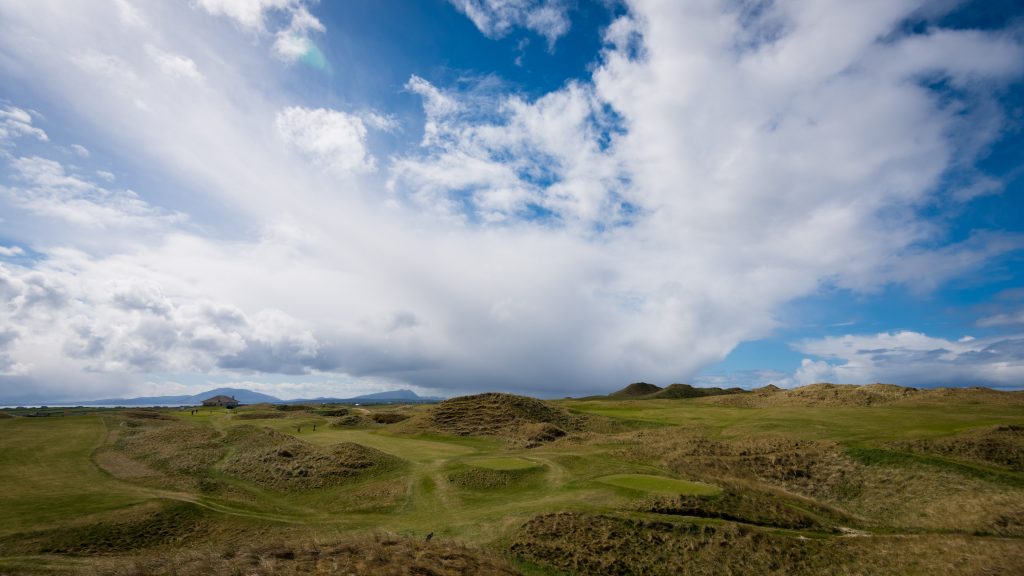
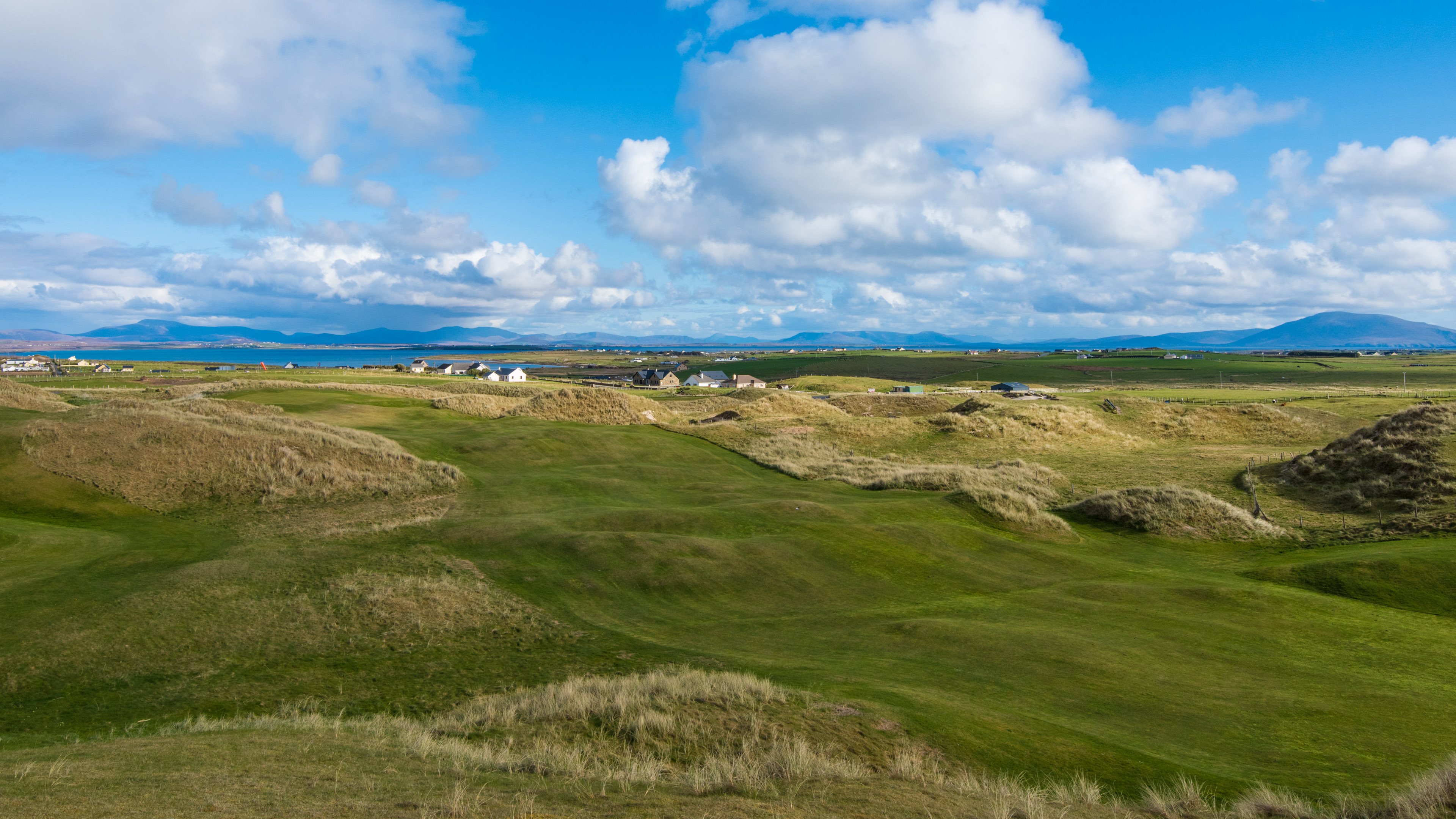
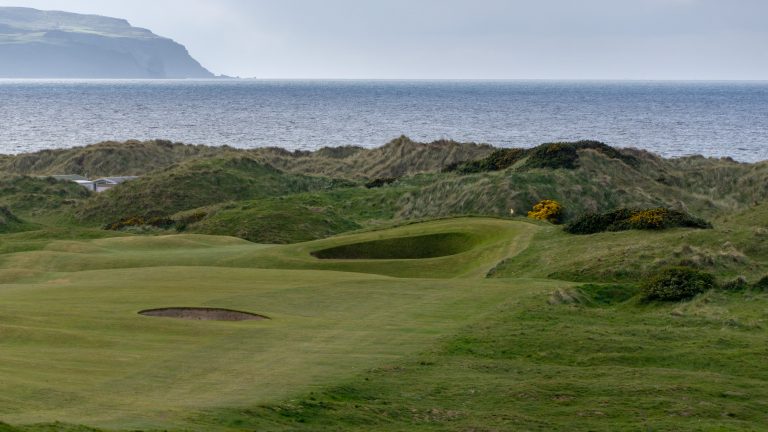
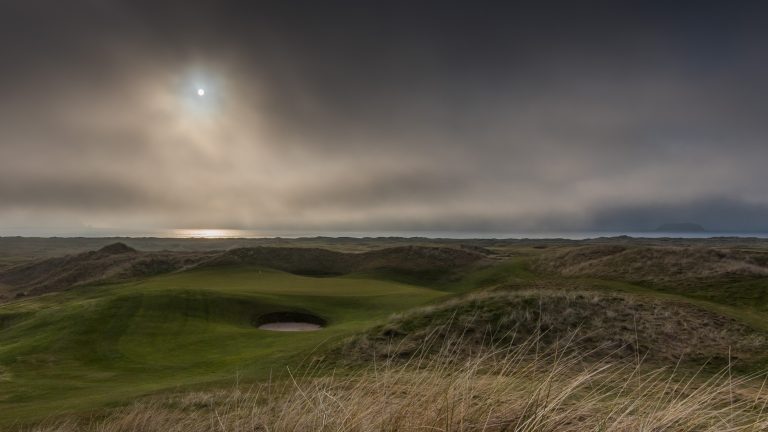
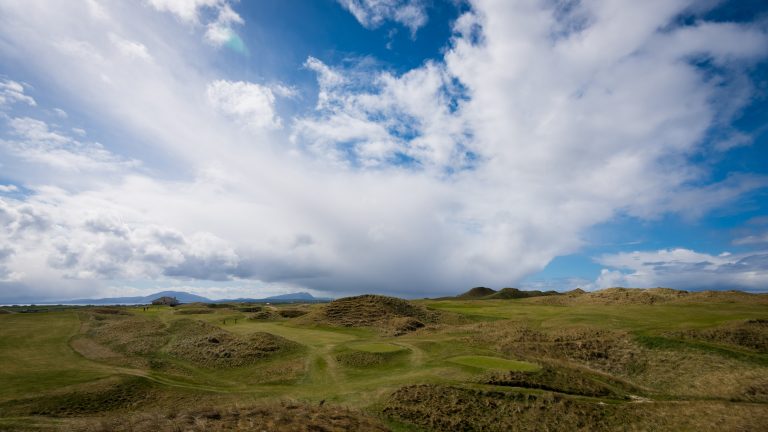
The landscape that greets us is almost improbably beautiful. If it weren’t so green, you might think you were on the moon. Eddie Hackett must have been overjoyed when he gazed out over the land offered to him for what would become his last and, by his own account, best golf course. This from a man who designed courses such as Ballyliffin and Waterville.
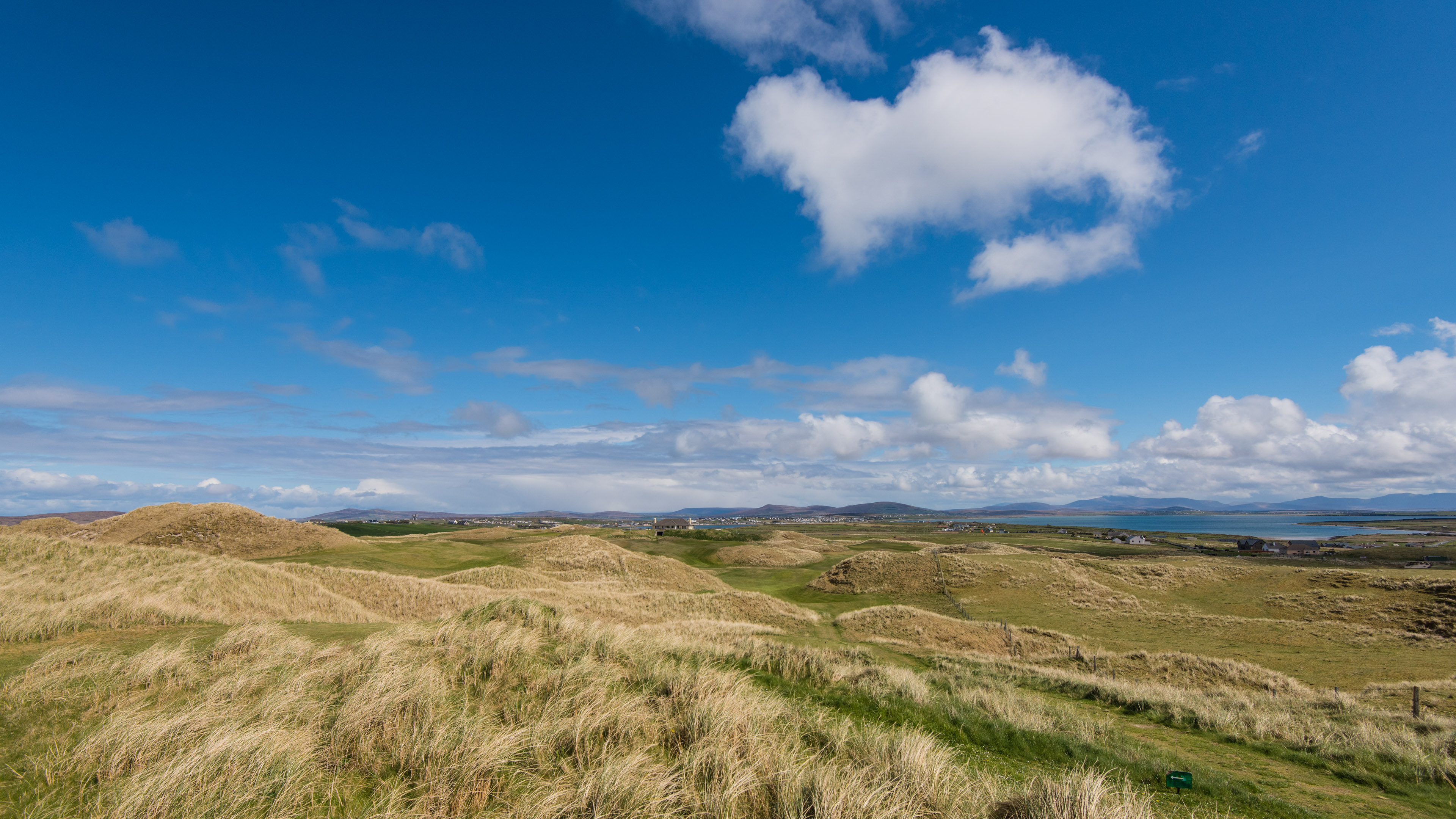
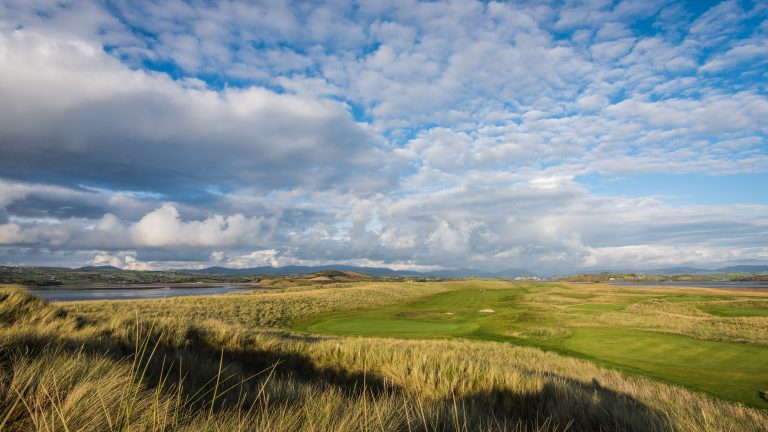
As we have seen earlier on this trip, at Enniscrone and Donegal for example, Hackett prefers the classic approach of following nature rather than moving too much earth or “shaping” too much. “I find that nature is the best architect . . . I try to dress up what the Good Lord provides,” as he himself put it. That makes the course feel very natural, as if you are playing on untouched land where the grass has simply been mowed a little.
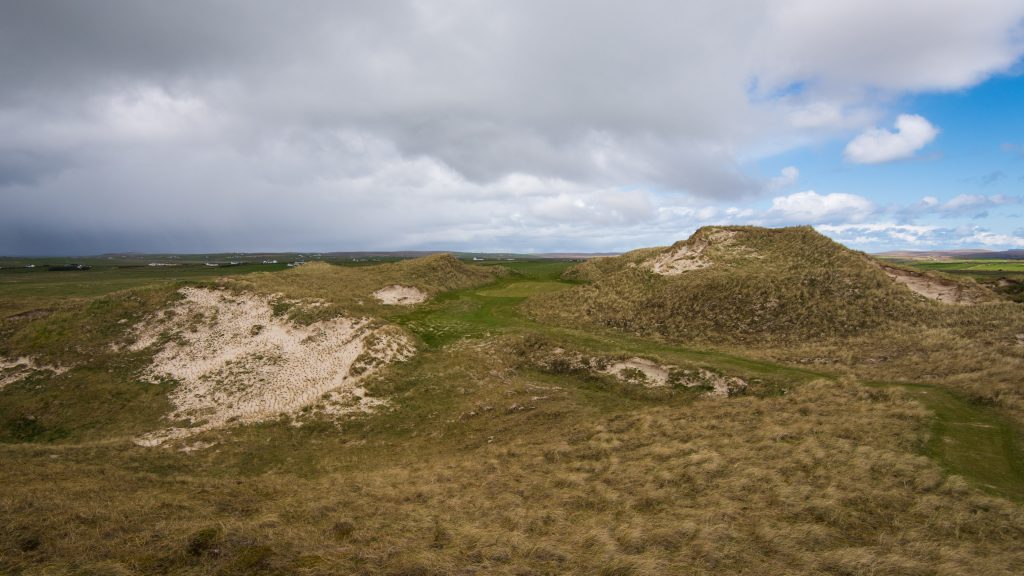
There are 27 holes in all at Carne Golf Links: 18 on the original Hackett Course from 1993 and 9 on the newer Kilmore Course, which opened in 2013. The Hackett Course has two nine-hole loops that bring you back to the clubhouse, so you can combine the courses if you like, playing for example the back nine of the Hackett followed by the Kilmore. We can recommend that combination if you don’t have time to play all 27 holes (which, of course, is what we really recommend, indeed almost insist on, now that you’ve made it all the way to the end of the world).
We go for the latter option and head out as a two-ball to fit in all 27 holes. Even though it’s the weekend, the course is relatively empty in May. We are, as mentioned, far from civilization, and the weather can be rough, but we’re lucky: the sun is shining and the wind is manageable. “A wee breeze,” as they say out here when it’s blowing a gale.
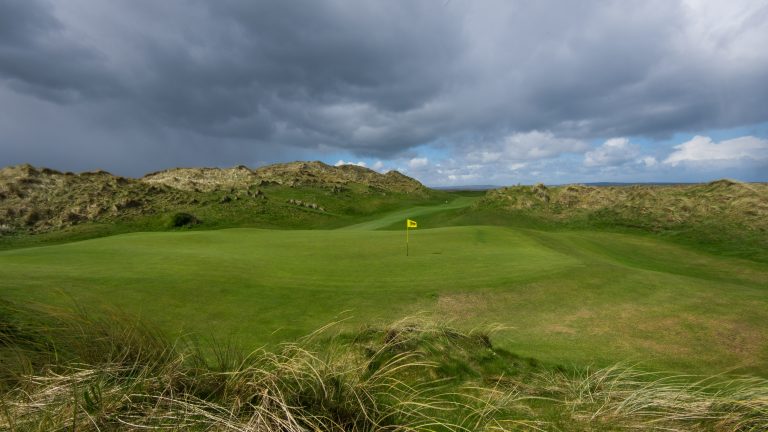
The front nine on the Hackett is played on somewhat flatter ground, relatively speaking. Because nothing is completely flat; every hole slopes one way or another, the fairways are hard and the balls bounce wherever they please. Real, genuine links golf, in other words. Now and then we enter the dunes, where the greens often lie sheltered and you can get a rest from the wind. The two best holes are the last two, the 8th and 9th. The 8th, a par 4, is best played down the right side to get a good view of the green complex. You may still have to walk forward a bit to see where the green is, in what looks almost like an amphitheater of tall dunes. The green has two tiers, so knowing where the flag is is a must. From the 8th green we climb high up to the 9th tee, with a view of the whole hole all the way back to the clubhouse. The flat fairway below ends with a steep climb up to the green. Hit it too far and your approach will be blind. A fine hole.
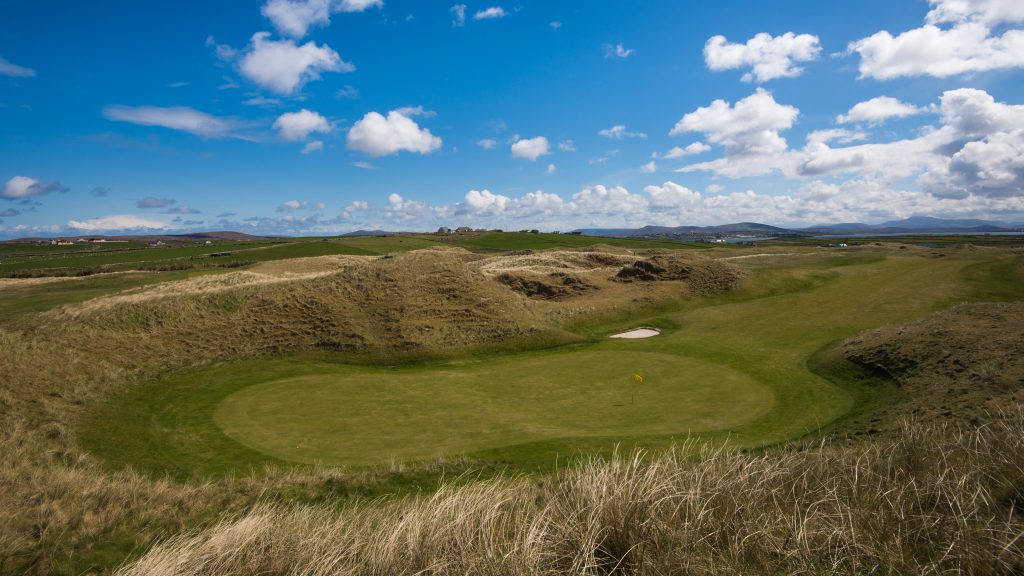
The back nine takes us out among the dunes in earnest. The holes are more spread out, and the dunes are so high that most of the time you can’t see any other golfers; it feels as if you have the course all to yourself. Hackett sometimes has us climbing over the dunes and sometimes playing in the valleys between them. The greens are often enclosed and sheltered from the wind, but on the whole the holes on this loop are more demanding than the front nine. Many are played from elevated tees toward what look like impossibly narrow targets, but which are often wider than they first appear. We’d like to describe every hole, but it would turn into a novel. We’ll just mention the last, a par 5. Long hitters may be tempted to go for it in two, but the dangers are many, with a heavily undulating fairway and an elevated green with a ravine right in front. We are very surprised to hear after the round that the hole is nature’s own creation; Hackett didn’t move any earth. What nature!
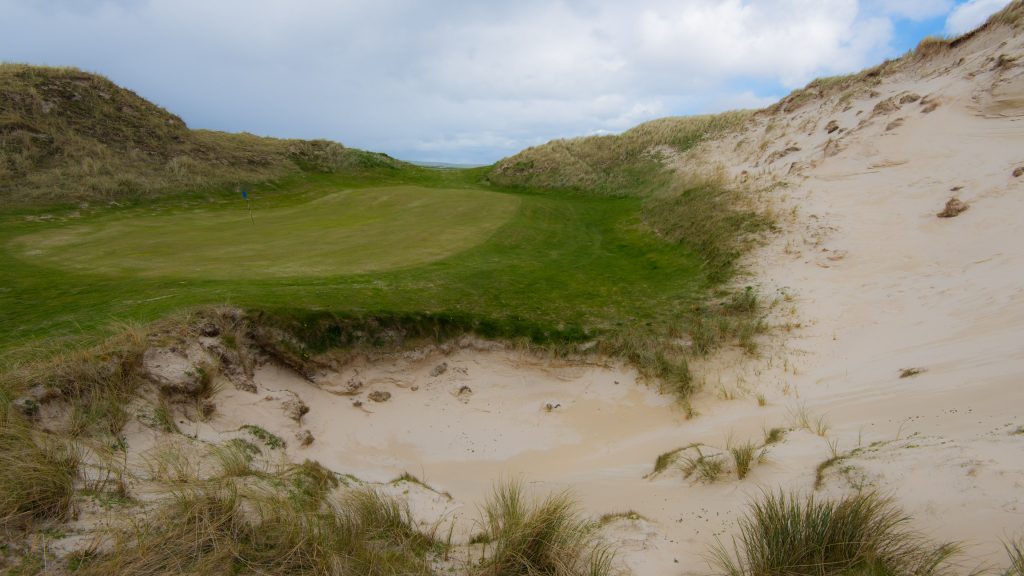
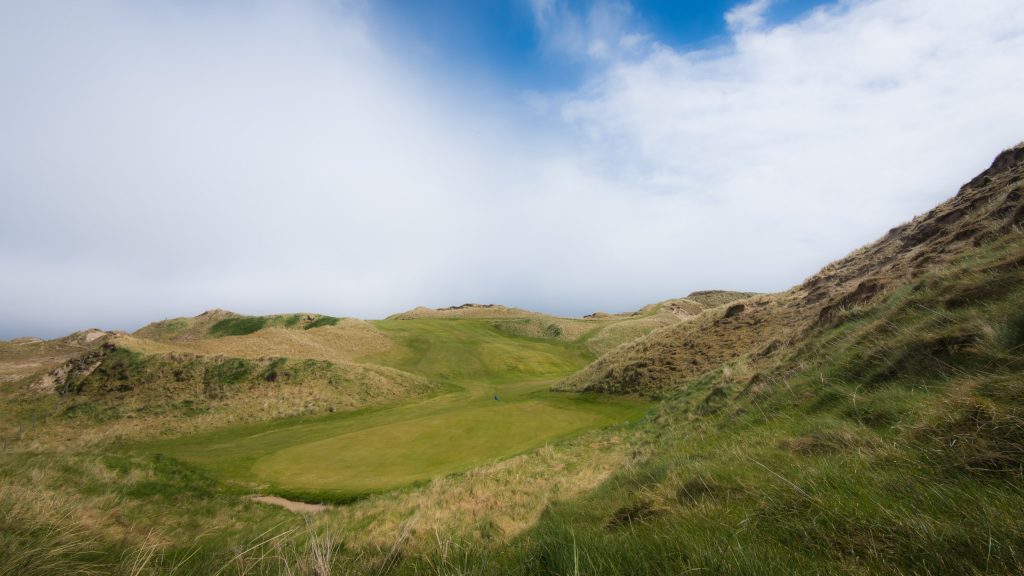
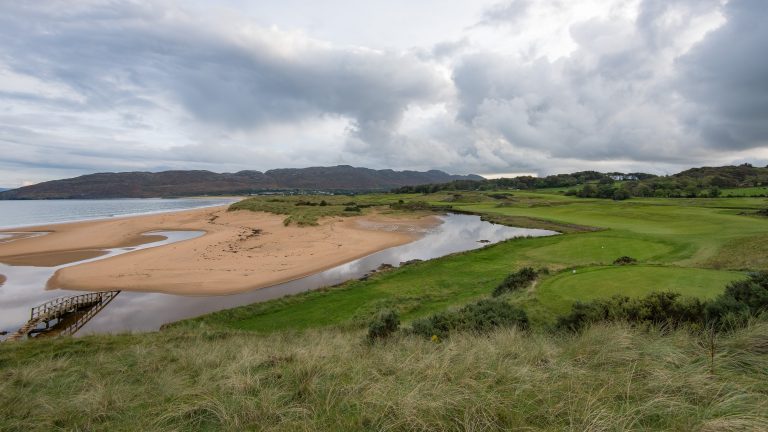
The Kilmore course continues in the same style as the back nine of the Hackett, in places even more spectacular. It also brings you closest to the Atlantic. So close, unfortunately, that the course has sometimes been flooded in winter storms, and in some years a few holes have had to close. But if it’s open when you are there, don’t miss it. In my opinion, some of its holes are the very best at Carne Golf Links.
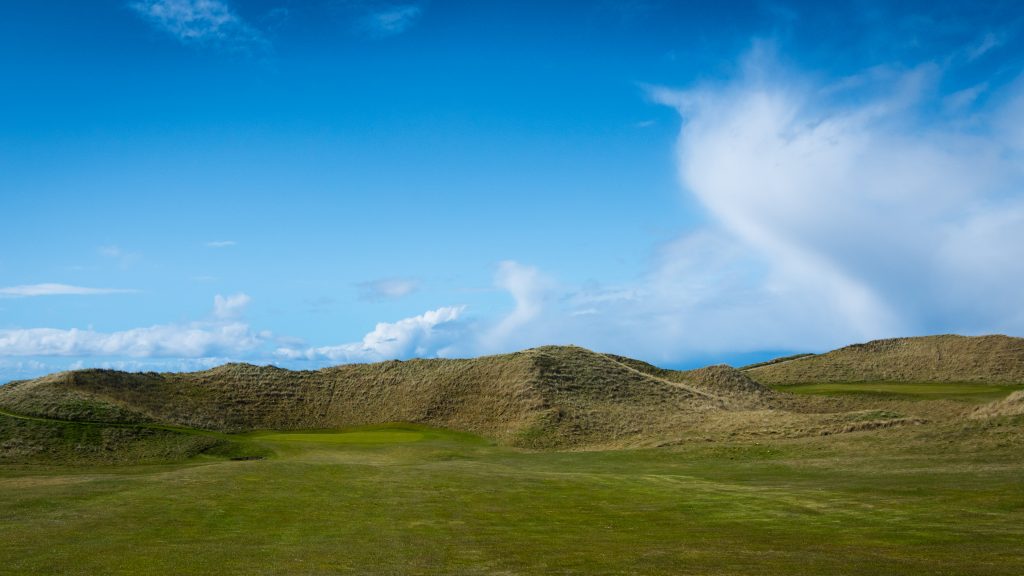
As mentioned, the climate is rough out here on the Atlantic coast. The grass takes a beating, and sometimes damp, salt-laden air blows in over the course. It isn’t as “polished” as, say, Enniscrone, but so what. This is real links golf for dedicated enthusiasts. Greens that aren’t quite perfect take nothing away from the golf experience. Don’t get me wrong, the course is by no means in bad condition; it just isn’t in quite the superb shape of some of the courses we’ve been spoiled with in recent days. If you want to play golf the way it was once meant to be played, come here to Carne Golf Links.
Alla inlägg i serien från Irland
This article by Bo Sjosten was originally published in Swedish on our sister site Golfjournalen.se. It has been translated by AI.