Golf in Estonia – A Country on the Move

Translated by AI
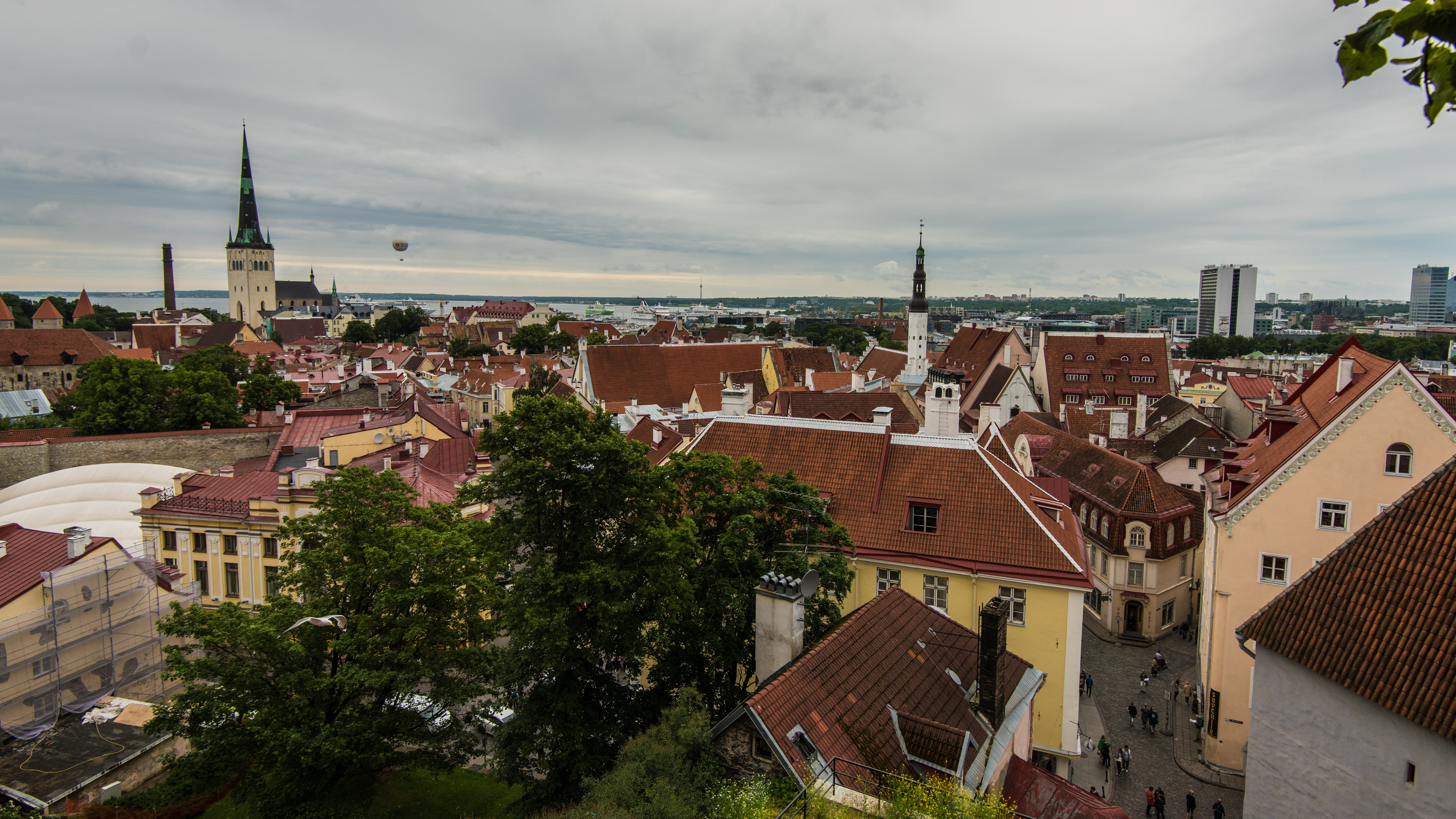
There’s building going on everywhere. The airport has just gotten a new, modern terminal. And when you look out over Tallinn from the viewpoints in the Old Town, you see lots of new skyscrapers and just as many cranes busy adding more. The cars are definitely more modern than back home in Sweden, with plenty of BMWs and Mercedes on the streets.
But old Tallinn is still there. The Old Town is as charming as ever; it’s easy to spend a day just wandering around admiring the beautiful old buildings, shopping in the many stores and eating at one of the restaurants that have kept their medieval feel.
But we were here to play golf.
Estonia is not a big golf country. There are only about 2,000 members in Estonian clubs, and only a handful of clubs. But 1,000 golfers have joined in the past year alone, so growth is fast. It feels a bit like Sweden in the 70s, perhaps even the 60s. Golf is still exclusive, but just about to break through and become more of a sport for everyone.
Estonian G&CC
You feel the exclusivity as soon as you arrive at the first club on our trip, Estonian Golf & Country Club, just outside Tallinn. The reception looks more like a luxury hotel than a golf club, and we’re immediately given a key to a locker in the well-appointed locker room. Nobody changes into golf shoes at their car here. The luxury continues in the club restaurant. White tablecloths, table service and a menu that makes you think you’d rather have played first and eaten afterward. Who can manage an afternoon of golf after three courses with tournedos as the main dish? Luckily there was also a “dish of the day,” so we got away with a lighter meal. But we chose a golf cart over walking…
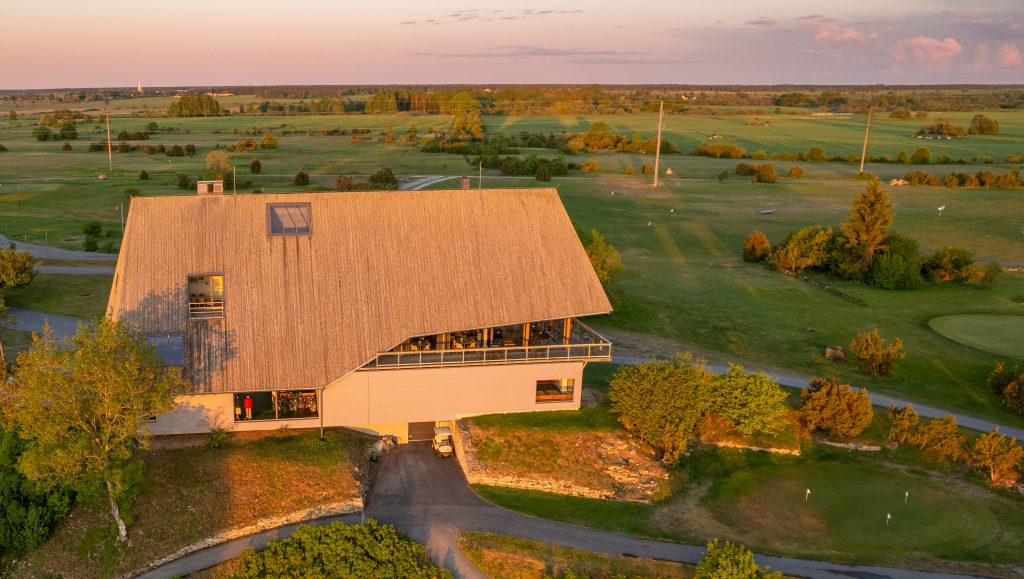
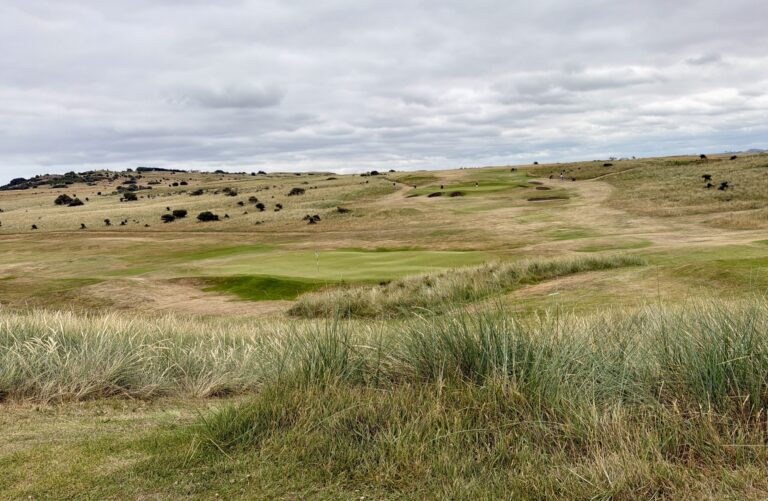
Estonian G&CC is a new course, opened as recently as 2006. But you’d hardly know it. The course first winds through the forest, then continues links-style along the shores of the Gulf of Finland (which not so long ago were full of Soviet trenches, with the machine guns pointing inland to stop the population from fleeing!), before finishing in the forest up toward the clubhouse. That means the surroundings are mature; no newly planted trees are needed. And the grass has grown in surprisingly quickly. It definitely feels like a mature golf course.

The layout is interesting and challenging for the somewhat better golfer without making it too hard for the high handicapper. This is achieved through a number of holes where the long hitter is tempted to “go for the green,” while the average golfer can play on as usual. An excellent design for golfers of every level.
Especially attractive in this respect is the closing hole, a par 5 that first bends right, then left, finishing with a big green below the clubhouse restaurant and terrace. The low handicapper is sorely tempted to go for the green with the second shot, but it usually fails. The mid-handicapper plays it as a normal par 5. An excellent finishing hole.
Southern Estonia
The next day we headed on toward Tartu and Otepää, about 250 km (155 miles) southeast of Tallinn. The roads are mostly good, but two-lane. Here too, though, there’s frantic building going on; highways will soon cross Estonia.
Otepää is Estonia’s “winter capital.” Among other things, it hosts cross-country skiing races that are part of the World Cup. There’s a little downhill skiing too, but not seriously, since Estonia’s highest hill is only 318 meters (1,043 feet) high.
Otepää Golf Club has embraced nature with its slogan “Loodusesse loodud!”, which we all quickly gather means “Close to nature.” The course certainly is close to nature, running through the forest, and you often get the feeling that you’re the only golfer on the course. This course is young too, the front nine opening in 2007 and the back nine in 2008, but it is in surprisingly good condition. The greens were a little slow, but that was mostly because they had been allowed to grow a bit in the drought: it had rained only 5 mm (0.2 inches) in the previous two months when we visited.
The design through the forest is interesting and challenging, but not too hard even for the high handicapper. Although most of the course winds through the forest, there are plenty of water hazards. The distances between holes are sometimes quite long on unfinished forest tracks, so a golf cart may be advisable.
Our only objection is that the 15th, a dogleg right, has a slightly odd layout, with a very short tee shot followed by a 90-degree bend. In our opinion the green should be moved to make the hole straighter and more interesting. But that’s a minor thing, and something you’d probably get used to.
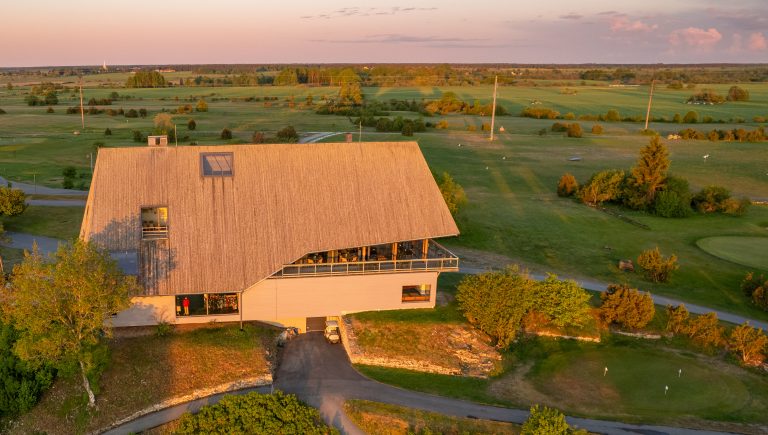
One highlight at Otepää Golf Club is definitely the clubhouse, with a fine restaurant with a wonderful view of the 18th green. And there’s a sauna, of course…
Tartu
Tartu, 40 km (25 miles) from Otepää, is Estonia’s second-largest city, a university town. The university was founded by the Swedish king Gustavus Adolphus in 1632, just months before the fateful battle in the fog at Lützen. At that time Estonia belonged to Sweden, and many Estonians still call the Swedish era the good old days, which is nice to hear for a Swede. As in Tallinn, there are many historic buildings, but also lively nightlife, as is often the case in university towns. No shortage of cafés and outdoor terraces, all with wireless internet. No free internet means no customers. In Estonia everyone expects to be connected 24/7.
Tallinn GC
Back in Tallinn we headed for Tallinn Golf Club, also known as Niitvälja. Tallinn GC is Estonia’s oldest golf club; it opened as early as 1994! You could tell Tallinn GC was a slightly more mature club. There was much more activity here, with a junior program and lots of golfers on the course, something we hadn’t seen at the previous courses.
Tallinn GC is a flat course. But the design is interesting, mixed woodland and meadow, with lots of water. The wooded areas were very well kept; if you hit your ball into the woods you could often find it. But with plenty of trees you were still punished fairly.
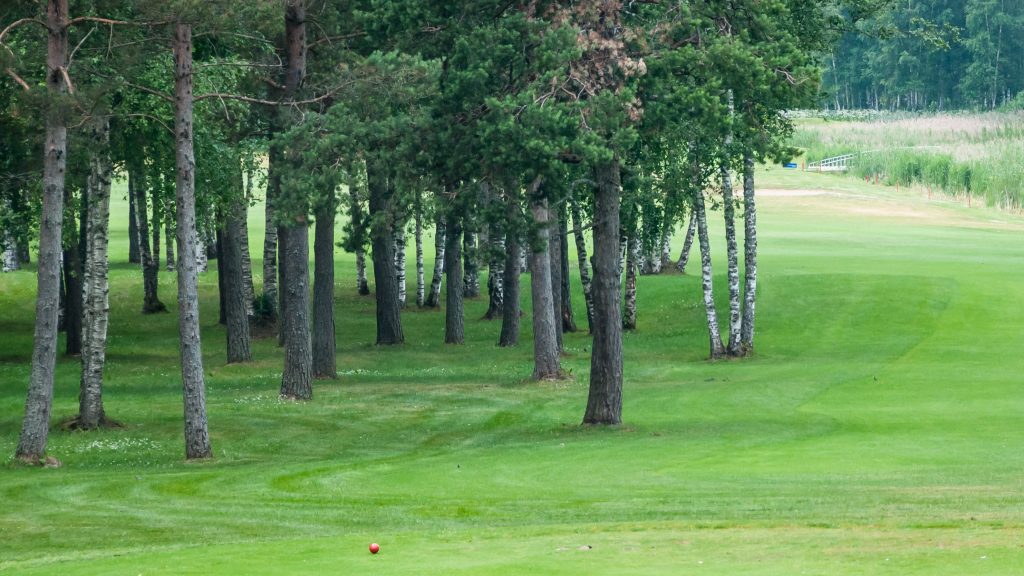
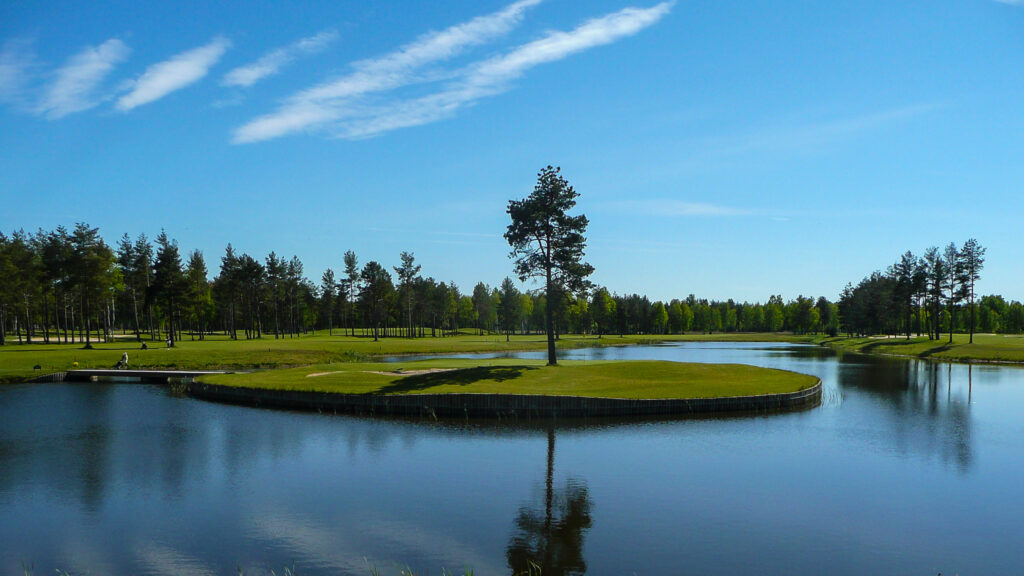
The signature hole is the 15th, a par 5 that runs along a lake and finishes with a shot out to a green on an island. A wonderfully beautiful hole, which you can also admire several times while playing other holes.
The club director, Leela Lepik, calls it a “members’ course,” meaning not too hard for the average golfer. But it is definitely of championship standard. Both fairways and greens are in excellent condition.
Summing up
So is Estonia worth a visit for golfers? We definitely think so. Every course we played was in fine condition, and prices were very reasonable. Being so close to Scandinavia and Finland means you can play a couple of courses on a long weekend.
If you have a little more time, consider bringing your car, playing a few courses around Tallinn, then driving to Tartu/Otepää to play there, and finishing with a round in Riga before taking the boat home from there.
Getting there and where to stay
If you’re short of time, fly to Tallinn. The airport is only a few minutes from the city center and the courses, so it’s perfectly possible to fly in in the morning, play up to 36 holes and be home by 10 p.m.
Tallink runs daily ferries from Stockholm to both Tallinn and Riga. The ferry arrives in the morning and leaves again around dinnertime, so here too it’s possible to squeeze in a round of golf.
There are hotels in every price range. If you want to treat yourself, stay at the Hotel Telegraaf, a five-star boutique hotel in a luxuriously renovated building in the middle of the Old Town. The Hotel Telegraaf also has golf packages.
If you prefer a modern hotel with a first-class view next to Tallinn’s largest shopping mall, we can recommend the Swissôtel.
This article by Bo Sjosten was originally published in Swedish on our sister site Golfjournalen.se. It has been translated by AI.