Morocco’s Golden Golf Week – A Teenage Sensation, a Hole-in-One and a Clear Message

Translated by AI
Every year something happens in Rabat that is still unusual in professional golf. Men and women play major international tournaments side by side, at the same venue, in the same week.
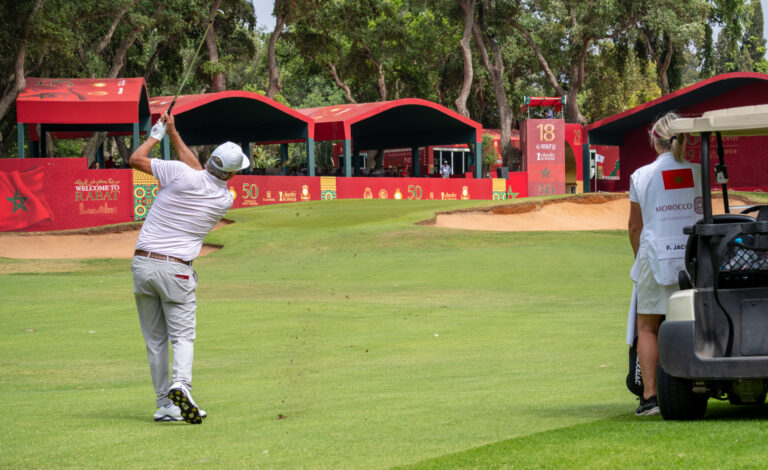
At Royal Golf Dar Es Salam, the men’s Hassan II Trophy is decided on the classic Red Course, while the Ladies European Tour plays the Lalla Meryem Cup on the Blue Course a few hundred meters away. It’s an arrangement that feels both obvious and unusual in a sport where women’s golf too often ends up in the shadows.
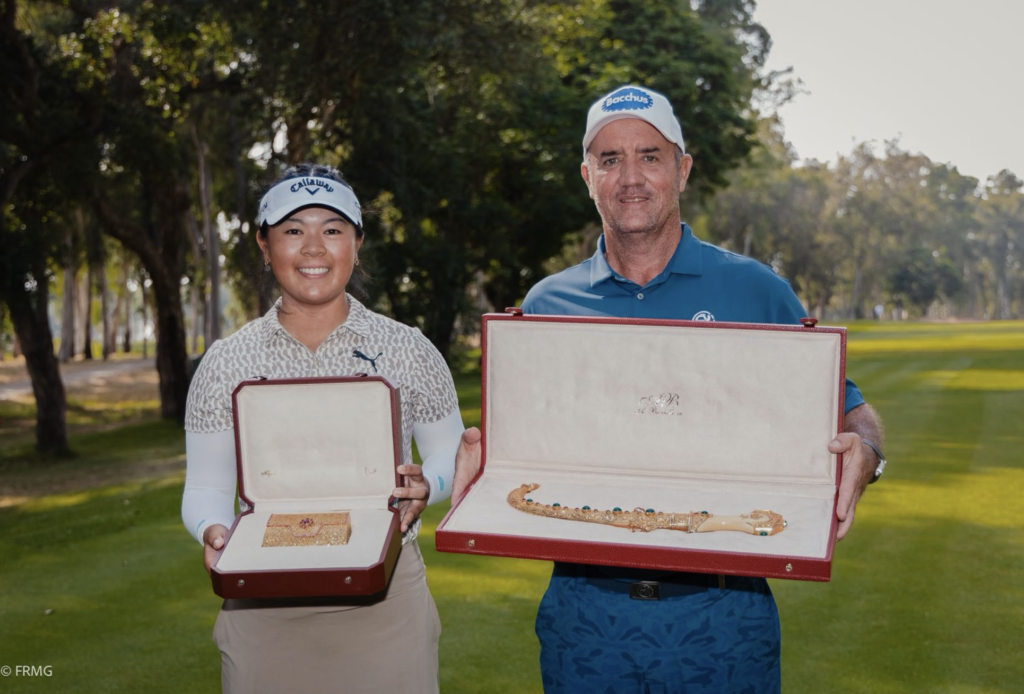
The winner was 17-year-old Canadian Anna Huang, after an impressive finish. On a course where mistakes are punished quickly and patience matters as much as technique, she showed a maturity far beyond her years. Winning on the Ladies European Tour as a teenager is remarkable in itself. Doing it on the Blue Course at Dar Es Salam makes the achievement even stronger.
But the week also delivered one of those moments that keep a tournament alive in the memory long after the last putt has dropped.
Indonesia’s Shannon Utama made a hole-in-one and was rewarded with a car, a scene that brought cheers from players, officials and spectators alike. Moments like that can’t be planned, but they help give a tournament its soul.


But the Lalla Meryem Cup is about more than the results.
The tournament has been played since 1993 and is named after Princess Lalla Meryem. Over the years it has grown into one of the most established events in women’s golf outside the traditional European heartlands. It is also part of something bigger: Morocco’s long-term investment in golf, especially women’s golf.
This isn’t just an international event for TV cameras and sponsors during one week in February. There is a clear ambition to build the future of golf in the country, with junior programs and initiatives to get more girls playing. The royal family’s support gives the tournament both weight and continuity, something far from every event on the women’s tour can count on.
The local roots also show in the field. Morocco had several of its own players in the event, with Maha Haddioui the best-known name. For the home crowd the week is not just about international stars but also about seeing their own players measure themselves against the best on tour.

And then, of course, there’s the course.
Royal Golf Dar Es Salam is one of the most impressive golf facilities in Africa. Set in a vast forest of cork oak and eucalyptus just a few minutes from central Rabat, it feels like a little world of its own. Robert Trent Jones created a 45-hole facility here, where the Red Course usually gets the biggest headlines.
But in many ways the Blue Course is just as interesting.
It isn’t as long and brutal as its more famous neighbor, but it asks the players different questions. The fairways are framed by dense vegetation, tee shots have to be placed correctly to give sensible angles into the greens, and the greens are both fast and heavily contoured. This is a course where strategy almost always beats brute force.
That’s exactly why it suits women’s golf so well.
Too often women’s golf is judged by the wrong yardstick, as if length were all that mattered. On the Blue Course it becomes clear that golf at the highest level is about so much more: precision, decision-making, creativity and mental patience.
This year’s field reflected the tournament’s international status, with players from all over the world, established tour winners, young challengers and several of the tour’s most interesting names.
And in the end, it was a teenager who lifted the trophy.
Somehow that feels symbolic, because the Lalla Meryem Cup is not just about the present but about the future.
In a golf world where women’s events are still often treated as a sideshow rather than a main attraction, Morocco shows another way. A strong tournament. A first-class venue. Genuine commitment.
And this year, with a teenage winner, a hole-in-one with a sports car as a bonus and another well-played edition, the message was clearer than ever:
Women’s golf belongs on the big stages.
This article by Bo Sjosten was originally published in Swedish on our sister site Golfjournalen.se. It has been translated by AI.