Shellfish and golf in Bohuslän

Translated by AI
We’re out collecting golf memories in Bohuslän. And they’re of the finest quality: the beautiful light along the coast, greens and fairways set against granite outcrops, an oyster safari in Grebbestad and Sweden’s only mussel bar in Ljungskile.
In a packed clubhouse at Lyckorna Golfklubb spirits are high. This is “Lyckornaveckan,” Lyckorna Week, and today’s format is family golf, with teams made up of two generations. The head chef makes sure there’s enough lax och potatis (salmon and potatoes, the dish of the day) for everyone. Outside, the driving range and putting green are packed: young and old alike want to take home the trophy.
Golf in Sweden is a real experience for visiting golfers, and it’s not just about the courses. Yes, the courses are top quality and well worth the trip. Lyckorna, 20 minutes south of Uddevalla, is a venerable and splendid parkland course with wide fairways and sea views, known for hosting high-level tournaments. But there’s something more than fine courses that draws us to Bohuslän. Everything around the golf in Sweden makes a Swedish golf vacation just a little “annorlunda,” a little different.
“We try to make golf more than just golf. It should be an experience,” says club manager Marcus Jonsson at Lyckorna.
Today there are pop-up stands with sponsor goodies and a heaving prize table, and tomorrow night there’ll be live music in the clubhouse after the week’s Texas scramble with 144 players. We want to find out more about everything else around golf in Bohuslän, including oysters, langoustines, crabs, lobster and anything else a golf tourist might get up to.
Klocktornet in Ljungskile
Golf, food and wine are like Huey, Dewey and Louie: inseparable. In the evening we drop in on one of Lyckorna GK’s partners. Musselbaren, the mussel bar in the old Klocktornet (the clock tower) on the pier in Ljungskile, is the trendiest seafood restaurant in Bohuslän. Here we meet Janne Bark, whose goal is to serve the world’s best and freshest mussels.
“In the old days people came to Ljungskile because there was a spa here from 1877,” he says. “It was a kind of match.com back then. It was all about status; ideally you married off your daughters over the summer.”
Janne took over the historic reception building, Klocktornet, to start Musselbaren. Now the place is packed every night in the summer season with guests feasting on mussels fresh that day, prepared in at least ten different ways. The traditional mussel pots hang in their dozens above the kitchen counter. You can’t get lobster, fish or meat here, only musslor (or a shrimp cocktail for those who absolutely won’t have mussels).
Another of Lyckorna GK’s partners is Villa Sjötorp, which many visiting golfers have already discovered on season-stretching spring and fall trips to Bohuslän. The owner is Ellika Mogenfelt. She was a co-owner of the big turn-of-the-century summer house along with 59 other heirs. At 17 she announced that one day she would run a hotel here.
“All the others laughed at me,” she says.
But 20 years ago she pulled off the feat of buying out all the others, and since then she has run a hotel with a private beach and ten bedrooms. Both hotel and restaurant are run on organic principles, which was ahead of its time in 1995. Today this must be one of Sweden’s most charming places to stay, where the chef serves up miracles of flavor for hungry golfers (try the fried cod with spelt risotto).
Fjällbacka in the wind
Further north, in Tanumshede, we’re back out on the course, this time at Fjällbacka GK. This course winds along the Anråsälven river; 11 of the holes are close to the river, and the first shot crosses it at its widest point, where it flows into the sea.
The key is to keep your wits about you, which is hard when it’s blowing as much as it is now. We play the first five holes more or less downwind, not that it helps much. Control is another matter entirely. The balls are close to blowing away on the greens. But do Swedish golfers let themselves be scared off the course by a mere gale? We look around. Nope. So we won’t give up either.
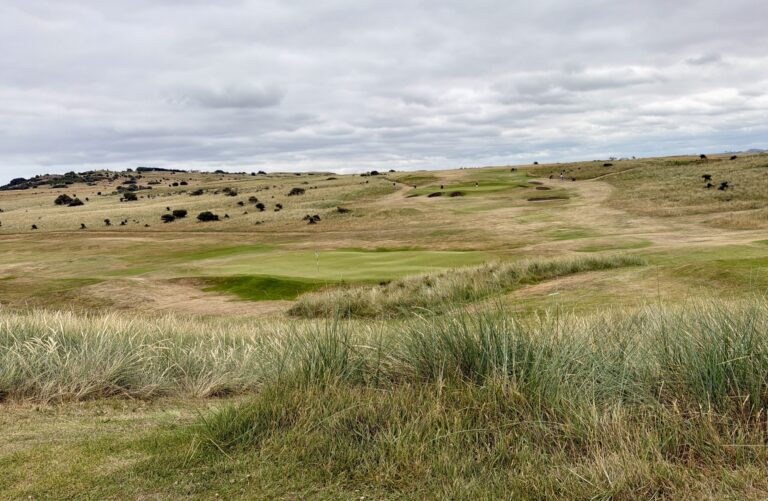
In fact, Fjällbacka is a bit reminiscent of links golf. The wind is a factor most days, and the greens are firm enough that running approaches can pay off. The long grass along the river is reminiscent of courses in the home of golf. Fjällbacka’s characteristic granite outcrops add extra drama. There’s some tough rough and plenty of places where water is very much in play, but there’s always somewhere to aim for those who want to play it safe.
After the round we head off to Fjällbacka, the village that grows from about 2,000 inhabitants in winter to nearly ten times that in summer. It’s also known as the home of Sweden’s latest addition to the crime fiction scene, the author Camilla Läckberg. The little village is like a colorful postcard with narrow streets and old wooden houses, compact and very idyllic. Is this Sweden’s Twin Peaks?
Stora Hotellet Bryggan runs the see-and-be-seen spot: Restaurant Matilda, where the terrace overlooking the marina, the archipelago and the sunset is the place to enjoy a glass of something liquid, light and with ice in it. If you didn’t get enough exercise on the course, you can climb up to the lookout on Vetteberget via the path through the narrow Kungsklyftan gorge, known from the film Ronia, the Robber’s Daughter.
The archipelago beckons. In Grebbestad we find Everts Sjöbod, a 19th-century boathouse that has been featured in the world’s leading travel magazines with a concept that started with lobster safaris. With brothers Per and Lars Karlsson it’s now all about oysters, lobster and everything else that lives in the water. There’s just enough room in the old wooden boat to take a load of overnight guests out exploring the Skagerrak. They’re experts at opening oysters; Grebbestad hosts the world oyster opening championship every year. A full 90 percent of Sweden’s oysters come from here, and oysters have had a special status here for many years.
“Oysters belonged to the King,” says Per, referring to the 17th century. In 1686 the local alderman and merchant Anders Kock was granted the sole right to fish oysters and lobster, as long as he delivered fresh goods to the palace in Stockholm every other week.
Per explains that the water is so cold, clean and clear that the oysters get a special character. They grow slowly and reach the right size after six or seven years. The slow growth means they’re full of flavor.
“Some of the world’s top chefs say Swedish oysters are the best,” he says.
Heading home via Strömstad
On the way home we stop off in Strömstad, which has two fine courses where visiting golfers are always welcome: Strömstad GK and Dynekilen GK. Playing these two courses in northern Bohuslän is like spending a day with an old friend; it’s easy to be reminded why we became friends in the first place. As always, there are plenty of people and lots of life in the clubhouse at Strömstad.
The course at Strömstad has just been through renovations and improvements on several holes. It’s a mix of woodland and parkland in beautiful surroundings. Many of the holes leave a special impression, with fairways, water hazards and greens beckoning so prettily while the hard rock formations look menacing to anyone who doesn’t quite trust which direction the ball will take. The greens are in superb condition.
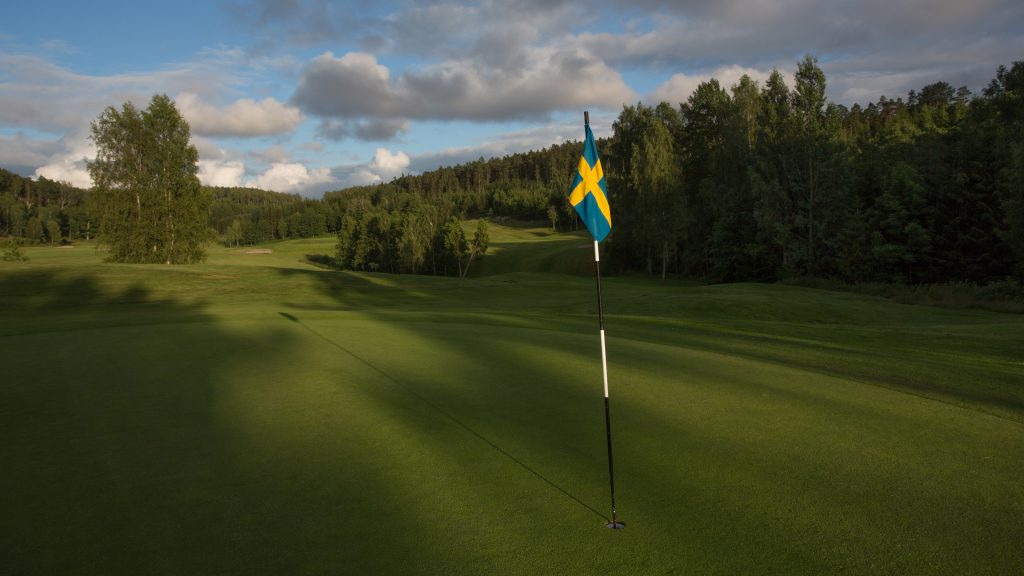
At Dynekilen we arrive right after the year’s biggest tournament: the Battle of Dynekilen. Sweden has just beaten Norway in the team match. The Norwegians are already plotting their revenge for next year. In the sunset we have time to take lots of pictures, and time to think. Why go to southern Europe in the middle of the golf season to collect golf memories, when there are so many to collect right here?
This article by Kaia Means was originally published in Norwegian on our sister site Golfjournalen.no. It has been translated by AI.