Åland in Miniature

Translated by AI
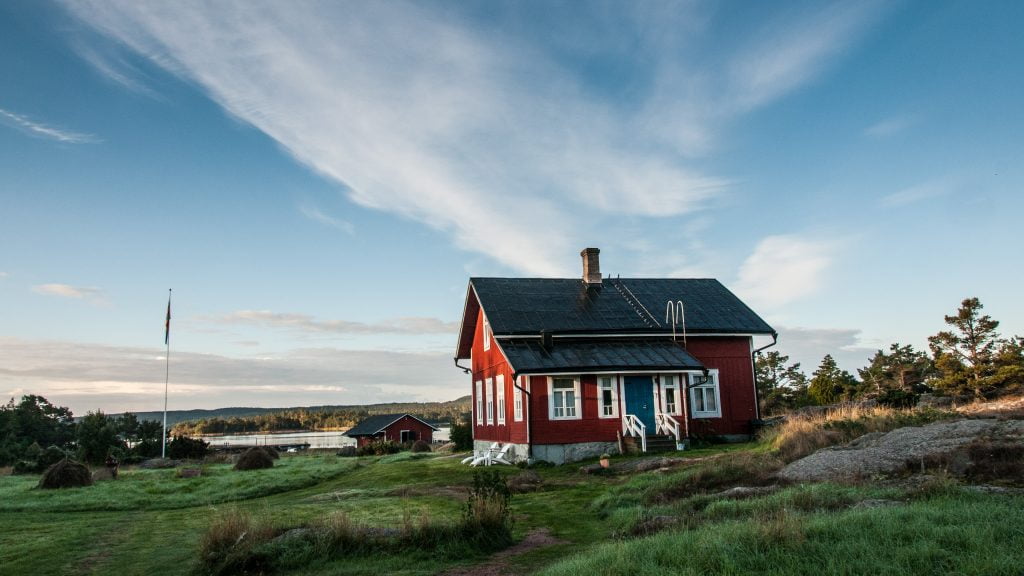
Up in the northeast corner of Åland lies a small island. It’s called Silverskär, and it is like Åland in miniature: hardly any population at all, quiet, wonderfully beautiful, well-off, independent. And a discreet playground for people with deep pockets.
The red cottages have white corners, rocks as smooth as desert dunes frame the island, and the air is as silent and clear as only the outermost archipelago can make it.
You reach Silverskär in Silverskär’s own little motorboat, which picks you up at the mainland jetty ten minutes away. Only one (1) party at a time is looked after at this conference and party venue.
Literally looked after. It is pure pampering, with top-class food, fishing, hunting, paddling, archery(!) and an open fire in the main cabin. At night soft beds await in cozy cottages, and when morning breaks a lavish breakfast table is laid.
That’s Silverskär: Åland in miniature. Because if you enlarge the almost unreal life on Silverskär by, say, a thousand percent, life on Åland is not so different from life on the little island. Everything is relative, of course, but let us tell you a little about Sweden’s closest neighbor. So close that even the language is the same: Åland is Swedish-speaking.
If you climb Åland’s highest hill, the 129-meter (423-foot) Orrdalsklint a few dozen kilometers northeast of Silverskär, you can almost see the whole of Åland with its 6,757 islands, 16 municipalities and 28,000 inhabitants. Well, not all the inhabitants at once, of course, but since 10,000 of them live in the only town, Mariehamn, most of it still feels fairly easy to take in.
Unfortunately, people easily get the impression that the island consists only of Mariehamn, a number of ferries and lots of fairly cheap liquor and food. Not so.
For sailors, a fabulous archipelago is waiting to be discovered. It isn’t the easiest to navigate, but it gives all the more back in nature and quiet, uninhabited islands made for going ashore.
For those interested in culture, there are some 40 museums, art galleries and craftspeople in Mariehamn, in the countryside and in the archipelago. Everything outside Mariehamn counts as countryside, by the way. And for history buffs there is everything from medieval castles to Viking graves.
For anglers… well, a whole archipelago of sea water plus no fewer than 379 lakes. But buy a fishing license!
If you’d rather drink wine, Åland’s own is made at Tjudö Vingård in Finström. One of Finland’s largest apple orchards, with ten thousand apple trees and a large planting of cherry trees, makes for a pleasant walk among fermentation vats and wine barrels. The house wine is called Västergårds äppelvin, comes in hand-blown glass bottles and tastes excellent. Not to mention Ålvados, an excellent calvados that sent the French through the roof, demanding that Tjudö change the name. Ålvados is far too similar to calvados. According to the French.
One might well wonder what Castro in Cuba thinks of Tjudö’s rum, made from sugar beets. The rum is called Kobba Libre, not unlike Cuba Libre. The foreign competition has not managed to subdue the stubborn Ålanders, who even have the nerve to plan more spirits with clearly international-sounding names. Duck, France, Tjudö is reloading. An Åland champagne next?
But whether you sail, ride the ferry or like wine and culture, there is one common denominator that tends to work for most people: golf. And the golf on Åland is good. Golf World magazine, for example, ranked Slottsbanan at Ålands GK among the hundred best courses in Europe outside Great Britain. Personally, I wonder why Golf World didn’t play the sharper Kungsbanan while they were there.
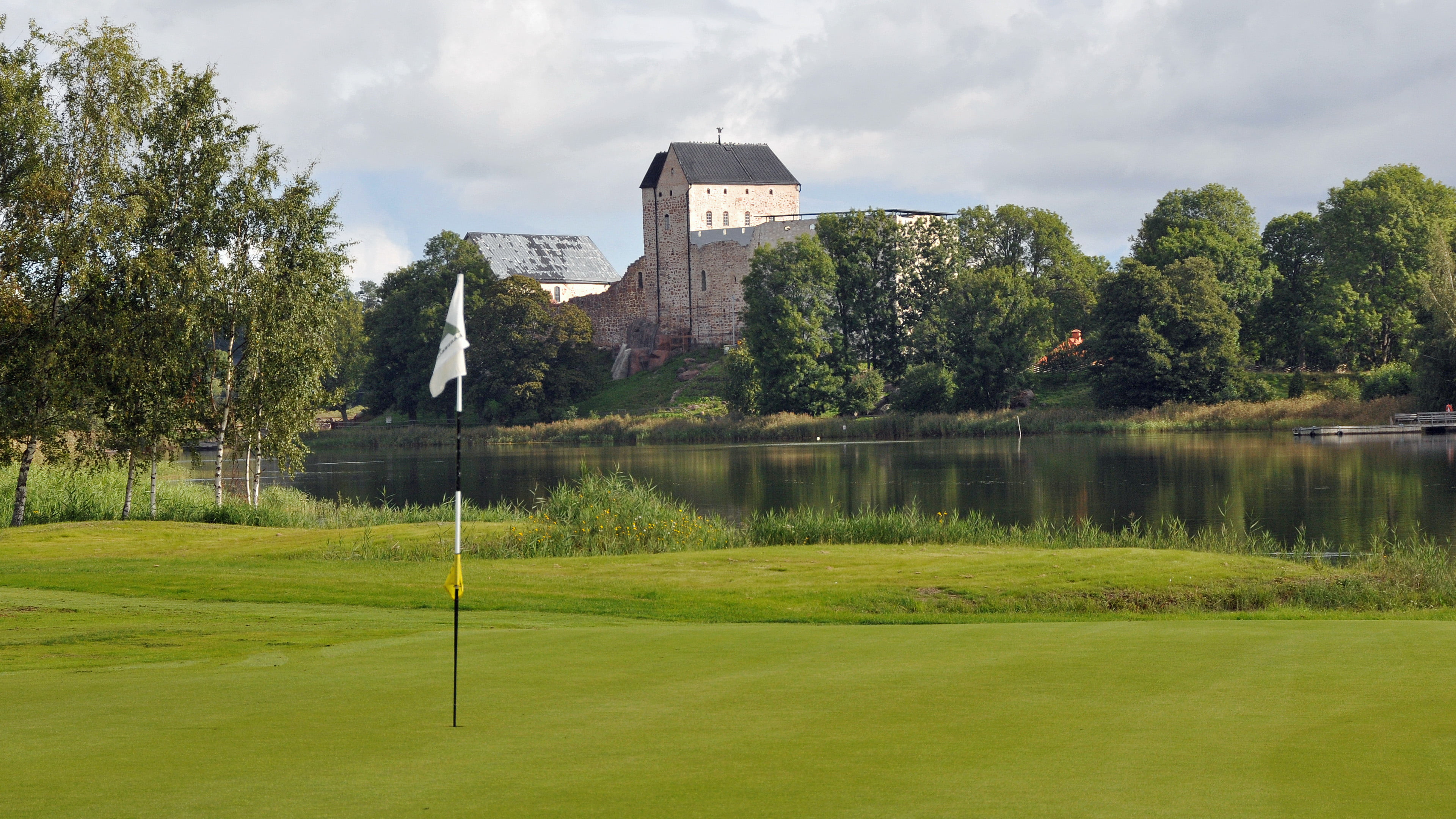
Both courses lie close to Åland’s medieval castle, Kastelholm, built by Gustav Vasa. Course architect Jan Sederholm came here one day in the early 1980s and began sketching what would become two courses: the woodland course Kungsbanan (par 72) and the parkland course Slottsbanan (par 71).
A few dozen kilometers away, right by the ferry terminal in Eckerö, is another full-length 18-hole course, Eckerö Golf. It opened in 2004 and still has some way to go to reach the level of its neighbors. But don’t underestimate Eckerö. It is the longest course on Åland from the yellow tees, and if the front nine feels easy, a small cold shower awaits on the back nine: considerably narrower, longer and set in the forest.
When the fall chill and frost settle over the mainland, Åland still has pleasant temperatures thanks to the warm sea, so you can stretch the golf season a little longer here. It’s worth buying a ferry ticket and “doing” Åland with its golf, its culture and all its leisure activities, whether it’s spring, summer or fall.
This article by Bo Sjosten was originally published in Swedish on our sister site Golfjournalen.se. It has been translated by AI.