Golf in Tunisia – A Great Winter Golf Destination

Translated by AI
We arrived just after midnight. After collecting our luggage, we stepped out into the warm night. It was raining. We were in the Sahara.
“The first rain this year,” said our driver cheerfully. It was April 14. The rain was very welcome.
We were in Tozeur in southwestern Tunisia. Tozeur is a desert town, an oasis with more than 400,000 date palms. And a golf course. That’s why we were here.
The next morning there was no sign of the rain; the sun was shining and it looked like a perfect day for golf. We set off for the course, about five minutes by car from the tourist area where most of the hotels are.
Golf Oasis
We were warmly welcomed at the Golf Oasis clubhouse. We were the first players of the day. There wasn’t a cloud in the sky, so I let the caddie master look after my umbrella to lighten the load.
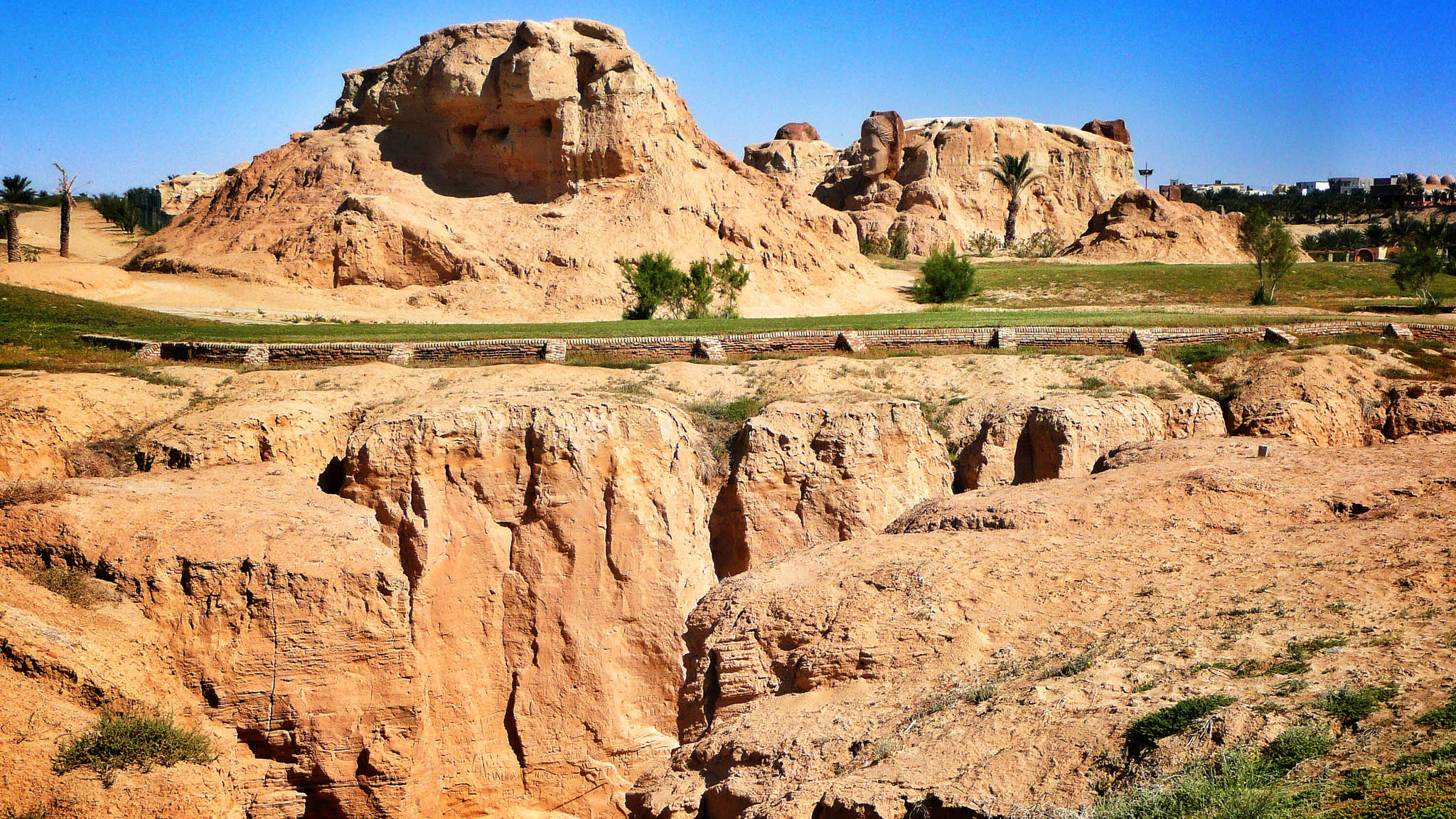
The course has an interesting layout, hillier than you might expect when you imagine a desert course. Straight through the front nine runs a ravine that looks like something out of a Star Wars film. Not so strange, perhaps: scenes from the films were shot in the desert not far from here. There are also several water hazards, perhaps not something you’d expect in the desert either.
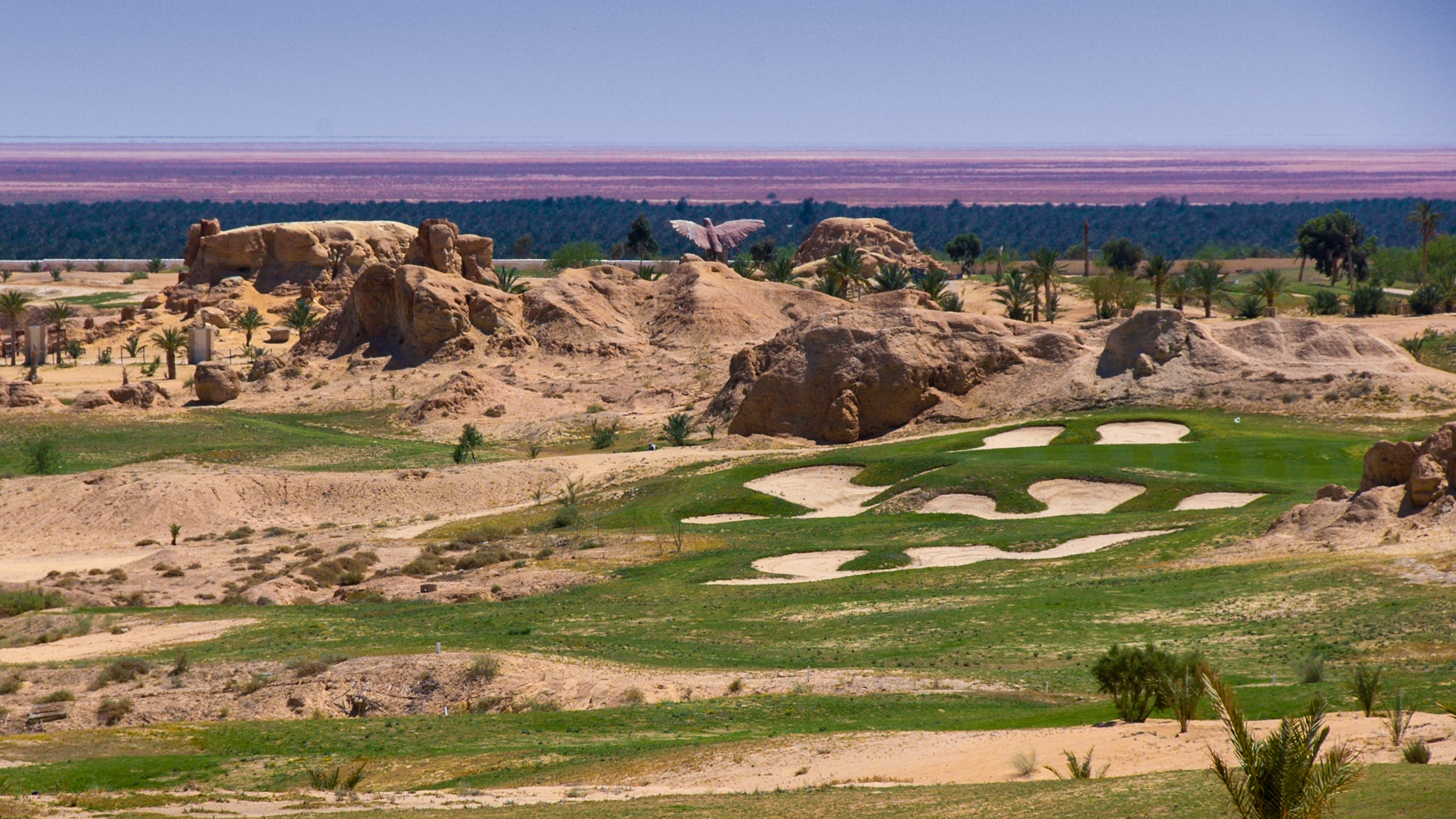
From the course there’s a fine view of the great salt lake, Chott el-Djerid. The lake is mostly dry these days but is believed to have once been part of the Mediterranean. Look toward the horizon over the lake and you may think you see water, but it’s only a mirage. Just like that birdie I thought I saw.
The course is very promising and suitable for mid-handicappers. Unfortunately it isn’t in the very best condition: the grass is still a little tufty with sand in between, and the greens are a bit uneven. The greenkeeper looked worried when we asked about the grass.
“It routinely gets above 50°C (122°F) on summer days, and in winter the temperature can drop to freezing. It’s hard to find a grass mix that can handle both extremes.”
The grass they have sown now is thickest and greenest in summer. But that’s when nobody wants to play; it’s far too hot. Still, the greenkeeper was optimistic about the course’s future. They keep experimenting with overseeding other grasses in the fall. If it works, the course will be top class. But even now it’s an experience to play, as long as you understand the grass problems.
After an excellent lunch in the clubhouse, it was time to leave. My umbrella was nowhere to be found. The caddie master was distraught and offered me a brand-new umbrella instead. Now I am the proud owner of an umbrella from the Sahara!
Tozeur
Besides golf there’s plenty to see and do in Tozeur. Tourism has now become more important than traditional date farming, for better and for worse. But there are still more than 400,000 date palms, and a trip out to one of the plantations is interesting.
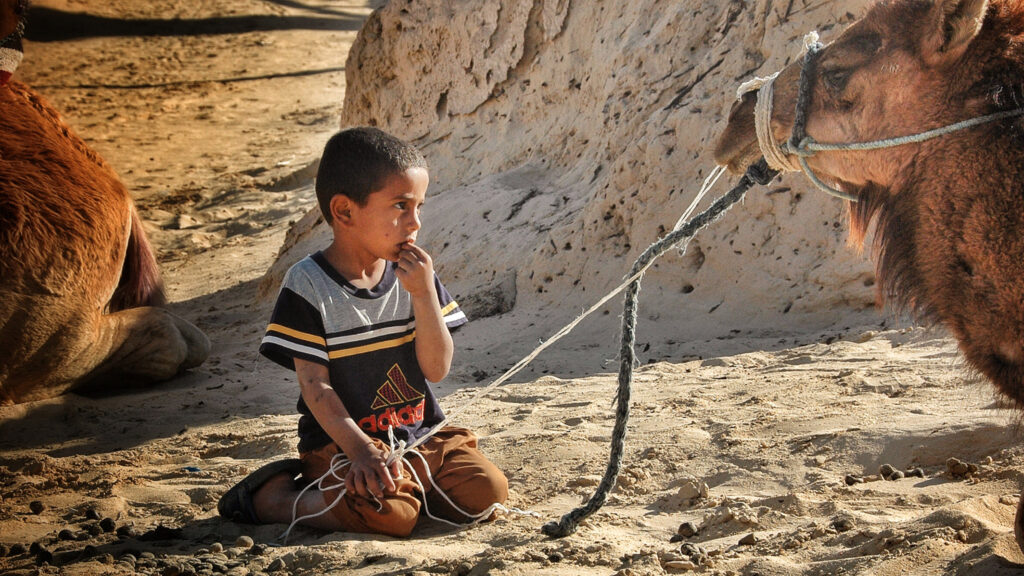
We met Ali, one of the workers at a date oasis. His father worked in date farming, as did his grandfather, and that’s Ali’s plan too. Ali showed us how to climb, or in his case run, up a date palm with ease. The harvest is in November, but Ali lives and works on maintenance in the oasis all year round with his brother. The reward is 25% of the profit; the rest goes to the owner. A good life? Ali seemed to have found his place in it.
Not to be missed in Tozeur is the medina, the old town, with traditional architecture using lots of brick in a style unique to the Sahara. Plenty of shopping too, of course, at lower and lower prices the more you haggle. And haggle you must. The price often drops to a fifth or less of the asking price.
From Tozeur you can go on a desert safari, anything from a day trip to longer tours where you spend the night in a tent in the Sahara. You can go by SUV or by camel. The choice is yours.
Golf in Monastir and farther north
Monastir is the town many European tourists fly into. And around Monastir and north along the coast are several of Tunisia’s finest golf resorts.
Near Monastir and the airport there are two golf courses, Flamingo GC and Palm Links GC. Both are OK, but definitely not in the same class as the courses around Hammamet. If you’re a beginner, they may suit a golf week well, but mid- and low handicappers should probably choose better courses.
Flamingo GC is the one with the more interesting layout, but unfortunately it has many holes with restricted views and lots of aiming posts. Play a few rounds, though, and you’ll learn. The condition is a little questionable, but again perfectly OK for a beginner.
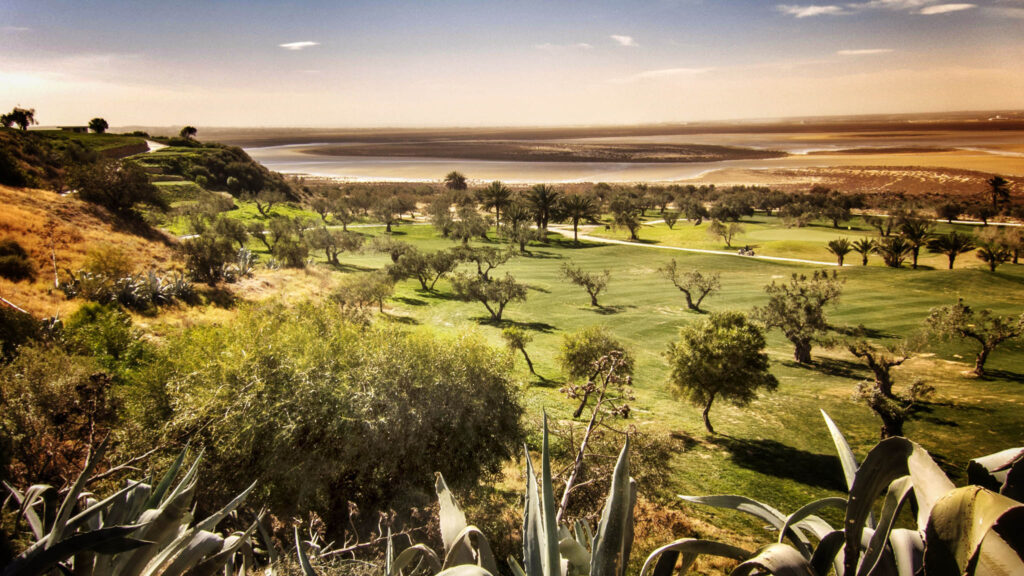
Palm Links GC is in better condition than Flamingo, but a little flat and dull. A few holes run down toward the water, where things get a bit more exciting, but a whole week’s golf vacation at Palm Links would probably be on the dull side.
Sousse and Port El Kantaoui
The next big town north of Monastir is Sousse, about 20 minutes by car from Monastir airport. Next to Sousse lie Port El Kantaoui and the El Kantaoui Golf Course.
El Kantaoui GC
El Kantaoui GC has two courses, The Panorama Course and The Sea Course.
As the name suggests, The Panorama Course has a number of first-class panoramic views over the two courses and nearby Port El Kantaoui. It is very much worth playing and in good condition, if not quite perfect. Fairly hilly; a cart may be advisable if you plan to play more than 18 holes a day.
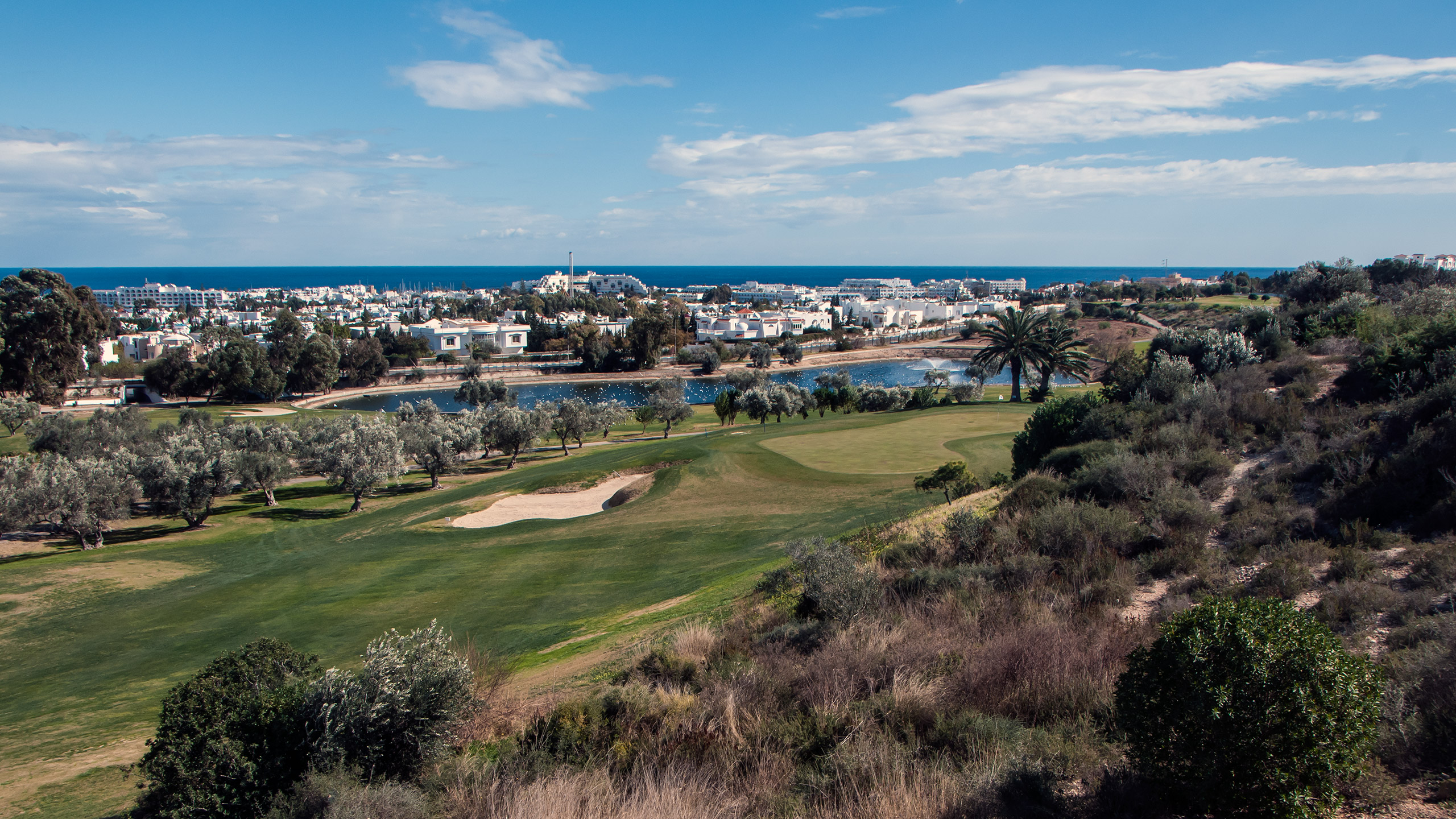
The Sea Course winds down toward the Mediterranean right next to the Green Park Hotel. This course is also in very good but not perfect condition. A little easier to play than The Panorama Course.
El Kantaoui GC is perhaps a notch below the best courses around Hammamet, but more than OK for a golf vacation. The clubhouse serves some of the best food you can find, at very reasonable prices. The Green Park Hotel is a good mid-range hotel, and if you stay there you can walk to the golf course and to the nearby marina with good restaurants and shopping. Try, for example, the restaurant Le Méditerranée in the marina. You can spend the whole evening over a luxurious three-course dinner and still have money left for the betting on the course the next day.
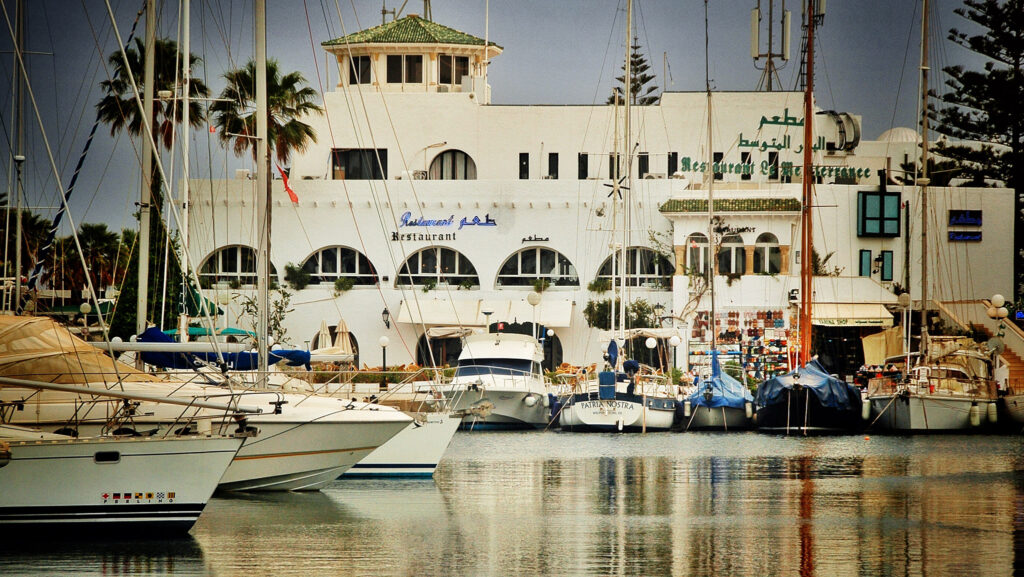
Hammamet
Hammamet lies about another 45 minutes north, halfway to Tunis. Around Hammamet are some of Tunisia’s very best courses. Two of the clubs are just northwest of Hammamet, about 10 minutes by car along the highway.
Golf Citrus
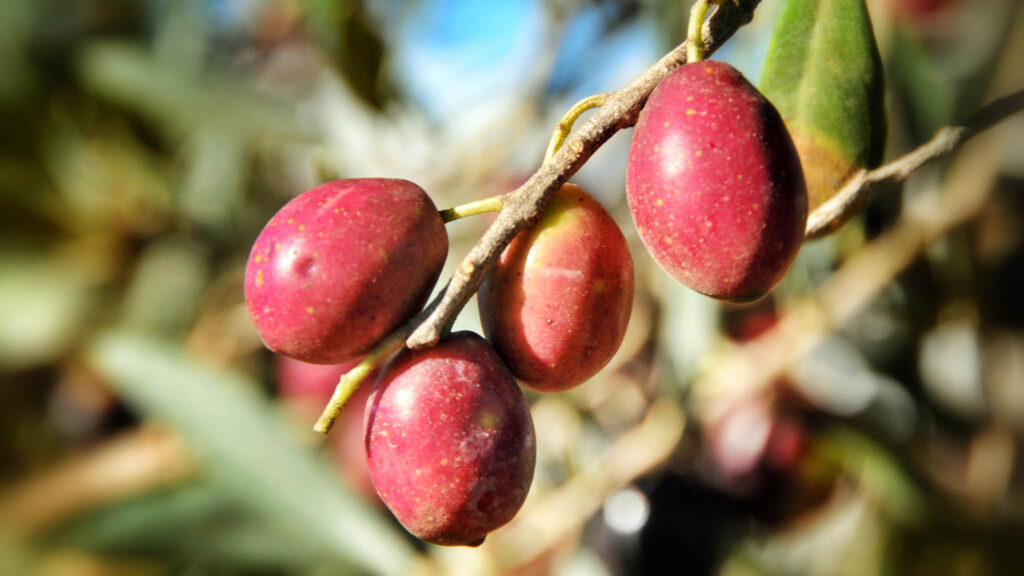
Golf Citrus has two top-class 18-hole championship courses, La Forêt and Les Oliviers. There’s also a 9-hole short course. La Forêt (the forest) is the slightly harder course, while Les Oliviers (the olive trees) is a course for every golfer. Both are of a high standard.
The La Forêt course
La Forêt is a very pleasant mix of woodland and parkland course. It is in top condition with fine greens. The course is very hilly, especially the back nine, so a golf cart may be advisable if you’re playing more than 18 holes. The course often gives you the feeling that you’re the only group out there. La Forêt is definitely the slightly harder course at Golf Citrus, with some long tee shots over water. Not for the faint-hearted.
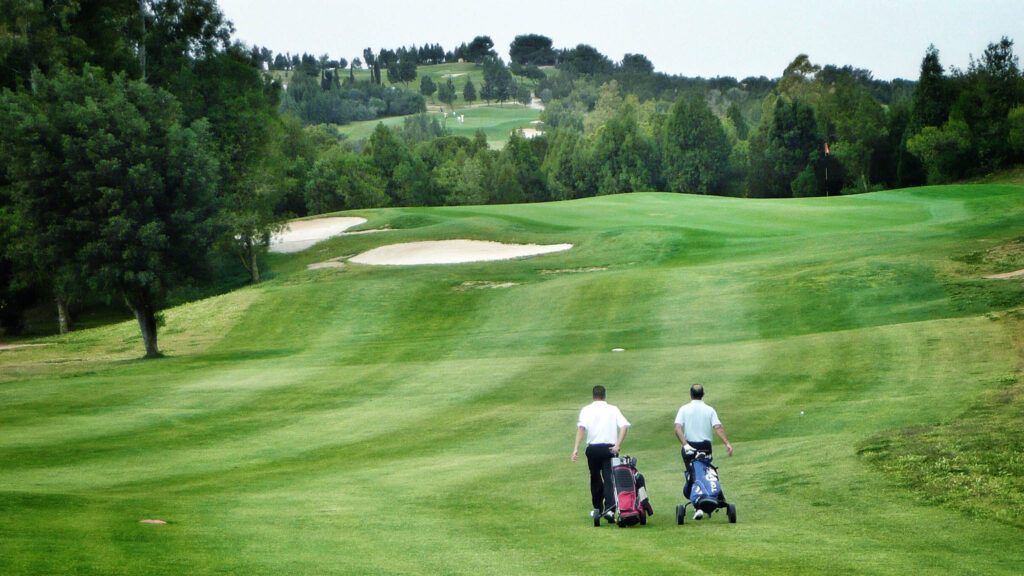
The Les Oliviers course
Les Oliviers is the slightly easier course at Golf Citrus, especially the front nine, which is fairly flat and wide but not uninteresting. The back nine runs down toward the water and offers somewhat harder challenges, but it is still easier than La Forêt.
The clubhouse at Golf Citrus has an excellent restaurant and bar, plus a pro shop with every golf accessory you might need.
It’s hard to find fault with Golf Citrus. Spend your golf vacation here and you’ll certainly be happy. Subject to your views on your own game, of course.
Yasmine GC
Yasmine GC lies across the road from Golf Citrus. This is also a first-class facility, with a beautiful clubhouse and pro shop and plenty of practice areas. The course is in very good condition. The layout is pleasant, but it lacks a real signature hole. The finish is a little weak: the 17th is narrow and slopes steeply to the right, which makes it a bit too hard to play. The 18th is a long par 4 with a blind approach for most golfers, both a little too hard and a little dangerous.
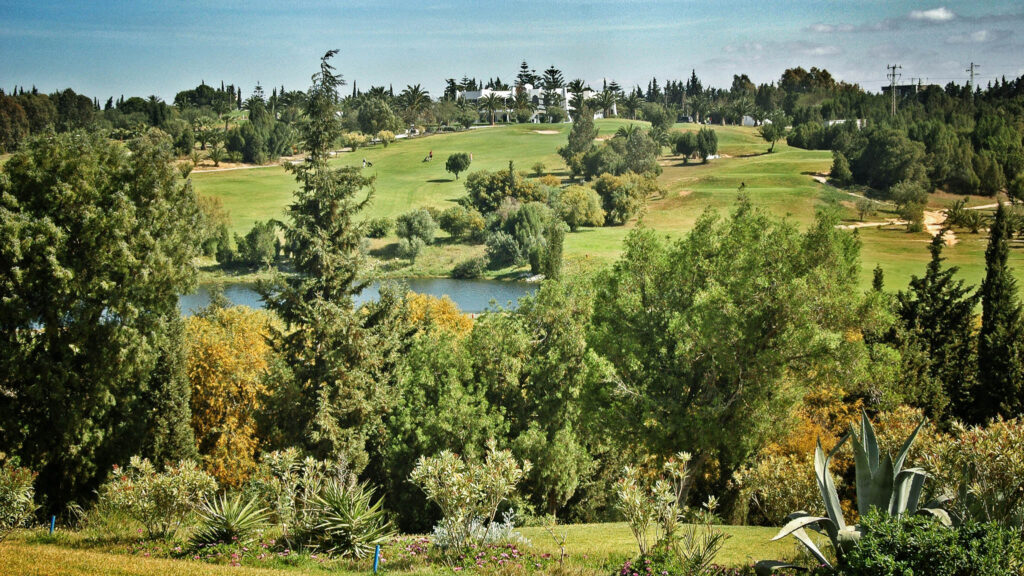
Despite the weak finish, the course is top class, though a notch below its rival across the road, Golf Citrus. We definitely recommend a round at Yasmine.
Tunis and surroundings
Farther north still lies Tunis. There are a few older courses here, plus a number of new ones under construction. Perhaps the most interesting is Residence GC.
Residence Golf Club
The Residence Golf Club is a links course designed by Robert Trent Jones Jr. It is expected to be finished in July 2008.
The course is very long, with lots of water. It’s also almost always windy, with a sea breeze off the Mediterranean, and there are no trees. That will make it difficult and probably best suited to low handicappers.
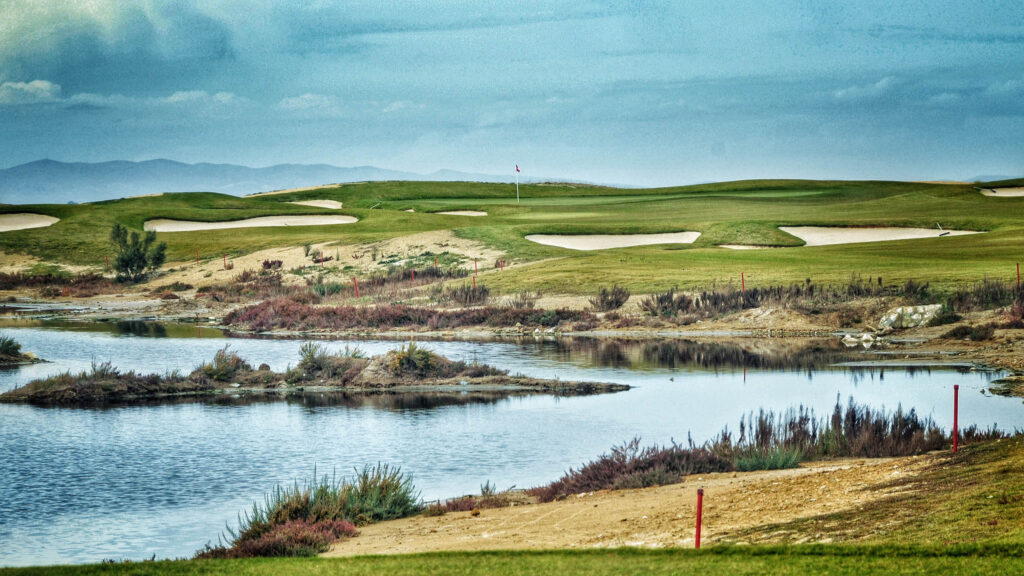
Around the course are a number of golf villas, and across the road is The Residence Hotel, a five-star hotel with which the course works closely. Stay at the hotel and you get priority and favorable green fees.
Dirt-cheap shopping
The taxi meter shows 350 when the ride begins. 350?? The currency in Tunisia is the dinar, and instead of hundredths it is divided into thousandths. So 350 means 0.35 dinars, about 20 cents. We took a taxi down to the medina in Hammamet, a ten-minute ride, and the total came to just over two dinars, about a dollar. We left a good tip.
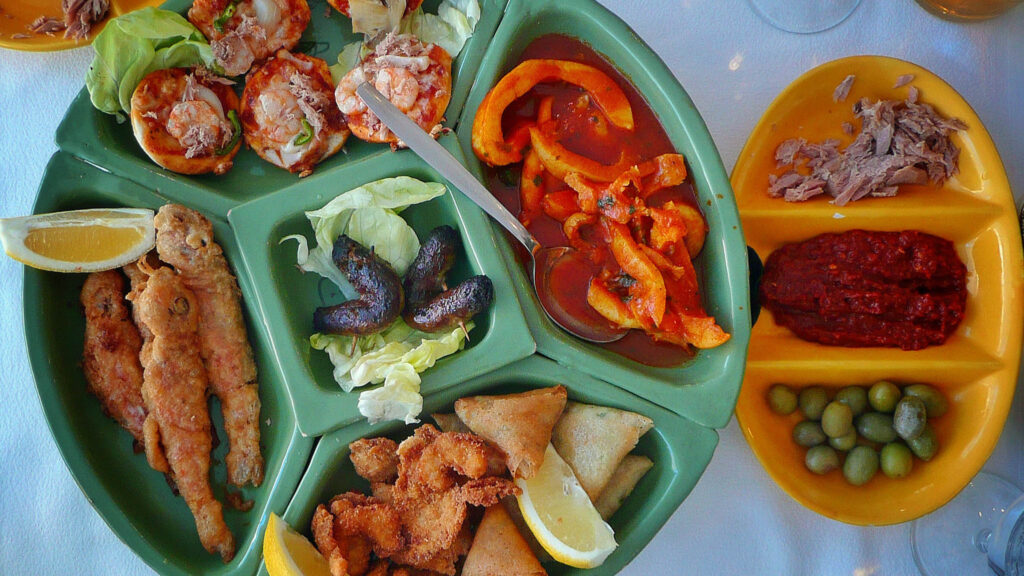
Tunisia feels a bit like Spain in the 70s, before everything got too expensive. A three-course lunch for six, complete with a lavish platter of starters and a couple of glasses of beer each, costs about 70 euros (around $80). And that’s at the golf club, where everything is usually a little more expensive.
In the medina everything is negotiable. A bracelet with an inscription? 35 dinars (about $11). Offer 4. You get it for 7. Real silver.
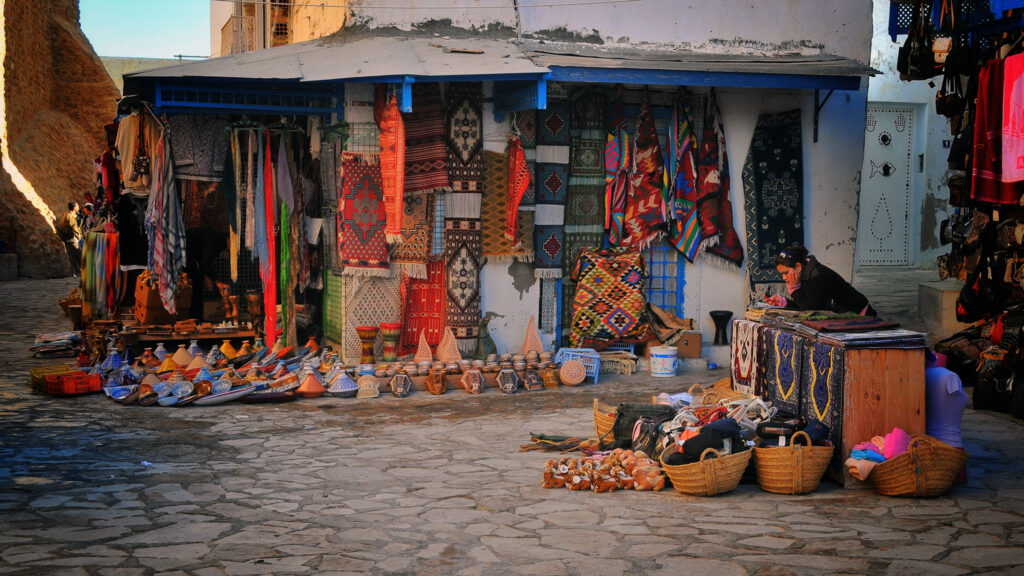
A nice camel-leather cushion goes for 10 dinars (about $3). Before you start negotiating.
If you don’t want to haggle, there are now also “prix fixe,” fixed-price shops, even inside the medina. A tip is to go to a fixed-price shop first to get an idea of the price level, so you’re better equipped for the negotiations. And don’t forget to put prices in perspective. Even if you don’t get the very best price, you’re only spending a fraction of what the goods would cost back home.
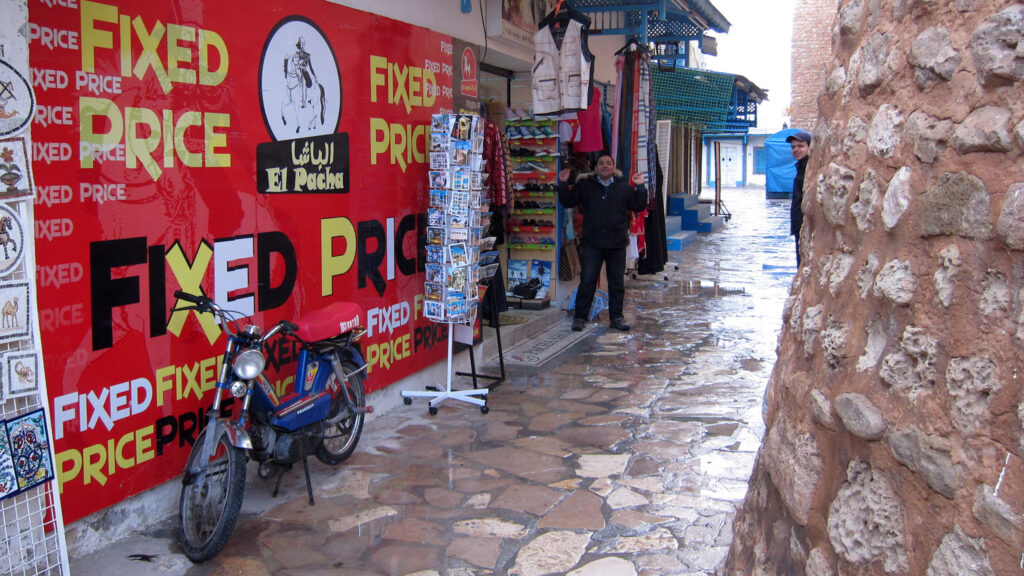
Leather goods are especially cheap. You can get a made-to-measure leather jacket for 150 dinars (about $50). Before you’ve negotiated.
Take your time, and don’t get annoyed with the seller. Become his friend, and the negotiation will be much more pleasant. If you end up not buying, you can still part as friends. He respects you more if you’re a good negotiator, even if no deal is done.
A Rolex replica can be had for 30 dinars (about $10).
“Made in Dubai,” the seller claims. Good Rolex replicas come from Dubai. But look carefully at the watch and make sure it really works.
“Genuine leather strap,” he continues. Apparently the strap is one of the most expensive parts of the watch. That may be a hint that this isn’t a watch you can rely on for the rest of your life. But it might come in handy on the golf course, on that tricky par 3.
“Shall we make it a little interesting? Closest to the pin wins. I’ll bet my Rolex. What are you betting?”
Package golf vacation or on your own?
It’s always a bit more adventurous to travel on your own and play the courses you choose yourself. But if you’re going to Tunisia, a golf package is probably the better option.
There are no low-cost flights to Tunisia, and few nonstop scheduled flights, so charter flights are often the better choice.
Most golf resorts in Tunisia give golf travel agencies significant green fee discounts. The agencies also negotiate good package prices with the hotels, some of which even part-own the golf courses, so as an independent traveler it’s very hard to get anywhere near the prices an agency can offer you.
This article by Bo Sjosten was originally published in Swedish on our sister site Golfjournalen.se. It has been translated by AI.